December 2020

Enteral Feeding Tube Market (By Product Type: Nasoenteric/Nasal Feeding Tube, Nasogastric tube, Nasojejunal tube, Abdominal/Ostotomy Feeding Tube, Gastrostomy tube, Jejunostomy/jejunal tube, Gastrojejunal (GJ) or transjejunal tube; By Patient: Adult, Pediatric; By Application: Oncology, Gastroenterology, Neurology, Diabetes, Others; By End-User: Hospitals, Home Care Settings, Ambulatory Surgical Centers (ASCs), Others) - Global Industry Analysis, Size, Share, Regional Analysis, Trends and Forecast 2025 - 2033
The global enteral feeding tube market size was accounted for USD 1.14 billion in 2025 and is estimated to reach around USD 1.69 billion by 2033 growing at a CAGR of 5.1% from 2025 to 2033.
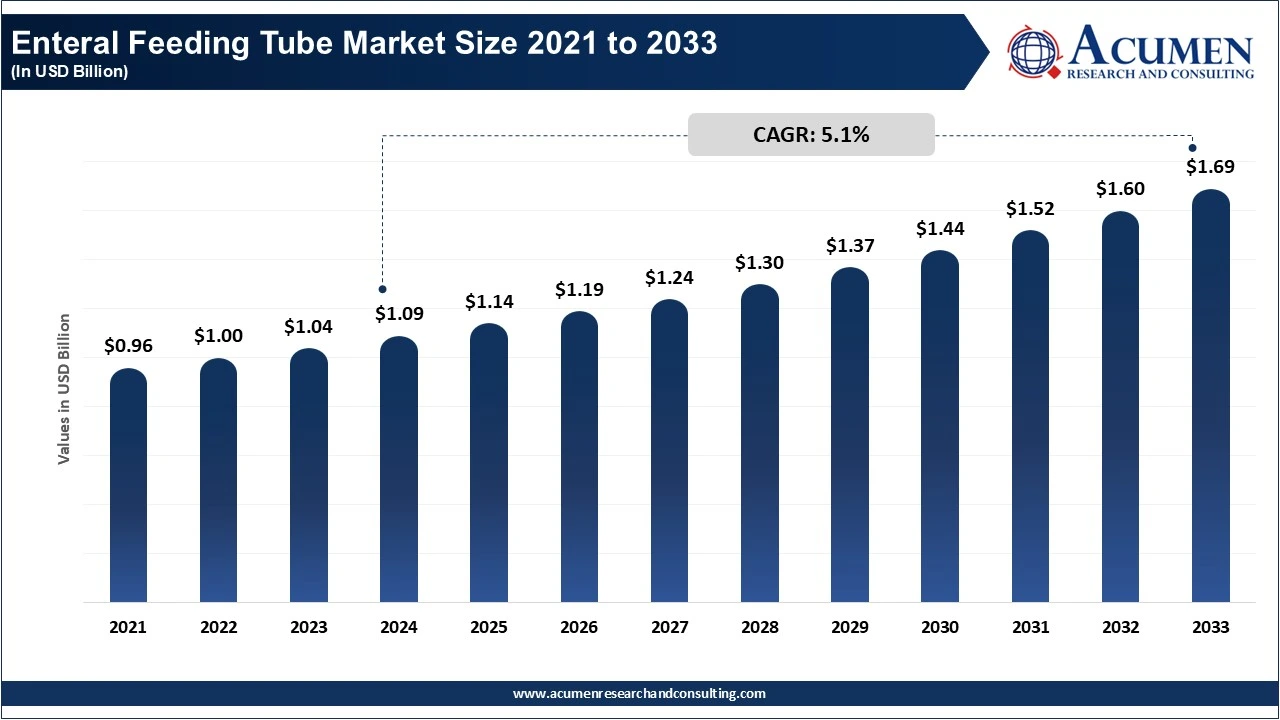
Enteral feeding tube is a medical device used to deliver nutrients directly into the stomach or small intestine when a person is unable to eat by mouth. It is commonly inserted through the nose (nasogastric), mouth (orogastric), or surgically through the abdomen (gastrostomy or jejunostomy). Enteral feeding tubes are used in patients with swallowing difficulties, neurological disorders, digestive issues, or those undergoing surgery or cancer treatment. They ensure proper nutrition, hydration, and medication administration to support recovery and maintain health.
| Attribute | Details |
| Enteral Feeding Tube Market Size 2025 | USD 1.14 Billion |
| Enteral Feeding Tube Market Forecast 2033 | USD 1.69 Billion |
| Enteral Feeding Tube Market CAGR During 2025 - 2033 | 5.1% |
| Analysis Period | 2021 - 2033 |
| Base Year | 2025 |
| Forecast Data | 2025 - 2033 |
| Segments Covered | By Product Type, By Patient, By Application, By End-User, and By Geography |
| Regional Scope | North America, Europe, Asia Pacific, Latin America, and Middle East & Africa |
| Key Companies Profiled | CONMED Corporation, Medline Industries, Inc., Danone S.A., B. Braun Melsungen AG, Avanos Medical, Inc., Abbott Laboratories, MOOG Inc., Cardinal Health, Cook Medical, Boston Scientific Corporation, Fresenius Kabi AG, Applied Medical Technology, Inc., Vygon, Becton, Dickinson and Company, and C.R. Bard, Inc. |
| Report Coverage | Market Trends, Drivers, Restraints, Competitive Analysis, Player Profiling, Covid-19 Analysis, Regulation Analysis |
Gradual increase in number of patients suffering from chronic diseases, rising geriatric population suffering from various physiological problems and increasing consumer approach towards home care in order to provide better care are factors expected to drive the growth of global market. There is rise in patients suffering from neurological disorders and consumer approach towards home care setting is increasing in order to provide better care to the patients. Enteral feeding devices are widely used to feed the medication and nutrition to the patients. In addition, rapid technological advancements by major players in order to provide innovative solutions in order to attract new customers are factors expected to support the growth of target market.
Major player’s approach towards business expansion through strategic acquisitions and focus on enhancing the customer base are among other factors expected to impact the growth of target market.
In September 2023, Cardinal Health launched the Kangaroo OMNI enteral feeding pump, offering patients a more personalized enteral feeding experience with configurable settings tailored to their specific care needs throughout their feeding journey.
In August 2023, Cardinal Health launched the NTrainer System 2.0, an innovative medical gadget that helps preterm and newborn infants develop oral coordination skills. This new approach helps reduce the duration of stays in neonatal intensive care units (NICUs) by enabling faster transitions to independent feeding.
In 2020, Otsuka Pharmaceutical a healthcare company launched ENORAS Liquid for Enteral use, coffee flavor and strawberry flavor. This product launch is expected to help the company to enhance the business.
However, factors such as stringent government regulation related to product approval and lack of reimbursement scenario are expected to hamper the growth of global enteral feeding tubes market. In addition, lack of skilled professionals is expected to challenge the growth of target market.
High investment by major players and focus on establishment of new enterprises in emerging economies in order to strengthen the distribution channel and increase the customer reach are factors expected to create new opportunities for players operating in the enteral feeding tube market over the forecast period. In addition, approach towards strategic partnership is expected to support the revenue transaction of target market.
The worldwide market for enteral feeding tube is split based on product type, patient, application, end-user, and geography.
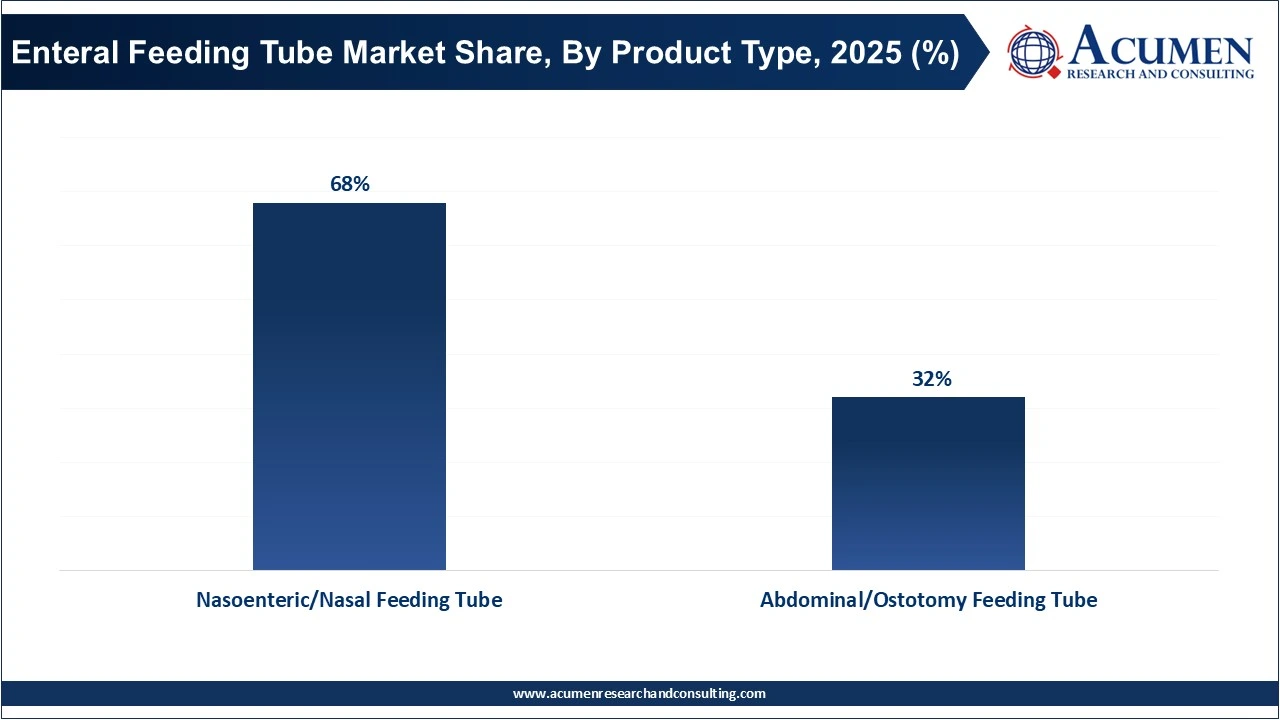
According to enteral feeding tube industry analysis, nasoenteric or nasal feeding tube is preferred because of its ease of installation, non-invasiveness, and suitability for short- to medium-term nutritional therapy. This category contains nasogastric tubes, which provide nutrients straight to the stomach and are often used in acute care. Nasojejunal tubes, on the other hand, extend into the jejunum and are appropriate for individuals who have poor gastric motility or are at high risk of aspiration. Nasal feeding tubes are the favored choice in healthcare settings due to their adaptability and wide range of clinical uses.
According to enteral feeding tube industry analysis, adult patients take the lead because chronic diseases such as cancer, stroke, and gastrointestinal disorders are more common in the adult population. The growing aging population raises the requirement for enteral nutrition supplementation among senior people. While the pediatric segment is smaller, it is continuously growing, owing to an increase in the prevalence of congenital diseases, early births, and malnutrition. Advances in neonatal and pediatric care are also driving the use of specific enteral feeding solutions for children.
According to enteral feeding tube industry analysis, oncology dominates because a large proportion of cancer patients require long-term nutritional support during chemotherapy, radiotherapy, or surgery. These patients frequently have difficulty swallowing or lose their appetite, therefore enteral nutrition is critical for preserving health and recovery. The expanding worldwide cancer burden continues to fuel strong demand in this area. Other important application categories include gastroenterology, which treats illnesses such as Crohn's disease and gastrointestinal procedures; neurology, which treats patients with stroke or ALS-related dysphagia; and diabetes, where regulated feeding helps manage glucose levels.
According to enteral feeding tube market forecast, hospitals leads because of the large number of acute and critical care patients who require prompt nutritional support. These institutions are outfitted with cutting-edge medical technology and skilled specialists to manage intricate feeding tube procedures. The increasing number of hospital admissions, particularly for oncology and neurological disorders, fuels this industry. Home care settings are quickly expanding, owing to the demand for affordable and comfortable long-term care. Ambulatory surgery centers (ASCs) and others, such as nursing homes, contribute consistently, notably for post-operative and geriatric care, where short-term nutritional support is essential.
The North American market is predicted to account for a significant portion of the global industry's revenue because of the growing number of patients suffering from neurological illnesses. Furthermore, rising preterm birth rates in the country are driving up demand for enteral feeding tubes to supply nutrition and drugs, which is projected to promote the expansion of the enteral feeding tube market. According to the Centers for Disease Control and Prevention, preterm and early-term birth rates in the United States grew by 12% and 20%, respectively, between 2014 and 2022. This rise is likely to fuel the region's enteral feeding tube market.
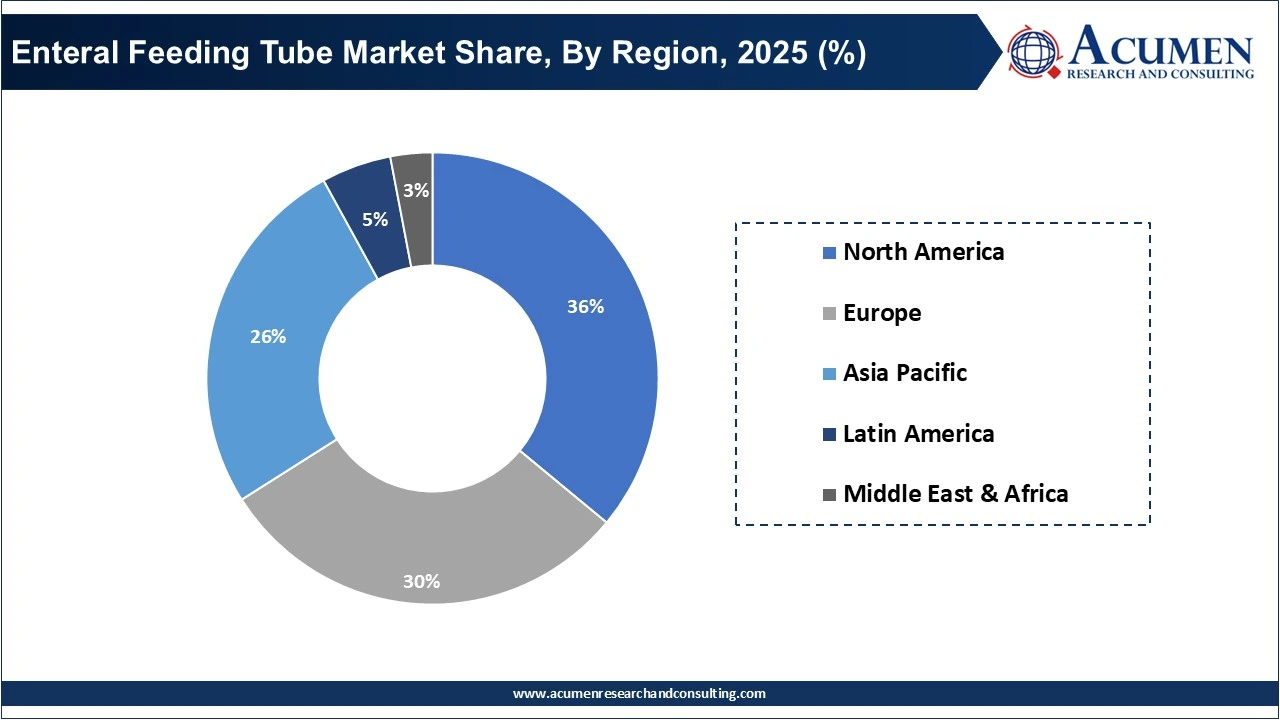
The Asia-Pacific enteral feeding tube market is expanding rapidly, owing to an aging population, rising prevalence of chronic diseases, and increased knowledge of enteral nutrition. Countries such as China, India, and Japan are driving this expansion due to their vast patient populations and advances in healthcare infrastructure.
By Product Type
By Patient
By Application
By End-User
By Region
Looking for discounts, bulk pricing, or custom solutions? Contact us today at [email protected]

December 2020
January 2021
January 2021
April 2021
Trusted Market Intelligence | 2026–2035 Insights | Designed to Support Faster, Smarter Decisions
Thank you! Our team will reach out to you soon.