
Crude Under Pressure: Why Oil Prices Are Reacting to Global Economic Concerns
Author: Acumen Research And Consulting



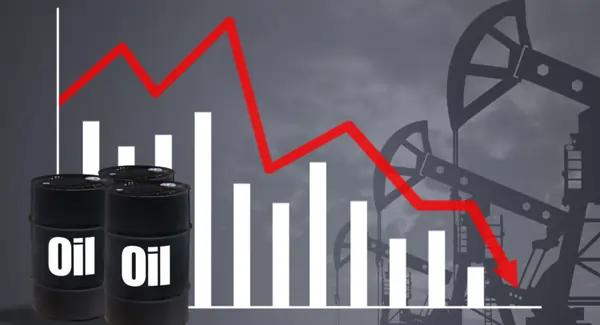
In 2025, the global oil market is in turmoil, and the slogan "Crude Under Pressure" accurately describes the scenario. Crude oil prices are seeing unprecedented volatility as countries battle with inflation, slowing GDP, and shifting energy demand. The oil price drop 2025 is the consequence of several interconnected events that represent the global economic impact on oil prices. Let's look at why oil prices are falling and the underlying market dynamics influencing today's energy sector.
A Changing Global Economic Landscape
The global economic impact on oil prices is clearer than ever. Major economies, including the United States, China, and the European Union, are either experiencing sluggish growth or on the verge of a recession. As consumer demand falls, so does industrial activity, resulting in reduced need for oil. As a result, it becomes clearer why oil prices are falling. It's not only about supply; there's also a sharp fall in worldwide demand.
Economic downturns lower industry and transportation activities, having a rippling effect in energy usage. With demand falling, the oil market becomes oversupplied, resulting in an oil price drop 2025. Investors and analysts are now paying special attention to macroeconomic indicators to analyze the global economic impact on oil prices, rather than geopolitical conflict.
Oil Price Drop 2025: US and China Growth Concerns Keep Crude Under Pressure
Global oil markets are crude under pressure as slower economic growth in the United States and China reduces demand forecasts. Investors are eagerly watching these changes, which help to explain why oil prices are falling. With industrial activity slowing, the oil price drop 2025 is gaining momentum. These signals are consistent with broader oil market trends that lead to decreased consumption. Uncertainty continues to dominate global trading floors.
The persistent downturn confirms why oil prices are falling, especially as China's post-pandemic economy sputters and inflation fears in the United States rise. Analysts attribute the oil price drop 2025 to both a supply-demand imbalance and sluggish growth. The market picture remains uncertain, putting crude under pressure once more. This tendency is consistent with shifting oil market trends in a transitioning global economy. It's becoming increasingly clear why oil prices are falling in 2025.
China's Position in Oil Demand
China is one of the world's top oil importers, thus any reduction in demand has a global impact.
- According to the International Energy Agency, world oil demand growth is expected to accelerate to little over 1 million barrels per day (mb/d) this year, up from 830 kb/d in 2024, to 103.9 mb/d. Asia accounts for about 60% of gains, headed by China, where petrochemical feedstocks will drive the whole expansion.
As Beijing focuses on renewables and electric vehicles, the long-term picture indicates continued pressure on oil demand. That is a major reason why oil prices are falling, especially since China's recovery from COVID has not matched forecasts.
Technological Advancements in U.S. Shale
Technological developments in U.S. shale production have added another layer to the global economic impact on oil prices.
- In April 2024, a U.S. energy company unveiled a breakthrough in shale oil extraction technology that cuts water usage by 30%, highlighting a significant step toward more environmentally responsible operations.
With more efficient extraction methods and increased output, the U.S. has flooded the market with cheaper oil. This abundance adds to why oil prices are falling, as buyers have more choices and negotiating power.
In reality, the most recent Oil price analysis shows that US shale producers are not just surviving, but prospering, even at lower prices. This economic resiliency simply increases the strain on traditional oil markets.
Renewable Energy Transition
The transition to green energy is slowly but steadily altering oil market trends. Global oil dependency is decreasing as investments in electric vehicles, solar, and wind energy expands.
- According to Acumen Research and Consulting, the global Renewable Energy Market was valued at USD 1.24 trillion in 2023 and is anticipated to reach USD 2.68 trillion by 2032, rising at a compound annual growth rate (CAGR) of 9.1% from 2024 to 2032.
Governments are also enforcing stronger climate rules, restricting fossil fuel consumption.
- For example, at the 26th session of the United Nations Framework Convention on Climate Change (COP26) in November 2021, India pledged to achieve net-zero emissions by 2070. This is a major opportunity for the renewable energy sector, not just to promote a greener future, but also to revolutionize economic growth.
As investors shift away from traditional oil-based assets, this contributes to why oil prices are falling. The oil market trends indicate a sluggish but continuous transition to other energy sources.
Market Trends and Expectations
Markets are also influenced by perception. When traders and experts anticipate declining demand or surplus supply, they sell their oil futures, putting further crude under pressure. Negative attitude, spurred by negative economic data, IMF projections, and lower trade volume, exacerbates the global economic impact on oil prices.
According to a recent Oil price analysis, pessimistic sentiment among investors has reached its peak in the last five years. Even in the absence of immediate factual changes, speculation has the potential to amplify current trends. That's still another reason why oil prices are falling.
Oil price variations have a direct impact on investment trends in the Oil & Gas Automation Market, as corporations are increasingly looking for cost-effective technology to improve production efficiency. Similarly, IoT in Oil and Gas Market is responding to economic demands by accelerating digital transformation for real-time monitoring and predictive maintenance.