
Antibody Drug Conjugate Market Size, Share, Trends and Forecast 2026 to 2035
Antibody Drug Conjugate Market (By Product: Enhertu, Padcev, Kadcyla, Adcetris, Trodelvy, Polivy, Others; By Target Antigen: HER2, TROP2, Nectin-4, CD30, CD79b, Others; By Payload: Topoisomerase I Inhibitors, Auristatins, Maytansinoids, Calicheamicin, Others; By Linker Type; By Application: Breast Cancer, Blood Cancers, Urothelial Cancer, Lung Cancer, Ovarian Cancer, Others; By End User; By Distribution Channel) - Global Industry Analysis, Size, Share, Regional Analysis, Trends and Forecast 2026 - 2035
- Last Updated: 11 Nov 2026
- Report Code: ARC1046
- Category: Healthcare and Pharmaceuticals
Antibody Drug Conjugate Market Size and Forecast 2026 to 2035
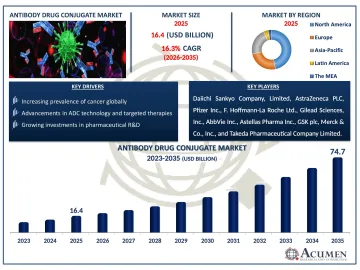
The global antibody drug conjugate market size was valued at $16.4 billion in 2025. The market is projected to reach $74.7 billion by 2035 from $19.2 billion in 2026, expanding at a CAGR of 16.3% during the forecast period from 2026 to 2035. Antibody drug conjugates (ADCs) have become one of the fastest-growing classes of cancer therapeutics. Growth of the antibody drug conjugates market is being driven by a run of new approvals and label expansions, the move of ADCs from late-line into first-line and early-stage disease, the success of topoisomerase I inhibitor payloads such as deruxtecan, and record levels of licensing and M&A activity. As of mid-2026, 23 ADCs had received regulatory approval worldwide, and hundreds more are in clinical development across solid tumors and blood cancers.
- Base Year Market Size (2025): $16.4 billion
- Current Year Market Size (2026): $19.2 billion
- Estimated Year Market Size (2035): $74.7 billion
- Forecast Period CAGR (2026-2035): 16.3%
Key Takeaways
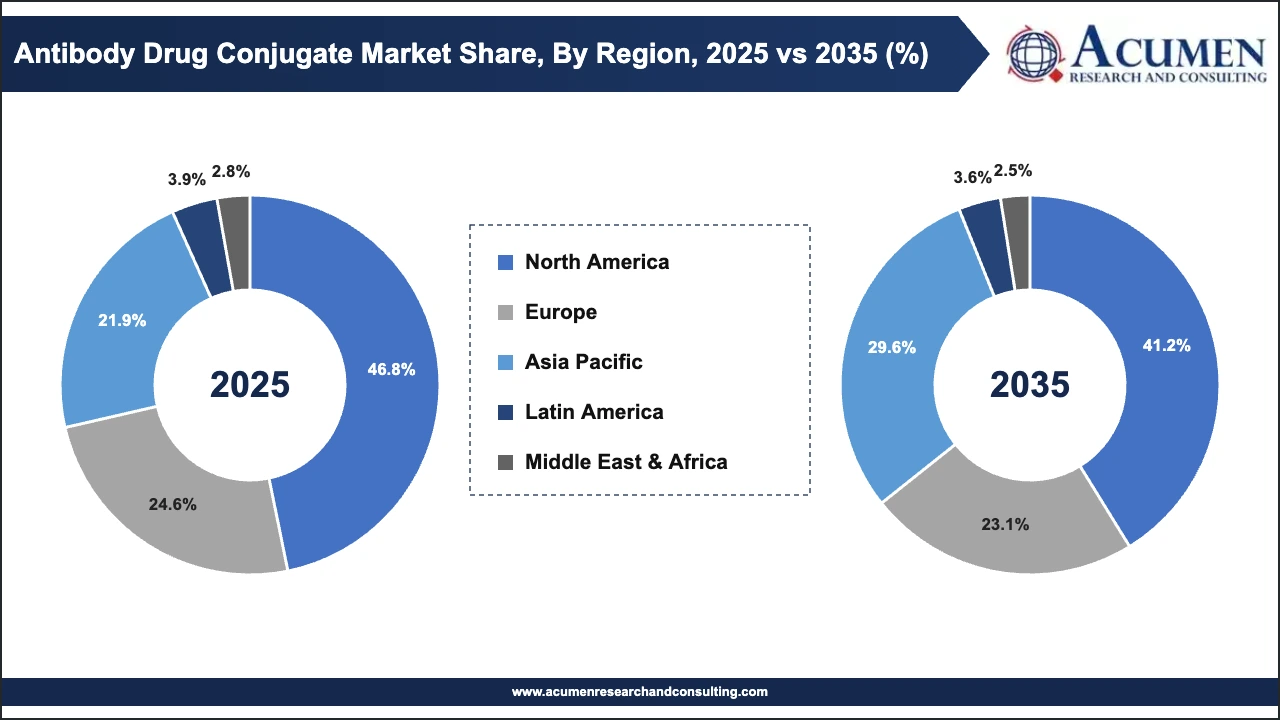
- By region: North America dominated the antibody drug conjugate market with a 46.8% share in 2025, generating USD 7.7 billion in revenue, supported by early access to new ADCs, broad reimbursement, and the largest concentration of ADC clinical trials.
- By region: Asia-Pacific is the fastest-growing region, with a projected CAGR of 20.2% from 2026 to 2035, driven by China's rapidly expanding ADC pipeline, faster local approvals, and wider access to HER2- and TROP2-directed therapies in China, Japan, and South Korea.
- By product: Enhertu (trastuzumab deruxtecan) led the product segment with a 30.4% share in 2025, making it the highest-selling ADC, with combined global sales of nearly USD 5.0 billion.
- By target antigen: HER2-directed ADCs accounted for 43.5% of the market in 2025, while TROP2-directed ADCs are expected to grow the fastest, at a CAGR of 26.2% from 2026 to 2035.
- By payload: Topoisomerase I inhibitor payloads (DXd and SN-38) held the largest share at 40.6% in 2025, and their share is expected to rise to 55.3% by 2035 as most new ADCs adopt this payload class.
- By linker: Cleavable linkers accounted for 86.4% of revenue in 2025, reflecting their use in nearly all recently approved ADCs.
- By application: Breast cancer was the largest application with a 46.2% share in 2025, while lung cancer is the fastest-growing indication, with a CAGR of about 31% from 2026 to 2035.
- By end user: Hospitals accounted for 61.8% of the market in 2025, as ADCs are infused intravenously under specialist supervision.
Antibody Drug Conjugate Market Overview: What Is an Antibody Drug Conjugate?
An antibody drug conjugate is a targeted cancer medicine made of three parts: a monoclonal antibody that binds to a protein (antigen) found mainly on tumor cells, a highly potent cytotoxic drug called the payload, and a chemical linker that joins the two. The antibody carries the payload to the tumor, the ADC is taken up inside the cancer cell, and the linker releases the payload, which then kills the cell. Because the toxic drug is delivered mostly to tumor cells rather than throughout the body, ADCs can use payloads that would be far too toxic to give as conventional chemotherapy.
Three design choices determine how well an ADC works:
- Target antigen: The antigen must be highly expressed on tumor cells and low on healthy tissue. HER2, TROP2, Nectin-4, CD30, CD22, CD33, CD79b, BCMA, FRα, c-Met, Tissue Factor, and CD123 are the targets of approved ADCs.
- Linker: Cleavable linkers (peptide, hydrazone, or disulfide) release the payload inside the cell and can also kill nearby tumor cells through the "bystander effect." Non-cleavable linkers release the payload only after the antibody is broken down, which can improve stability.
- Payload and drug-to-antibody ratio (DAR): Payloads include microtubule inhibitors (MMAE, MMAF, DM1, DM4), topoisomerase I inhibitors (deruxtecan/DXd, SN-38), DNA-damaging agents (calicheamicin, PBD dimers), and newer classes. The DAR, which is the number of payload molecules per antibody, ranges from about 2 to 8 and shapes both potency and safety.
ADCs are now part of standard care in breast, bladder, lung, ovarian, cervical, and gastric cancers as well as several lymphomas, leukemias, and multiple myeloma. The class is moving from treatments for patients who have run out of options to earlier lines of therapy and combinations with immunotherapy, which greatly expands the number of patients eligible for treatment.
FDA-Approved Antibody Drug Conjugates: How Many Are There?
The U.S. Food and Drug Administration (FDA) has approved 16 ADCs, and 23 ADCs have been approved worldwide when products approved only in China and products later withdrawn are included. The table below lists the main approved ADCs and their design.
| ADC (Brand) | Company | Target | Payload | First FDA Approval | Key Indications |
|---|---|---|---|---|---|
| Gemtuzumab ozogamicin (Mylotarg) | Pfizer | CD33 | Calicheamicin | 2000; 2017 | Acute myeloid leukemia |
| Brentuximab vedotin (Adcetris) | Pfizer / Takeda | CD30 | MMAE | 2011 | Hodgkin lymphoma, T-cell lymphomas |
| Trastuzumab emtansine (Kadcyla) | Roche | HER2 | DM1 | 2013 | HER2-positive breast cancer |
| Inotuzumab ozogamicin (Besponsa) | Pfizer | CD22 | Calicheamicin | 2017 | B-cell acute lymphoblastic leukemia |
| Polatuzumab vedotin (Polivy) | Roche | CD79b | MMAE | 2019 | Diffuse large B-cell lymphoma |
| Enfortumab vedotin (Padcev) | Astellas / Pfizer | Nectin-4 | MMAE | 2019 | Urothelial (bladder) cancer |
| Trastuzumab deruxtecan (Enhertu) | Daiichi Sankyo / AstraZeneca | HER2 | DXd | 2019 | HER2-positive, HER2-low and HER2-ultralow breast cancer; gastric, lung, and HER2-positive solid tumors |
| Sacituzumab govitecan (Trodelvy) | Gilead Sciences | TROP2 | SN-38 | 2020 | Triple-negative and HR+/HER2- breast cancer |
| Belantamab mafodotin (Blenrep) | GSK | BCMA | MMAF | 2020; re-approved 2025 | Relapsed or refractory multiple myeloma |
| Loncastuximab tesirine (Zynlonta) | ADC Therapeutics | CD19 | PBD dimer | 2021 | Diffuse large B-cell lymphoma |
| Tisotumab vedotin (Tivdak) | Genmab / Pfizer | Tissue Factor | MMAE | 2021 | Cervical cancer |
| Mirvetuximab soravtansine (Elahere) | AbbVie | FRα | DM4 | 2022 | Platinum-resistant ovarian cancer |
| Datopotamab deruxtecan (Datroway) | Daiichi Sankyo / AstraZeneca | TROP2 | DXd | 2025 | HR+/HER2- breast cancer, EGFR-mutated NSCLC, triple-negative breast cancer |
| Telisotuzumab vedotin (Emrelis) | AbbVie | c-Met | MMAE | 2025 | c-Met-overexpressing non-small cell lung cancer |
| Pivekimab sunirine (Decnupaz) | AbbVie | CD123 | DNA alkylating agent | 2026 | Blastic plasmacytoid dendritic cell neoplasm |
Moxetumomab pasudotox (Lumoxiti), approved in 2018 for hairy cell leukemia, was later withdrawn from the U.S. market. Several ADCs, including disitamab vedotin, sacituzumab tirumotecan, trastuzumab rezetecan, and the first bispecific ADC, izalontamab brengitecan, are approved in China.
Recent Trends
- Move into first-line and early-stage disease: Padcev plus pembrolizumab is now a first-line standard in advanced bladder cancer and, since November 2025, is approved around surgery for muscle-invasive bladder cancer in cisplatin-ineligible patients. In May 2026, Enhertu received two approvals in HER2-positive early-stage breast cancer, and in June 2026, Trodelvy was approved for first-line triple-negative breast cancer.
- Topoisomerase I inhibitor payloads dominate new development: The success of deruxtecan (DXd) and SN-38 has made topoisomerase I inhibitors the most common payload in new clinical programs, replacing the microtubule inhibitors used in earlier ADCs.
- Rise of bispecific and dual-payload ADCs: Developers are combining two targets (such as EGFR/HER3 or TROP2/HER3) or two payloads in one molecule to overcome tumor heterogeneity and resistance. China approved the first bispecific ADC, izalontamab brengitecan, in 2026.
- China becomes a major source of innovation: Chinese companies now originate a large share of new ADC candidates and are licensing them to global drug makers through multi-billion-dollar deals.
- Biomarker-defined, tumor-agnostic use: Enhertu's tumor-agnostic approval for HER2-positive (IHC 3+) solid tumors and the use of HER2-low and HER2-ultralow categories are increasing the role of companion diagnostics in ADC treatment decisions.
- New indications beyond cancer: Early-stage programs are testing ADCs with immune-modulating payloads (such as glucocorticoid receptor modulators) for autoimmune and inflammatory diseases.
AI in Antibody Drug Conjugate Development
Artificial intelligence is being used across the ADC development process. Machine learning models help identify tumor-specific antigens from genomic and proteomic data, predict antibody internalization, and design linkers and payloads with better stability. AI tools are also used to model the drug-to-antibody ratio and conjugation sites, predict toxicities such as interstitial lung disease and eye toxicity, and select patients through digital pathology that measures target expression more precisely than manual scoring. Companies including AstraZeneca have developed AI-based quantitative scoring of TROP2 expression to select patients for TROP2-directed ADCs. These tools are expected to shorten discovery timelines and raise success rates in clinical trials, supporting the wider drug discovery shift toward data-driven design.
Investment Outlook: Where Is ADC Capital Flowing?
ADCs have become the most actively acquired asset class in oncology. Large pharmaceutical companies are paying high prices for late-stage assets and for platforms that provide new linkers, payloads, and conjugation chemistry. Key transactions include:
| Year | Deal | Value | Strategic Rationale |
|---|---|---|---|
| 2023 | Pfizer acquires Seagen | About USD 43 billion | Added Adcetris, Padcev, Tivdak, and a deep ADC pipeline |
| 2023 | Merck & Co. and Daiichi Sankyo collaboration | Up to USD 22 billion | Co-development of three DXd ADCs |
| 2024 | AbbVie acquires ImmunoGen | About USD 10.1 billion | Added Elahere and a pipeline of FRα- and CD123-directed ADCs |
| 2024 | Johnson & Johnson acquires Ambrx | About USD 2.0 billion | Site-specific conjugation platform |
| 2024 | Genmab acquires ProfoundBio | USD 1.8 billion | Next-generation FRα-directed ADC |
| April 2026 | Gilead to acquire Tubulis | USD 3.15 billion upfront, up to USD 1.85 billion in milestones | NaPi2b-targeted ADC for ovarian cancer and next-generation linker-payload platform |
| July 2026 | Novartis acquires Myricx Bio | Undisclosed | Novel NMT-inhibitor ADC payload platform |
| August 2026 | Pathos AI licenses JSKN016 from Alphamab Oncology | Up to USD 2.2 billion | First-in-class TROP2/HER3 bispecific ADC |
| August 2026 | Genentech and DualityBio collaboration | About USD 1.0 billion | Next-generation ADCs with novel payloads |
Capital is also flowing into manufacturing. ADCs require high-potency containment, conjugation suites, and specialized analytics, which is driving capacity investments by biologics CDMOs and dedicated ADC manufacturers in the United States, Europe, China, and Singapore. Between 2026 and 2035, investment is expected to focus on bispecific and dual-payload ADCs, payloads with new mechanisms of action, ADCs for early-stage cancer, and combinations with immunotherapy.
Regulatory and Policy Landscape
| Region | Agency / Framework | Impact on ADCs |
|---|---|---|
| United States | FDA (CDER, Oncology Center of Excellence) | Accelerated approval, breakthrough therapy, and priority review shorten time to market. Project Optimus requires dose optimization before approval, and FDA guidance sets clinical pharmacology expectations for ADCs, including assessment of the antibody, the conjugate, and the free payload. |
| European Union | EMA | PRIME designation and conditional marketing authorization support early access. Health technology assessment under the EU HTA Regulation adds joint clinical assessments for new cancer medicines. |
| China | NMPA | Breakthrough therapy and priority review pathways have made China the second-largest source of ADC approvals, with several ADCs approved locally before anywhere else. |
| Japan | PMDA / MHLW | Sakigake and conditional early approval schemes support fast access, and Japan is home to leading ADC developers such as Daiichi Sankyo and Astellas. |
| Global | ICH S9, ICH Q5/Q6B, occupational safety rules | Define nonclinical and quality requirements for anticancer biologics and conjugates, while high-potency payloads require strict containment during manufacturing. |
| United States | Inflation Reduction Act | Medicare price negotiation for biologics after 13 years on the market may affect the lifetime revenue of older ADCs, encouraging lifecycle investment in new indications. |
Antibody Drug Conjugate Market Dynamics
Growth Drivers
Rising cancer burden and the need for targeted therapies: Cancer cases are rising globally as populations age, and there is a strong need for treatments that are more effective and better tolerated than conventional chemotherapy. ADCs offer targeted delivery of potent drugs, which has made them a growing part of the precision medicine approach in oncology.
Strong clinical results and steady label expansion: ADCs have repeatedly shown better survival than standard care in large phase III trials. Each new approval in an earlier line of therapy or a new cancer type increases the number of eligible patients and the length of treatment, which supports rapid revenue growth for leading products such as Enhertu, Padcev, Trodelvy, and Datroway.
Record regulatory support: The FDA granted a record 63 review designations, such as breakthrough therapy and fast track, to ADCs in 2024, nearly double the previous high. This regulatory support shortens development timelines and brings new ADCs to patients faster.
Restraints
Toxicity and safety management: ADCs can cause serious side effects, including interstitial lung disease with deruxtecan-based ADCs, eye toxicity with MMAF and DM4 payloads, peripheral neuropathy and skin reactions with MMAE, and blood-related toxicity. Managing these risks requires monitoring and dose changes, and some ADCs, such as Blenrep, are available only through restricted programs.
High cost and complex manufacturing: ADCs are among the most expensive cancer medicines, and their production requires antibody manufacturing, payload synthesis, and conjugation under high-potency containment. These costs limit access in many lower-income countries.
Opportunities
Next-generation formats: Bispecific ADCs, dual-payload ADCs, site-specific conjugation, and new payload classes offer a way to treat tumors that have become resistant to existing ADCs. Combinations with immune checkpoint inhibitors and bispecific antibodies are another major opportunity.
Expansion into new tumor types and non-cancer diseases: Lung, gastrointestinal, prostate, and head and neck cancers, along with autoimmune diseases, represent large patient populations where ADCs are only beginning to be used.
Challenges
Crowded targets and competition: Many ADCs in development target HER2 and TROP2, which creates intense competition and pressure on prices. Developers must show clear advantages over approved ADCs to gain share.
Resistance and biomarker selection: Tumors can become resistant to ADCs through loss of target expression or changes in payload sensitivity. Selecting the right patients with reliable biomarker tests remains a challenge, especially for low-expression categories such as HER2-ultralow.
Antibody Drug Conjugate Market Segmental Insights
Product Insights
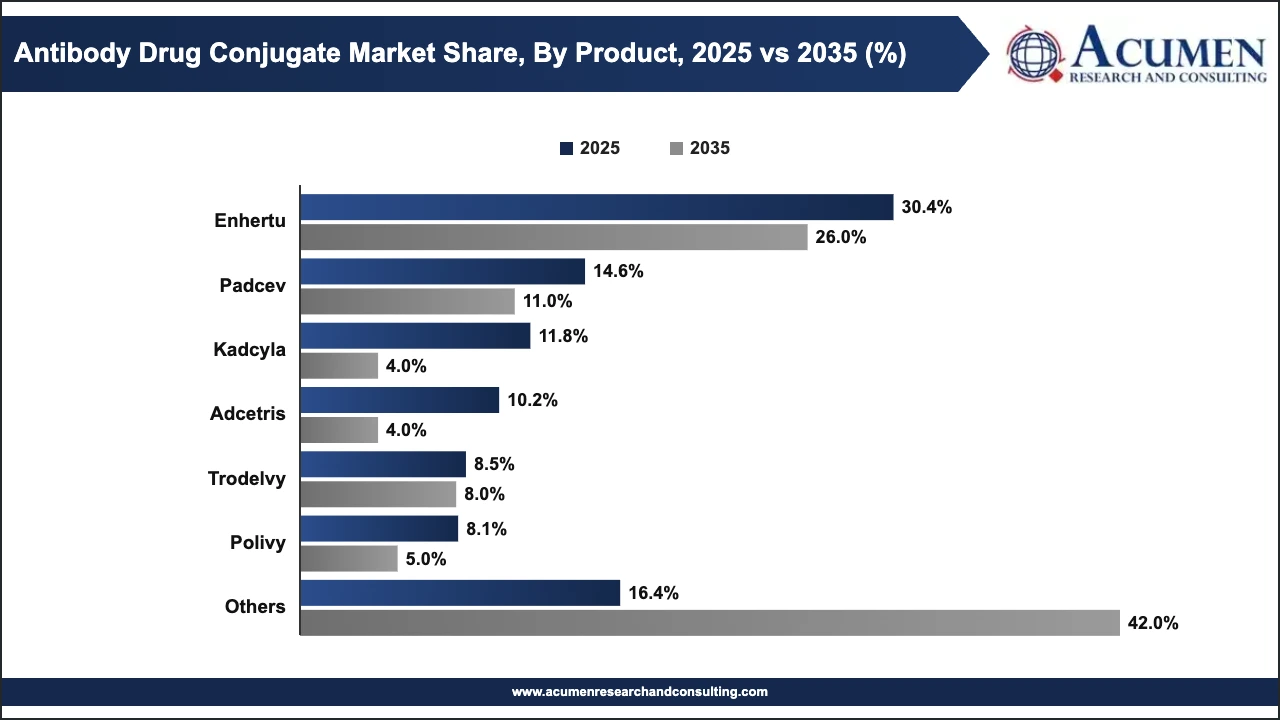
Which ADC has the highest sales? Enhertu (trastuzumab deruxtecan) is the highest-selling ADC, with a 30.4% share of the market in 2025. Combined sales recorded by Daiichi Sankyo and AstraZeneca reached about USD 5.0 billion in 2025, up from about USD 3.8 billion in 2024, supported by its use in HER2-positive, HER2-low, and HER2-ultralow breast cancer, gastric cancer, and lung cancer.
Padcev (enfortumab vedotin) held the second-largest share at 14.6% in 2025, driven by its combination with pembrolizumab in first-line and perioperative bladder cancer. Pfizer reported Padcev sales of USD 1.94 billion in 2025, up 22% from the previous year. Kadcyla, Adcetris, Trodelvy, and Polivy followed, while the others segment, which includes Datroway, Elahere, Blenrep, Emrelis, and newer approvals, is expected to grow the fastest and reach 42.0% of the market by 2035.
| Product | Share 2025 (%) | Share 2035 (%) |
|---|---|---|
| Enhertu | 30.4 | 26.0 |
| Padcev | 14.6 | 11.0 |
| Kadcyla | 11.8 | 4.0 |
| Adcetris | 10.2 | 4.0 |
| Trodelvy | 8.5 | 8.0 |
| Polivy | 8.1 | 5.0 |
| Others (Datroway, Elahere, Blenrep, Emrelis, pipeline ADCs) | 16.4 | 42.0 |
Target Antigen Insights
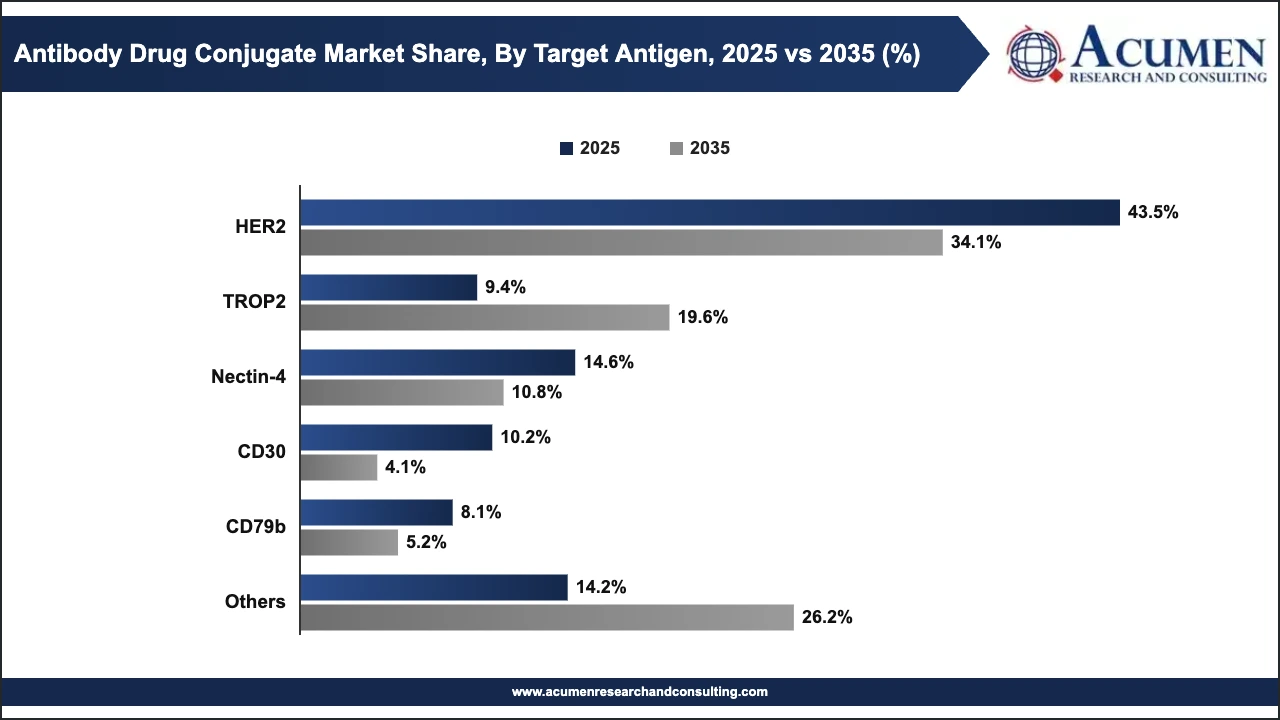
HER2 was the leading target antigen with a 43.5% share in 2025, supported by Enhertu and Kadcyla. TROP2 is the fastest-growing target, with a CAGR of 26.2% from 2026 to 2035, as Trodelvy and Datroway expand into first-line breast cancer and lung cancer and as several TROP2 ADCs developed in China reach global markets. Nectin-4, CD30, and CD79b remain important targets, while the others segment, including FRα, c-Met, BCMA, B7-H3, CDH6, HER3, and Claudin 18.2, is expected to grow rapidly as new ADCs are approved.
Payload Insights
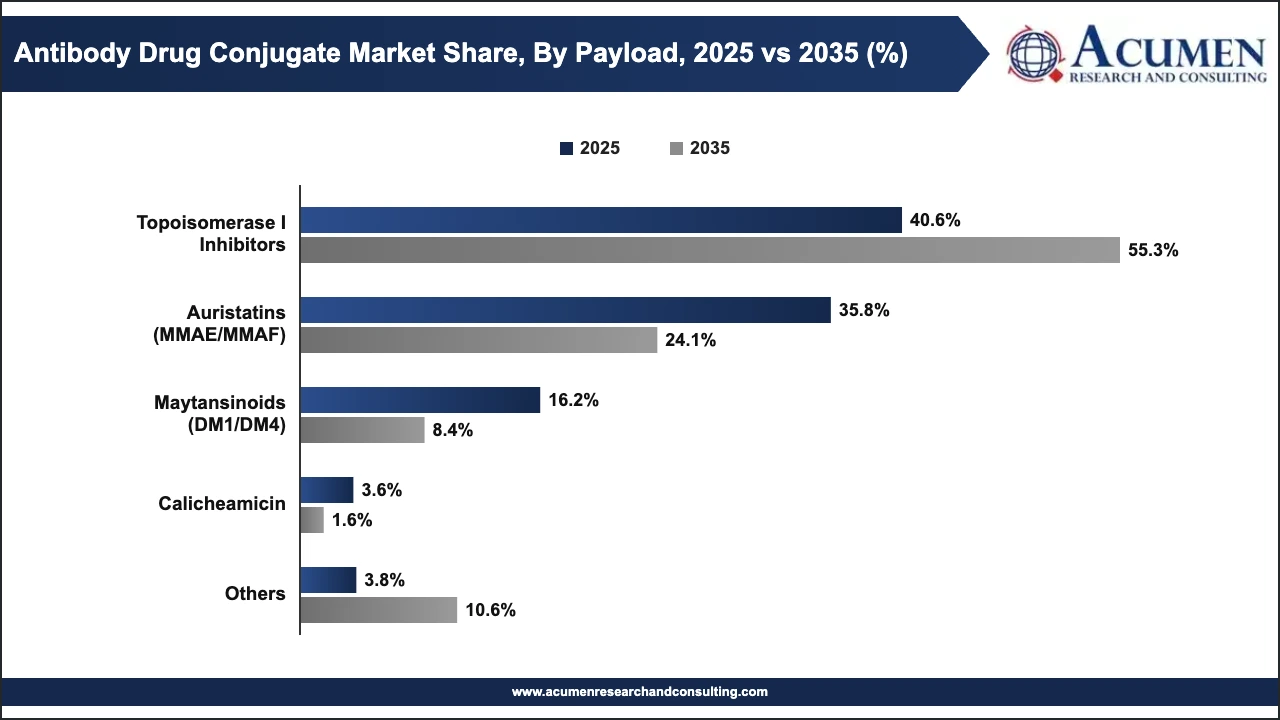
Topoisomerase I inhibitors (DXd and SN-38) accounted for the largest share at 40.6% in 2025 and are expected to reach 55.3% by 2035, growing at a CAGR of 20.4%. These payloads are effective even in tumors with low or uneven target expression because of their strong bystander effect. Auristatins (MMAE and MMAF) held 35.8% of the market in 2025, supported by Padcev, Adcetris, Polivy, Tivdak, Blenrep, and Emrelis. Maytansinoids (DM1 and DM4), calicheamicin, and other payloads, including PBD dimers, DNA alkylating agents, and immune-stimulating payloads, made up the rest.
Linker Insights
Cleavable linkers accounted for 86.4% of the market in 2025, as most approved ADCs, including Enhertu, Padcev, Trodelvy, and Datroway, use cleavable peptide or other linkers that support the bystander effect. Non-cleavable linkers held 13.6%, mainly through Kadcyla and Blenrep, and are valued for their stability in circulation.
Application Insights
| Application | Share 2025 (%) | Outlook |
|---|---|---|
| Breast Cancer | 46.2 | Largest segment, supported by HER2- and TROP2-directed ADCs in first-line, early-stage, and later-line disease |
| Blood Cancers (lymphoma, leukemia, multiple myeloma) | 24.8 | Steady growth from Polivy, Adcetris, Blenrep, and Decnupaz; see the lymphoma treatment outlook |
| Urothelial Cancer | 14.6 | Padcev plus pembrolizumab now used from early-stage to metastatic disease |
| Ovarian Cancer | 4.5 | Elahere and new FRα, CDH6, and NaPi2b ADCs |
| Lung Cancer | 3.9 | Fastest-growing, with a CAGR of about 31%, driven by Datroway, Enhertu, Emrelis, and TROP2 and B7-H3 ADCs in development |
| Others (gastric, cervical, other solid tumors) | 6.0 | Supported by tumor-agnostic HER2 use and Tivdak in cervical cancer |
End User and Distribution Channel Insights
Hospitals held a 61.8% share in 2025 because ADCs are given as intravenous infusions that require monitoring for infusion reactions and other side effects. Specialty cancer centers accounted for 28.7% and are growing quickly as more patients are treated in outpatient infusion settings. By distribution channel, hospital pharmacies dominated with a 72.4% share, while specialty pharmacies are gaining share as payers shift oncology drugs to specialty distribution.
Antibody Drug Conjugate Market Regional Insights
Why Does North America Lead ADC Revenue?
North America held a 46.8% share of the antibody drug conjugate market in 2025, generating USD 7.7 billion in revenue, and is expected to reach USD 30.8 billion by 2035. The region benefits from early FDA approvals, high use of new cancer therapies, broad insurance coverage, and the largest number of ADC clinical trials. The United States accounts for most of the region's revenue: U.S. in-market sales of Enhertu alone reached about USD 2.4 billion in 2025.
U.S. Antibody Drug Conjugate Market Outlook
The United States is the single largest country market for ADCs. Growth is driven by first-line approvals in breast and bladder cancer, new lung cancer indications, and fast uptake through community oncology practices. The U.S. is also the base for most global ADC deals and for growing domestic ADC manufacturing capacity.
Why Is Asia-Pacific the Fastest-Growing Region?
Asia-Pacific is projected to grow at a CAGR of 20.2% from 2026 to 2035 and reach USD 22.1 billion by 2035. China has the world's second-largest ADC pipeline and has approved several ADCs locally, including the first bispecific ADC. Japan is home to Daiichi Sankyo, the developer of the DXd platform, and Astellas, the co-developer of Padcev. Rising cancer incidence, inclusion of ADCs in national reimbursement lists, and expanding local manufacturing are supporting growth across the region.
Europe and Other Regions
Europe accounted for 24.6% of the market in 2025, led by Germany, France, the U.K., Italy, and Spain, where ADCs are being added to national treatment guidelines after health technology assessment. Latin America and the Middle East & Africa held smaller shares but are expected to grow steadily as access programs and approvals in Brazil, Mexico, Saudi Arabia, and the UAE expand.
Value Chain Analysis
- Target discovery and antibody engineering: Identifying tumor-specific antigens and engineering antibodies with good internalization, often using antibody production platforms.
- Linker and payload development: Proprietary linker-payload platforms such as DXd, vedotin (MMAE), and newer topoisomerase and novel payloads are a key source of value and licensing revenue.
- Clinical development: Phase I to III trials, biomarker and companion diagnostic development, and dose optimization.
- Manufacturing: Antibody production, high-potency payload synthesis, conjugation, purification, and fill-finish, often outsourced to specialized CDMOs.
- Commercialization: Regulatory approval, pricing and reimbursement, distribution through hospital and specialty pharmacies, and patient support programs.
Top Companies
The antibody drug conjugate market is led by a group of large pharmaceutical companies with approved ADCs, alongside a growing number of biotech companies, many based in China, with strong pipelines. Key companies include:
| Company | Key Approved ADCs | Pipeline / Platform Focus |
|---|---|---|
| Daiichi Sankyo / AstraZeneca | Enhertu, Datroway | DXd platform; HER3, B7-H3, and CDH6 ADCs (with Merck & Co.) |
| Pfizer | Padcev, Adcetris, Tivdak, Mylotarg, Besponsa | Sigvotatug vedotin (integrin beta-6) and other vedotin ADCs |
| F. Hoffmann-La Roche (Genentech) | Kadcyla, Polivy | Next-generation ADCs, including a DualityBio collaboration |
| Gilead Sciences | Trodelvy | Tubulis NaPi2b ADC and next-generation payload platform |
| AbbVie | Elahere, Emrelis, Decnupaz | c-Met, FRα, and CD123-directed ADCs |
| Astellas Pharma | Padcev (co-developed) | New ADCs in solid tumors |
| GSK | Blenrep | B7-H3 and B7-H4 ADCs |
| Merck & Co. | Partnered DXd ADCs | Sacituzumab tirumotecan (with Kelun-Biotech) |
| Johnson & Johnson | - | Site-specific ADCs from Ambrx |
| ADC Therapeutics | Zynlonta | PBD-based ADCs in lymphoma |
Other notable companies include Takeda Pharmaceutical, Genmab, Sichuan Kelun-Biotech, RemeGen, Jiangsu Hengrui, Sichuan Biokin, DualityBio, MediLink Therapeutics, Sutro Biopharma, and Byondis.
Recent Breakthroughs
- In June 2026, the FDA approved Trodelvy (sacituzumab govitecan) for two indications in adults with triple-negative breast cancer, including first-line treatment.
- In May 2026, the FDA approved pivekimab sunirine (Decnupaz) from AbbVie, a CD123-directed ADC, for blastic plasmacytoid dendritic cell neoplasm, the first ADC for this rare blood cancer.
- In May 2026, the FDA approved Datroway (datopotamab deruxtecan) for unresectable or metastatic triple-negative breast cancer in patients who are not candidates for PD-1/PD-L1 inhibitors, and approved Enhertu for two indications in HER2-positive early-stage breast cancer.
- In April 2026, Gilead Sciences agreed to acquire Tubulis for USD 3.15 billion upfront plus up to USD 1.85 billion in milestones, adding a NaPi2b-targeted ADC for ovarian cancer.
- In November 2025, the FDA approved Padcev plus pembrolizumab as neoadjuvant and adjuvant treatment for muscle-invasive bladder cancer.
- In October 2025, the FDA approved Blenrep (belantamab mafodotin) with bortezomib and dexamethasone for relapsed or refractory multiple myeloma, returning the BCMA-directed ADC to the U.S. market.
- In June 2025, Datroway received accelerated approval for EGFR-mutated non-small cell lung cancer, and in May 2025, AbbVie's Emrelis became the first c-Met-directed ADC approved for lung cancer.
Segments Covered
By Product
- Enhertu (trastuzumab deruxtecan)
- Padcev (enfortumab vedotin)
- Kadcyla (trastuzumab emtansine)
- Adcetris (brentuximab vedotin)
- Trodelvy (sacituzumab govitecan)
- Polivy (polatuzumab vedotin)
- Others (Datroway, Elahere, Blenrep, Zynlonta, Tivdak, Besponsa, Mylotarg, Emrelis, Decnupaz)
By Target Antigen
- HER2
- TROP2
- Nectin-4
- CD30
- CD79b
- Others (CD22, CD33, CD19, BCMA, FRα, c-Met, Tissue Factor, CD123)
By Payload
- Topoisomerase I Inhibitors (DXd, SN-38)
- Auristatins (MMAE, MMAF)
- Maytansinoids (DM1, DM4)
- Calicheamicin
- Others (PBD dimers, DNA alkylating agents)
By Linker Type
- Cleavable Linker
- Non-Cleavable Linker
By Application
- Breast Cancer
- Blood Cancers
- Urothelial Cancer
- Lung Cancer
- Ovarian Cancer
- Others
By End User
- Hospitals
- Specialty Cancer Centers
- Others
By Distribution Channel
- Hospital Pharmacies
- Specialty Pharmacies
- Others
By Region
- North America (U.S., Canada)
- Europe (Germany, France, U.K., Italy, Spain, Rest of Europe)
- Asia-Pacific (China, Japan, India, South Korea, Australia, Rest of Asia-Pacific)
- Latin America (Brazil, Mexico, Rest of Latin America)
- Middle East & Africa (GCC, South Africa, Rest of Middle East & Africa)
Looking for discounts, bulk pricing, or custom solutions? Contact us today at sales@acumenresearchandconsulting.com
Frequently Asked Questions

Related Market Research Reports
September 2024
June 2024
August 2023
August 2023
June 2022
June 2022
April 2022
April 2021