
Alternative Fuel Engine Market Size, Share, Forecast 2026 To 2035
Alternative Fuel Engine Market (By Fuel Type: CNG Engines, Electric Engines, Hydrogen Engines, LNG) Engines, Biodiesel Engines, Ethanol/Methanol Engines, Hybrid Engines, Others; By Engine Type: ICE, Fuel Cell Engines, Hybrid Engines, Spark-Ignition Engines, Compression-Ignition Engines, Others; By Application: On-Road Vehicles, Power Generation, Off-Road Vehicles, Marine & Shipping, Others; By End User: Automotive OEMs, Commercial Vehicle Manufacturers, Power Generation Companies, Industrial Equipment Manufacturers, Others) - Global Industry Analysis, Size, Share, Analysis, Trends and Forecast 2026 - 2035
- Last Updated: 06 Jan 2026
- Report Code: ARC3887
- Category: Automotive And Transportation
Alternative Fuel Engine Market Size and Forecast 2026 - 2035
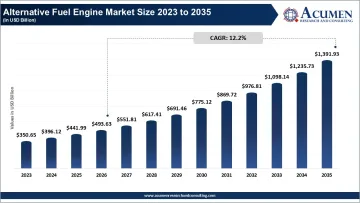
The global alternative fuel engine market size was valued at USD 441.99 billion in 2025 and is projected to reach USD 1,391.93 billion by 2035, expanding at a compound annual growth rate (CAGR) of 12.2% during the forecast period from 2026 to 2035.
Report Highlights
- In 2025 Asia Pacific will be the largest region accounting for more than 39% of revenue in alternative fuel engines.
- North America is projected to register the fastest CAGR of 14.9% from 2026 to 2035 for alternative fuel engine market.
- By fuel type, CNG engines currently have the largest market share of, representing 36% of the total alternative fuel engine market.
- By engine type, internal combustion engines (ICE) dominate the market, holding 52% market share, following fuel cell engines represent the share 16%.
- By end user, automotive OEMs is the largest end use market for alternative fuel engines, holding a total of 38% share in 2025, followed by power generation companies, which hold approximately 18% of the market share.
Alternative Fuel Engine Market Overview
The growth of the alternative fuel engine market is driven by the increasingly strict global emissions regulations and the increasing number of government initiatives to reduce carbon footprints. Governments around the world are also implementing strict fuel economy and emissions standards to encourage auto makers and Industries to move from conventional combustion engines towards cleaner alternatives, such as compressed natural gas (CNG), liquefied natural gas (LNG), hydrogen, biofuels, and hybrid vehicles instead of continuing to rely on traditional internal combustion engine technology. In addition, increased volatility of petroleum prices has motivated many industries to convert to alternative fuel engines to reduce overall operational expenses, provide a stable energy source, and minimize their environmental footprint. Also, government incentives such as tax credits and subsidies for alternative fuel vehicles and infrastructure help to expand market growth.
Another significant reason for the market growth is the rapid advancement of engine and fuel technology, including improvements in fuel economy, increased engine durability, and enhancements to the performance of alternative fuel systems. Growth of investment in, hydrogen fuel infrastructure, electric-hybrid powertrains, and technology related to fuel cells has accelerated and will continue growing within the automotive, power generation, and industrial markets. Moreover, the use of alternative fuel engine solutions continues to grow in commercial vehicles, public transportation, off-road equipment, and distributed power generation, resulting in expanding the overall market reach. Likewise, an increase in both consumer and corporate environmental awareness through the development of sustainability goals will continue to support the long-term trend of increased acceptance and use of alternative fuel engine technology.
Alternative Fuel Engine Market Dynamics
Market Drivers
Stringent Emission Regulations and Climate Policies
- The increased enforcement of stricter emissions requirements and regulations regarding climate policy is a major driver of growth in the alternative fuel engine market. The governments across the globe are beginning to implement more stringent emissions limits, carbon reduction goals, and fuel efficiency mandates to reduce environmental pollution and climate change. Additionally, these regulation engaged in automotive manufacturing, industrial processes, and electric power generation are shift from conventional fuel-powered engines to alternative fuel technologies such as compressed natural gas (CNG), liquified natural gas (LNG), hydrogen fuel cells, and bio-fuels to achieve compliance with these regulatory regimes.
Rising Fuel Costs and Energy Security Concerns
- The changes in the price of crude oil and increasing reliance upon fossil fuel imports are significantly driving the adoption of alternative fuel engines. Alternative fuels can provide stable prices as well as potential long-term savings compared to current petroleum-based fuels. Many nations are focusing on increasing the utilization of locally produced fuels such as natural gas, biofuels, and renewable electricity to promote energy independence and achieve economic benefits through improved energy security, which in turn will increase the need for these technologies across a range of industrial sectors.
Market Restraints
High Initial Investment and Limited Infrastructure Availability
- The rapid technological progress in hydrogen engines and fuel cell systems presents significant growth opportunities for the market. The advanced engine systems used, together with the specific component systems and safety features, all contribute to the greater initial costs of alternative fuel engine systems compared to traditional fossil fuel-based engines. Additionally, the limited number of fueling infrastructures that support hydrogen, LNG, and electric fuel technologies restricts large-scale adoption of alternative fuel engines, especially in less developed regions. As a result, these factors will slow the growth of the alternative fuel engine market.
Technical Complexity and Operational Challenges
- Alternative fuel powered engines face many technical challenges with regard to fuel storage, engine optimization, and operating efficiencies. Hydrogen engines require state-of-the-art storage and safety systems, while bio-fuel engines may experience compatibility challenges. Additionally, a limited pool of qualified technicians and a lack of appropriately designed maintenance facilities may lead to increased servicing costs and longer periods of operation with no service interruptions. These technical and labour related obstacles to the development of engines using alternative fuels limit the rate of adoption in many different sectors using the engines for their respective end uses.
Market Opportunities
Advancements in Hydrogen and Fuel Cell Engine Technologies
- The rapid advancement of hydrogen technology and fuel cell systems has created a substantial opportunity for growth within the market. The investments in green hydrogen production are expanding and supported by both government funding initiatives and sustainability activities, which are providing a more cost-effective and scalable way to produce green hydrogen. Hydrogen-based fuel cell engines produce almost no greenhouse gas emissions and have exceptional efficiency when compared to gasoline-powered engines. As a result, they are very appealing for use in heavy-duty vehicles, buses, and many other types of transportation, and they will continue to create future growth opportunities for the market.
Expanding Adoption in Commercial Vehicles and Power Generation
- The increasing emphasis on clean transportation and decentralized energy systems is creating strong opportunities for alternative fuel engines market in commercial vehicles and power generation. Fleet operators in logistics, public transport, and industry have begun adopting compressed natural gas, liquefied natural gas, and hybrid-powered engines to reduce emissions and costs associated with using fossil fuels. This increasing range of applications, as well as the increased focus on sustainability, has created a situation where the market for these products will continue to grow on a global level for many years into the future.
Alternative Fuel Engine Market Report Scope
| Attribute | Details |
|---|---|
| Alternative Fuel Engine Market Size 2025 | USD 441.99 Billion |
| Alternative Fuel Engine Market Forecast 2035 | USD 1391.93 Billion |
| Alternative Fuel Engine Market CAGR During 2026 - 2035 | 12.2% |
| Analysis Period | 2023 - 2035 |
| Base Year | 2025 |
| Forecast Data | 2026 - 2035 |
| Segments Covered | By Fuel Type, By Engine Type, By Application, By End Use, and By Geography |
| Regional Scope | North America, Europe, Asia Pacific, Latin America, and Middle East & Africa |
| Key Companies Profiled | Cummins Inc., General Motors Company, Ford Motor Company, Daimler AG, Volvo Group, Hyundai Motor Company, Toyota Motor Corporation, Honda Motor Co., Ltd., MAN Energy Solutions, Caterpillar Inc., PACCAR Inc., and Hino Motors Ltd. |
| Report Coverage | Market Trends, Drivers, Restraints, Competitive Analysis, Player Profiling, Covid-19 Analysis, Regulation Analysis |
Alternative Fuel Engine Market Regional Analysis
The Asia Pacific region dominates the alternative fuel engine market, driven by accelerated urbanization, an increase in automotive manufacturing, and government support for the introduction of cleaner fuels. The countries of China, India, and Japan are making massive investments into the development of vehicles that use CNG, LNG, hybrid, and electric engines to reduce the impact of air pollution through their reliance on fossil fuels. The establishment of large-scale public transportation systems, increased numbers of commercial vehicles, and favorable government policies that promote the use of alternative fuels have led to the positioning of the Asia-Pacific region.
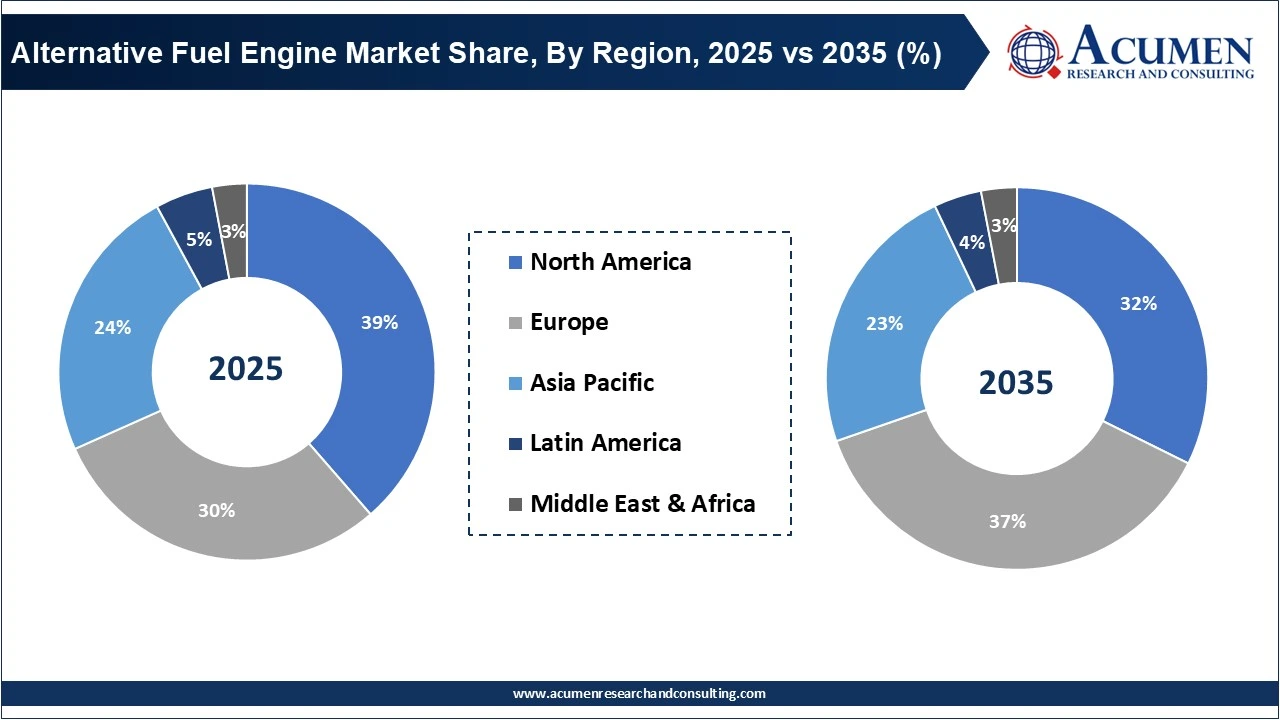
Additionally, the North American region is the fastest-growing market due to support from strict emission regulations and growing investment in hydrogen and fuel cell technologies. The region is also contributing to the growing acceptance of alternative fuel-based engines in the commercial vehicle and power generation sectors. The countries of the U.S. and Canada are encouraging the development of alternative energy sources through tax incentives, developing infrastructure, and establishing public-private partnerships. Additionally, with the increased focus on sustainability and continued innovation in technology for alternative fuels, along with the rapid implementation of advanced engine systems, North America will continue to experience additional growth.
Alternative Fuel Engine Market Segmental Insights
The worldwide market for alternative fuel engine is split based on fuel type, engine type, application, end user, and geography.
Fuel Type Insights
Compressed natural gas (CNG) engines dominate the alternative fuel engine market because of their widespread availability, established refueling infrastructure, and lower emissions than conventional fuels. CNG is used widely in passenger cars, buses, and commercial fleet vehicles. In the urban environment, CNG is currently the most used alternative fuel type. Additionally, due to the cost of operation, incentives offered by various governments, and the proven reliability of the engine, CNG has become the most commercially advanced alternative fuel type and the most commonly used.
| Fuel Type | Market Share, 2025 (%) | Key Highlights |
|---|---|---|
| Compressed Natural Gas (CNG) Engines | 36% | Widely adopted due to mature infrastructure, lower emissions, and cost advantages in passenger and commercial vehicles. |
| Electric Engines | 20% | Strong growth supported by zero-emission mandates, urban mobility demand, and charging infrastructure expansion. |
| Hydrogen Engines | 18% | Fastest-growing segment driven by green hydrogen investments and long-term decarbonization goals. |
| Liquefied Natural Gas (LNG) Engines | 8% | Increasing use in heavy-duty trucks and marine applications due to higher energy density than CNG. |
| Biodiesel Engines | 7% | Favored in agricultural and industrial sectors due to compatibility with existing diesel engines. |
| Ethanol / Methanol Engines | 6% | Growing adoption in regions with strong biofuel production and blending mandates. |
| Hybrid Engines | 3% | Transitional solution combining fuel efficiency with reduced emissions. |
| Others | 2% | Includes niche fuels and experimental alternative propulsion technologies. |
Hydrogen engine is one of the fastest-growing segments of the fuel engine market due to growing global decarbonization initiatives and continued investments in green hydrogen production. These engines offer near-zero emissions and high energy efficiency, making them attractive for heavy-duty transportation, power generation, and future mobility. The rapid development of hydrogen storage technologies and the increasing integration of fuel cells, together with a supportive government policy landscape, are facilitating the adoption of hydrogen engines throughout both developed and developing markets.
Engine Type Insights
Internal combustion engines dominate the market due to the their ability of these engines to utilize existing vehicle platform designs and current manufacturing system designs. By adapting ICE technologies for CNG, LNG, and biofuels, OEMs and fleet operators can achieve a lower cost of transition. The durability and ease of maintenance together with the amount of ICEs operating today contribute significantly to the market demand for ICEs in transportation and industrial applications throughout the economy.
| Engine Type | Market Share, 2025 (%) | Key Highlights |
|---|---|---|
| Internal Combustion Engines | 52% | Dominant due to fuel adaptability, existing manufacturing base, and lower transition costs. |
| Fuel Cell Engines | 16% | Commonly used in CNG and ethanol-powered vehicles for light-duty applications. |
| Hybrid Engines | 14% | Widely applied in biodiesel and LNG-powered heavy-duty vehicles. |
| Spark-Ignition Engines | 8% | Fastest-growing engine type offering high efficiency and near-zero emissions. |
| Compression-Ignition Engines | 7% | Supports gradual transition by combining conventional and alternative fuel technologies. |
| Others | 3% | Includes experimental and emerging engine architectures. |
Fuel cell engines are the fastest-growing segment, supported by increasing investments in hydrogen infrastructure and zero-emission technologies. These engines convert hydrogen directly into electricity, providing users with high levels of efficiency and low levels of environmental impact. Commercial vehicles, public transport, and stationary power generation are the fastest-growing areas of adoption, especially for those parts of the world that have goals for achieving long-term carbon neutrality.
Application Insights
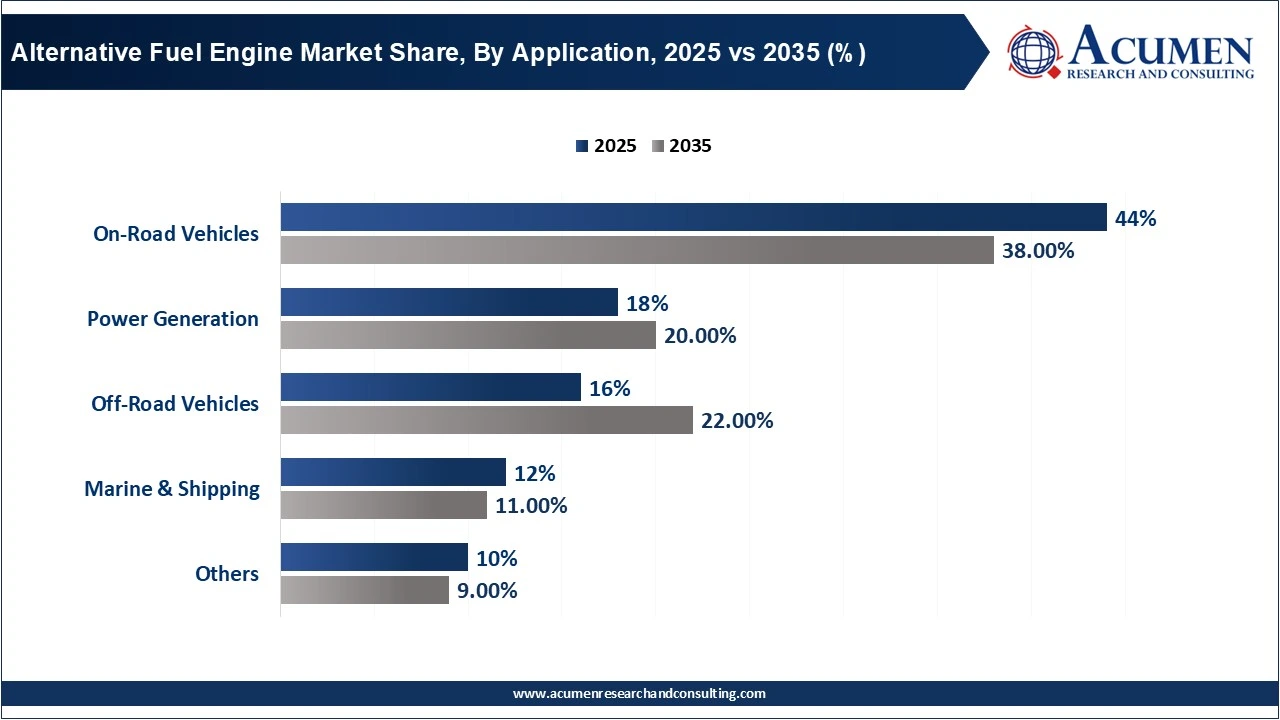
On-road vehicles dominate the segment of the alternative fuel engine market, driven by high adoption rates in passenger cars, buses, and commercial fleets. Demand has increased significantly due to the implementation of urban emissions regulations as well as fuel economy standards and large-scale fleet conversions to cleaner fuels. Additionally, the continued availability of alternative fuel infrastructure for road transport and growing consumer preference towards cleaner forms of transportation have solidified this segment's position as the leading player in the alternative fuel engine market.
| Application | Market Share, 2025 (%) | Key Highlights |
|---|---|---|
| On-Road Vehicles | 44% | Dominant application driven by passenger cars, buses, and commercial fleets |
| Power Generation | 18% | Higher share than off-road, driven by demand for clean backup and distributed energy systems |
| Off-Road Vehicles | 16% | Fastest-growing due to adoption in construction, mining, and agriculture equipment |
| Marine & Shipping | 12% | Increasing LNG and alternative fuel use to meet maritime emission regulations |
| Others | 10% | Includes railways, aviation ground support, and specialty vehicles |
Off-road vehicles are the fastest-growing segment because of their need for lower emissions in industries such as construction, agriculture, and mining. With increasing regulatory pressure placed on industries that produce high levels of emissions and the movement toward the adoption of alternative fuel engine technologies in heavy-duty equipment, these are driving factors for growth in this market segment. The development of improved engine performance and durability will allow for the use of these engines in a broader range of challenging off-road applications.
End User Insights
Automotive OEMs dominate the segment of the alternative fuel engine market, supported by primary developers and integrators of alternative-fuel engine technologies. OEMs have advanced R&D capabilities, extensive manufacturing facilities, and a commitment to meeting federal and state emissions requirements. The ability to build a successful platform for CNG, hybrid, or electric engines and provide them to various vehicle categories has created a substantial and consistent demand for their products, both domestically and internationally.
| End User | Market Share, 2025 (%) | Key Highlights |
|---|---|---|
| Automotive OEMs | 38% | Lead integration of alternative fuel engines at vehicle manufacturing stage. |
| Commercial Vehicle Manufacturers | 22% | Increasing focus on low-emission trucks and buses. |
| Industrial Equipment Manufacturers | 18% | Adoption across construction, mining, and agricultural machinery. |
| Power Generation Companies | 14% | Fastest-growing due to demand for cleaner distributed energy solutions. |
| Others | 3% | Includes marine operators, defense, and specialty engine users. |
Power generation companies are showing the fastest-growing segment due to the transition toward cleaner and decentralized energy systems. Alternative fuels have been increasingly used for backup power generation, distributed generation, and grid stabilization. As demand grows for low-emission, fuel-flexible power generation systems, as well as increasing investment in renewable-integrated energy systems, the use of this alternative fuel-powered generation will continue to grow.
Alternative Fuel Engine Market Players
- Cummins Inc.
- General Motors Company
- Ford Motor Company
- Daimler AG
- Volvo Group
- Hyundai Motor Company
- Toyota Motor Corporation
- Honda Motor Co., Ltd.
- MAN Energy Solutions
- Caterpillar Inc.
- PACCAR Inc.
- Hino Motors Ltd.
Alternative Fuel Engine Market Recent Developments
- In April 2024, Cummins Inc. announced expansion of its hydrogen internal combustion and fuel-agnostic engine platforms, supporting decarbonization across heavy-duty vehicles, power generation, and industrial applications.
- In May 2024, General Motors Company accelerated its alternative propulsion strategy by expanding hybrid and fuel-efficient engine programs for trucks and SUVs, aligning with emission regulations and transitional clean mobility demand.
Alternative Fuel Engine Market Segmentation
By Fuel Type
- Compressed Natural Gas (CNG) Engines
- Electric Engines
- Hydrogen Engines
- Liquefied Natural Gas (LNG) Engines
- Biodiesel Engines
- Ethanol / Methanol Engines
- Hybrid Engines
- Others
By Engine Type
- Internal Combustion Engines (ICE)
- Fuel Cell Engines
- Hybrid Engines
- Spark-Ignition Engines
- Compression-Ignition Engines
- Others
By Application
- On-Road Vehicles
- Passenger Cars
- Commercial Vehicles
- Power Generation
- Off-Road Vehicles
- Construction & Mining Equipment
- Agricultural Machinery
- Marine & Shipping
- Others
By End User
- Automotive OEMs
- Commercial Vehicle Manufacturers
- Power Generation Companies
- Industrial Equipment Manufacturers
- Others
By Region
- North America
- U.S.
- Canada
- Europe
- U.K.
- Germany
- France
- Spain
- Rest of Europe
- Asia-Pacific
- India
- Japan
- China
- Australia
- South Korea
- Rest of Asia-Pacific
- Latin America
- Brazil
- Mexico
- Rest of LATAM
- The Middle East & Africa
- South Africa
- GCC Countries
- Rest of the Middle East & Africa (ME&A)
Looking for discounts, bulk pricing, or custom solutions? Contact us today at sales@acumenresearchandconsulting.com
Frequently Asked Questions

Other Automotive And Transportation Reports
February 2025
July 2020
October 2024
August 2023