
Flexible Packaging Market Size, Share, Forecast 2026 to 2035
Flexible Packaging Market (By Material: Plastic, Paper, Aluminium Foil, Bioplastics; By Product Type: Pouches, Bags & Sacks, Films & Wraps, Rollstock, Flexible Tubes, Tapes & Labels, Others; By Packaging Format: Single-use Flexible Packaging, Reusable Flexible Packaging, Recyclable Flexible Packaging, Compostable/Biodegradable Flexible Packaging; By Thickness: Up to 30 Microns, 30–70 Microns, 70–100 Microns, Above 100 Microns; By Application) - Global Industry Analysis, Size, Share, Regional Analysis, Trends and Forecast 2026 - 2035
- Last Updated: 27 May 2026
- Report Code: ARC3928
- Category: Packaging
Flexible Packaging Market Size, Forecast 2026 to 2035
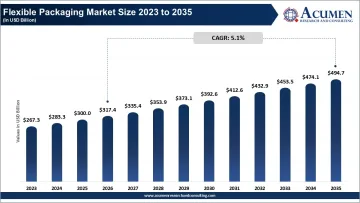
The global flexible packaging market size was valued at USD 300 billion in 2025 and is estimated to surpass around USD 494.70 billion by 2035 growing at a CAGR of 5.1% from 2026 to 2035. The rising demand for convenient, lightweight and cost-effective packaging solutions, especially in pharmaceutical, food and e-commerce sectors created a significant potential for the market to boom. In addition, the demand for durable packaging options that cater EPR mandates of sustainability holds major potential in the flexible packaging market to grow.
Report Highlights
- Asia Pacific dominated the market share with 38.0% in the flexible packaging market in 2025 and is anticipated to grow with the fastest CAGR of 6.5% over the forecast period owing to booming industrial development, expanding food & beverage industry and increasing demand for convenience packaging by consumers.
- Europe is seen to grow at the fastest rate at CAGR of 3.8% over the forecast period due to growing urbanization and expanding retail industry coupled with robust growth in the manufacturing sector in developed economies.
- By material, the plastic segment dominated the market with 63.0% share in 2025 and is anticipated to grow at a significant CAGR of 6.0% over the forecast period due to its favorable properties such as lightweight, cost-effectiveness, high durability, flexibility and high applicability across numerous packaging products.
- By material, the paper was the second largest market with 19% market share, and is growing at the highest CAGR over the forecast period due to increasing consumer demand for environment friendly, and sustainable packaging solutions.
- By product type, the pouches segment dominated the market with a market share of 28.0% in 2025 due to its lightweight structure, and user friendliness, resealable properties, and cost-effective transportation costs.
- By product type, the pouches segment is also expected to witness the fastest CAGR of 6.6% over the forecast period due to the growing popularity of convenient and portable packaging formats among consumers of food and personal care products.
- By packaging format, the single-use flexible packaging segment dominated the market with a share of 57.0% in 2025 owing to its common use in the food, beverages, and consumer goods packaging.
- By packaging format, the recyclable flexible packaging segment was the second largest with 21% market share and also the fastest growing segment due to growing regulations among manufacturer's on sustainable production processes and increasing consumer trends toward such products.
- By thickness, the 30-70 microns thickness segment held a market share of 40.0% in 2025 and is anticipated to grow at a substantial rate over the forecast period due to its favorable combination of flexibility and strength at an affordable price.
- Whereas up to 30 microns was the second largest segment with 26% market share and the fastest growing segment owing to increasing demand from the packaging industry to reduce weight and material usage.
- By application, the food packaging segment dominated the market with a share of 40.0% in 2025 due to rising demand for packaged and processed foods on the global level.
- By application, the healthcare segment was estimated to be the second largest with a share of 13% in 2025 growing segment owing to increasing pharmaceutical product demand and growing emphasis toward safe and sterile packaging.
Flexible Packaging Market Overview
Flexible packaging market refers to a market sector related to the production and application of packaging made from flexible materials like plastic films, paper, aluminum foil and bioplastics which could readily change its shape in filled condition or used application. Products used in flexible packaging is categorized into pouches, bags, wraps, sachets, films and roll stock. These materials are widely adopted by food and beverage, pharmaceuticals, personal care, industrial and domestic sectors. In addition, there are various benefits associated with the flexible packaging including light weight and cost-effectiveness in transportation and high level product protection, extended shelf life and easy to use and carry as compared to the rigid packaging formats.
Increasing consumption of processed foods and packaged and convenience food, high growth of the e-commerce industry, growing attention toward sustainability of packaging formats and widespread use of recycleable and biodegradable materials are some of the crucial factors to drive the growth of the global flexible packaging market.
Major Mandates for Flexible Packaging Across the Globe (2026)
- EU, PPWR requires member countries to increase recyclability and decrease single-use plastic packaging waste.
- States like California and New York are implementing EPR laws, holding packaging producers responsible for managing recycling and waste reduction programs.
- India has expanded its Plastic Waste Management Rules, making it mandatory for plastic packaging producers and importers to utilize minimum amounts of recycled content and achieve stringent compliance requirements.
- Moving towards a "zero plastic waste" future, Canada has proposed to set binding requirements by 2030 that will make all packaging recyclable, reusable, or compostable.
- China is expanding bans on non-degradable plastic bags and pushing for the usage of biodegradable flexible packaging materials in retail and food delivery.
- Japan is advocating for circular economy practices to guide manufacturers to produce more recyclable and lightweight flexible packaging materials.
- United Nations Environment Programme is working toward global accords that aim at reducing plastic pollution and promoting the use of sustainable packaging solutions.
- Many Middle East countries are actively creating sustainability targets to promote the adoption of recyclable flexible packaging for the food and consumer products sectors.
Market Dynamics
Driver
Rising Demand for Convenient and Sustainable Packaging Solutions
Increasing worldwide need for convenience and lighter packaging solutions coupled with greater environmental concern is another factor boosting demand of the flexible packaging market. Urbanization, changing lifestyles, and increasing use of packaged and ready-to-eat foods products are substantially enhancing the consumption of flexible packaging format such as pouch, wrap, sachets etc. The main benefits associated with flexible packaging over rigid packaging are lower transportation cost, improved shelf life and re-sealable feature and reduced material utilization.
Moreover, rapid expansion of the e-commerce and online food delivery businesses has heightened the demand of rigid and lighter packaging solutions providing greater protection for the products during transit. Increased consciousness and awareness among consumers and producers about environmentally friendly alternatives has promoted increased consumption of recyclable, biodegradable and mono material based flexible packaging product across the globe.
Restraint
Environmental Concerns and Stringent Plastic Regulations
Environment related issue which is regarding to generation of plastic wastes and stringent government regulations imposed on the single use plastic materials limits the growth of flexible packaging market. Most of the flexible packaging products are made from multi-layer plastic materials which cannot be recycled via current disposal systems. Many governments and environment agencies worldwide, particularly Europe and North America are imposing harsh legislations, taxes and bans on specific types of plastic packaging products in order to decrease the level of pollution. The price volatility of raw materials, especially petroleum based plastic, increases the cost burden of packaging manufacturers.
Opportunity
Growing Adoption of Recyclable and Bio-Based Flexible Packaging
Growing movement toward sustainable, recyclable, compostable and bio-based packaging solutions are providing numerous growth prospects for the flexible packaging industry. Moreover, the packaging companies are largely investing in the sustainable packaging solutions such as mono-material films, bio-degradable polymers, recyclable polyethylene (PE) structures and paper based flexible packaging to meet the regulatory demands and evolving consumer need. In addition, growing awareness regarding the circular economy principles and company responsibility toward sustainable environment coupled with ever increasing commitments by worldwide food & beverage, medical and pharmaceuticals companies are rapidly speeding the demand for green flexible packaging solutions.
On the other hand, innovative developments and advancement in the barrier coatings, digital printing and smart packaging are helping manufacturers improve package performance by minimizing the ecological footprints. Furthermore, a rising consumption of packaged food along with developing retail outlets and the ever-growing need for cost-effective and lightweight packaging solutions are driving significant business opportunities.
Regional Analysis
- The Asia-Pacific flexible packaging market size was valued at USD 114 billion in 2025 and is forecasted to expand around USD 212.72 billion by 2035 growing at a CAGR of 6.5% from 2026 to 2035.
- The North America flexible packaging market size was estimated at USD 75 billion in 2025 and is expected to hit around USD 106 billion by 2035 growing at a CAGR of 3.3% from 2026 to 2035.
- The Europe flexible packaging market size was accounted for USD 66 billion in 2025 and is anticipated to reach around USD 3.8 billion by 2035 growing at a CAGR of 5.1% from 2026 to 2035.
Asia Pacific held the largest share of the global flexible packaging market, with market share at 38.0% in 2025, and would expand at a robust CAGR of 6.5% over the forecast period. Increasing industrialization rate in this region, significant development in food & beverage industry, coupled with increasing demand for lightweight and convenient packaging solution, contributed to the market dominance of Asia Pacific region.
Growth in consumption of packaged food and beverage, increased pharmaceutical manufacturing activities and rising trend in e-commerce, in countries like China, India and Japan is driving the usage of flexible packaging products in the region. Also, rising middle class, urbanization trend and modern life style is boosting the requirement for portable and re-sealable packaging forms in this region. In addition, growth in organization retail stores and online delivery service will provide growth opportunities for flexible packaging producers in Asia Pacific.
India & China Flexible Packaging Market Highlights
- It's also one of the largest producers of pharmaceuticals in the world and provides more than 20% of the global production of generic medicines, which speeds up the growing need of sterile and high-barrier flexible healthcare packaging.
- Indian government set forth more Stringent Plastic Waste Management Rules and Extended Producer Responsibility (EPR) norms for promoting recyclable and sustainable flexible packaging manufacturing.
- The country is responsible for a massive 4-million+ tonnes of plastic packaging waste every year; it means manufacturers need to have more recyclable mono material and biodegradable flexible packaging solutions.
- The demand for flexible packaging manufacturing facilities is growing in Indian states like Gujarat, Maharashtra, Tamil Nadu, and others as they possess good industrial infrastructure.
- The Chinese government restricted on the non-degradable plastic bag production and is encouraging more and more use of biodegradable and recyclable packaging materials under their national environment plans.
- The Chinese biodegradable plastic market is growing at a fast rate as their environmental regulations are increasing and more and more investment is made in bio-packaging technology.
- Flexible packaging demand in China is extensively being driven by urban customers who demand the most convenient, portable and ready-to-eat packaged food products.
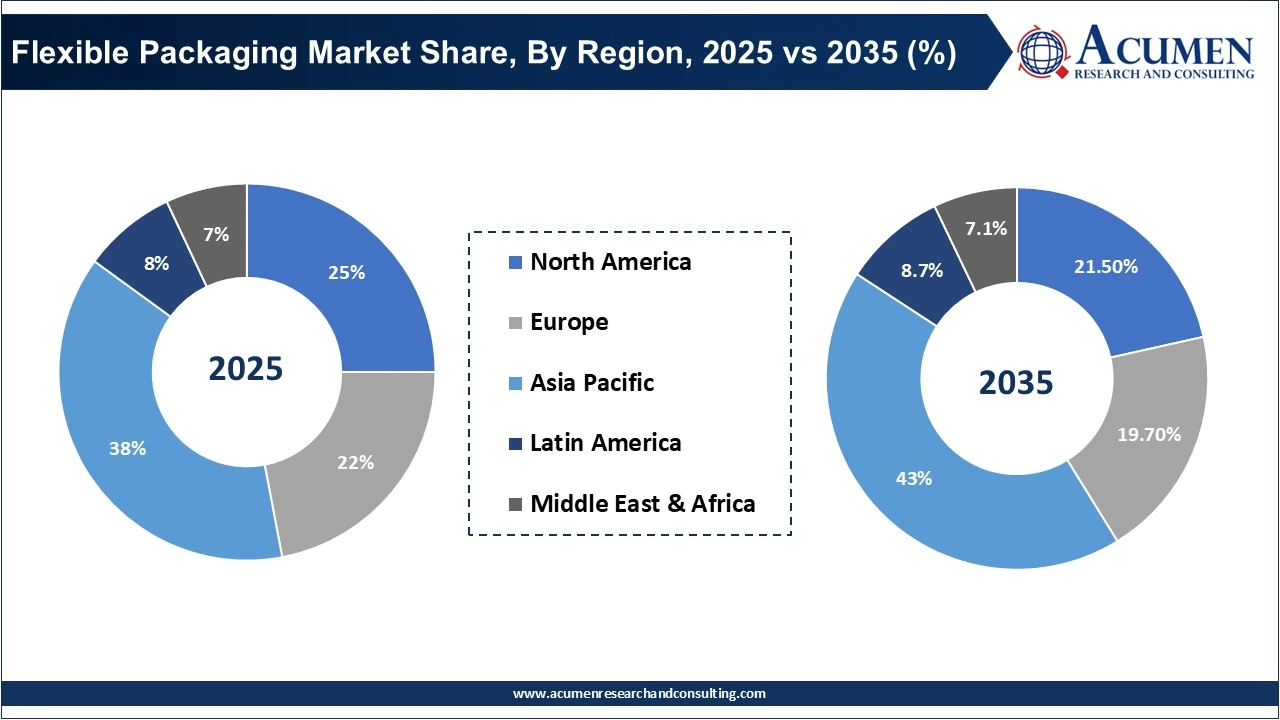
Europe is another key market in terms of regional and is anticipated to grow at a significant CAGR of 3.8% during the forecast period. Growing urbanization and expanding retail infrastructure along with presence of strong industrial base of advanced manufacturing industries fuels the growth of this region. In addition, stringent EU regulations on eco-friendly sustainable and recyclable packaging materials pushes manufacturers towards adoption of flexible eco-friendly packaging solutions. The increasing popularity and usage of recyclable films, paper-based flexible packaging, and mono-material flexible packaging format can be attributed to increasing environmental consciousness among countries such as Germany, France, and Italy.
Segmental Insights
Material Insights
The plastic segment was the largest material segment in the flexible packaging market, holding a share of 63.0% in 2025 and expected to expand at a substantial pace during the forecast period. The vast application of plastic materials in flexible packaging is attributed to properties such as light weight, low cost, flexibility, resistance to moisture and durability. Materials such as polyethylene (PE), polypropylene (PP), polyethylene terephthalate (PET), etc. are heavily used in food packaging, healthcare packaging, industrial packaging and personal care applications as they exhibit high barrier properties and an extended shelf-life. Polyethylene held a large share within plastic materials due to excellent sealing properties and high adaptability to forms such as pouches, wrappers and bags.
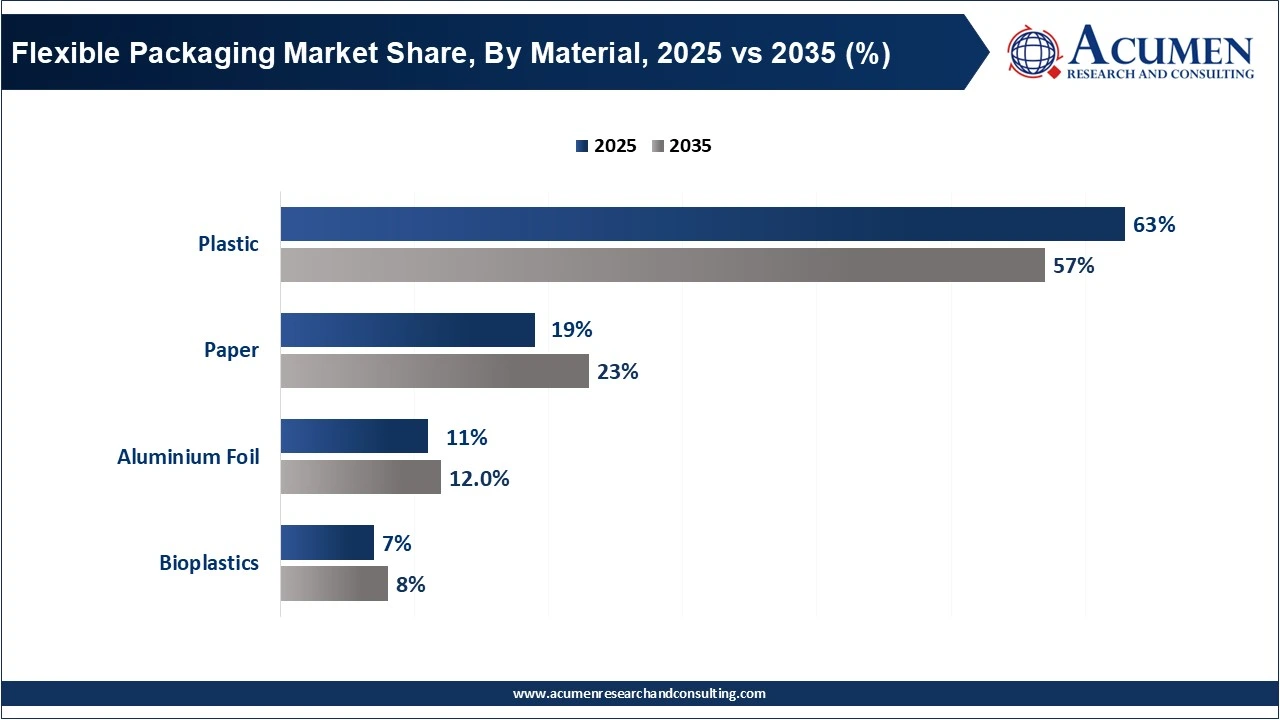
Paper captured the second largest segment of the market with a share of 19.0% in 2025 and is expected to expand moderately over the forecast period. The increasing preference towards paper based flexible packaging solution is due to growing environment concern and rise in demand of sustainable packaging material. Numerous regulations related to single-use plastic are implemented in many countries thereby urging the packaging manufacturers to shift to paper which are recyclable and biodegradable.
Product Type Insights
The pouches segment holds the largest market share in flexible packaging market of 28.0% in 2025 driven by advantages like its low weight, convenient to use, resealable closure system and easy to transport, cost saving features. The flexible pouches are widely used in packaged foods, snacks, beverages, pet food and personal care products due to minimum use of material compared to rigid packages. The consumers are benefiting from better visibility of products along with ease of carrying them from place to place. Stand-up pouches, zipper pouches, spouted pouches are highly popular among manufacturers because of their appealing shelf-presentation and the ability to store it easily.
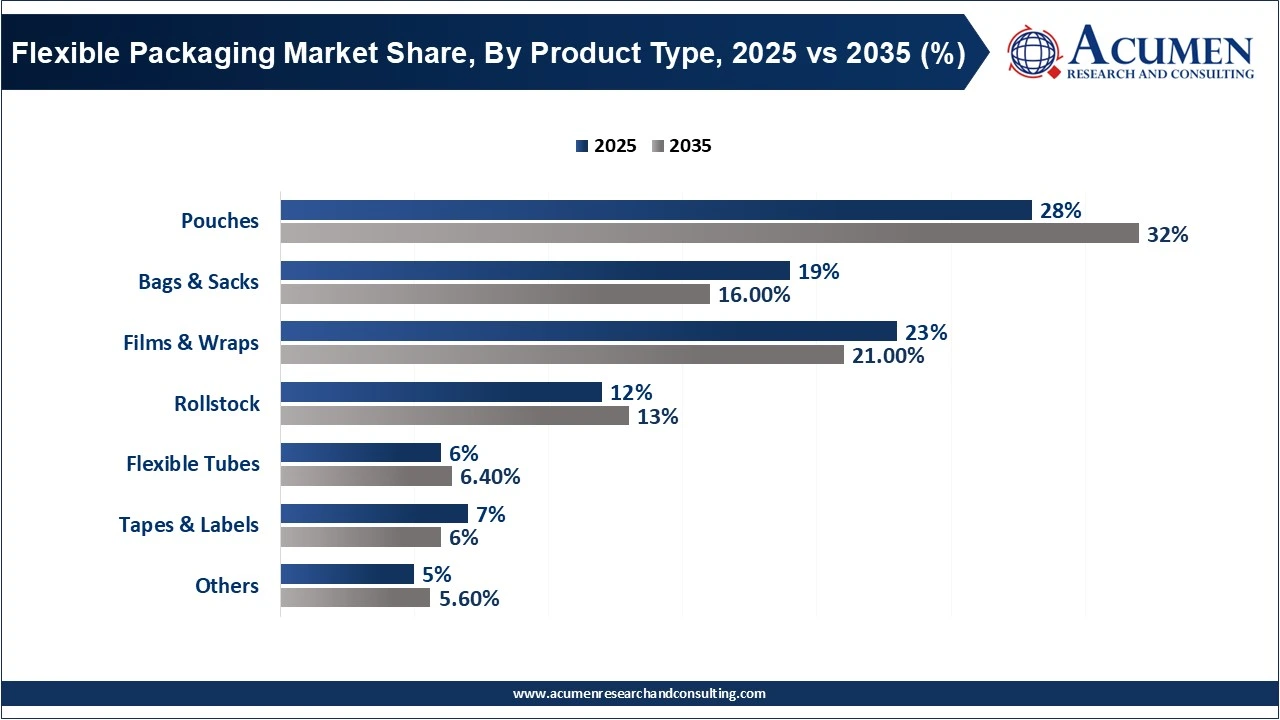
The pouches segment is also projected to grow at the highest CAGR of 6.6% over the forecast period, driven by consumers' increasing inclination toward convenience, portable and resealable packaging forms. Accelerated growth in e-commerce food delivery, high demand for snacks on the go, increase in use of flexible packaging by the personal care industry etc., are also some of the contributing factors toward accelerated growth in pouches segment. Besides, the usage of recyclable and mono-material pouches are increasing among the manufacturers in order to support the sustainability efforts and environmental regulations.
Packaging Format Insights
The single-use flexible packaging segment accounted for the largest market share, at 57.0% in 2025. This segment is popular due to the widespread use of flexible packaging in food and beverages, pharmaceuticals, and consumer products industry. Single-use packaging solutions are economically efficient, lightweight, sterile, and ideal for bulk packaging operations. The burgeoning consumption of processed and packaged foods globally has fueled up the demand of single-use flexible packaging materials. This is also owing to rising trend of sachets, pouches, wrappers and single-use packaging solutions in developing countries.
Flexible Packaging Market Share, Packaging Format, 2025 (%)
| Packaging Format | Market Share, 2025 (%) |
|---|---|
| Single-use Flexible Packaging | 57% |
| Reusable Flexible Packaging | 12% |
| Recyclable Flexible Packaging | 21% |
| Compostable / Biodegradable Flexible Packaging | 10% |
Recyclable flexible packaging held the second largest market share by revenue at 21.0% in 2025. The segment is projected to grow considerably over the forecast period, due to the increasing focus towards sustainability due to growing environmental concerns and pressure from regulations regarding packaging waste management, as well as due to strong sustainability initiatives by packaging manufacturing companies. Global players such as consumer goods companies are investing more in recyclable flexible packaging solutions to help lower carbon footprints and contribute to a circular economy.
Thickness Insights
The 30–70 microns thickness segment was the largest market section of 40.0% of market share in 2025 and expected to expand at a high rate in the forecast period. The superiority of this section of the market comes from its best balance of strength, flexibility, and cost. The packaging films of this thickness range have broad application uses in food packaging, industrial packaging and personal care because they are strong enough to support product needs but they do not increase material costs too much, as well as they do allow good printability and product protection but it will have lower package weight. So this thickness range can be most widely used.
Flexible Packaging Market Share, Thickness, 2025 (%)
| Thickness | Market Share, 2025 (%) |
|---|---|
| Up to 30 Microns | 26% |
| 30–70 Microns | 40% |
| 70–100 Microns | 20% |
| Above 100 Microns | 14% |
The up to 30 microns segment was the second largest market section which occupied a share of 26.0% in 2025 and anticipated to gain a fast expansion in the forecast period. The increased demand for lighter packaging and reduction of materials drives manufacturers to make thinner flexible packaging film. Manufacturers are investing more in high tech material design to achieve greater strength and barrier properties while reducing film thickness. The packaging applications that have seen high growth in this range include food and retail packaging sector where reduced package weight contributes to lower transportation costs and better sustainability profile.
Application Insights
The dominant share in flexible packaging market was the food packaging segment in the year 2025 accounting a market share of 40.0%. This is attributed to ever growing global demand for packaged, processed and readily consumed food products. The application segment, food is increasingly utilizing the benefit offered by the flexible packaging in terms of enhancing the product shelf life, superior moisture and oxygen barrier properties, and packaging convenience. Furthermore, the ever increasing network of online food delivery channels, supermarket retailers and consumption of convenience foods further drives the demand for this segment. The adoption of visually appealing printed flexible packaging formats by the manufacturers has a key role in enhancing the product appeal to the consumer at retail shelf.
Flexible Packaging Market Share, Application, 2025 (%)
| Application | Market Share, 2025 (%) |
|---|---|
| Food Packaging | 40% |
| Beverage Packaging | 12% |
| Healthcare Packaging (Pharma + Medical) | 13% |
| Personal Care & Cosmetics Packaging | 10% |
| Household Products Packaging | 8% |
| Industrial Packaging | 7% |
| Agricultural Packaging | 5% |
| Others | 5% |
The second largest application segment was healthcare packaging which occupied a share of 13.0% in the year 2025 and is anticipated to expand at an impressive rate during the forecast period. This segment growth is propelled by the increasing use of packaged pharmaceuticals, medical devices, and sterile packaging materials. In addition, the health packaging industry uses flexible packaging in extensive manner owing to their light weighted structure, resistance against contamination and maintaining the product integrity. Moreover, increasing expenditure on health, expanding pharmaceutical production at various economies and emphasis over patient safety will continue to drive the advanced healthcare packaging needs globally.
Top Companies & Their Offerings
- Amcor - famous for flexible packaging (recyclable and high-barrier) and others, including food, beverage and health industries. Also leading innovation in sustainable packaging.
- Berry Global Group, Inc. - provides flexible packaging (films, stretch wrap, laminates) and others in plastics, targeting the everyday consumer, health sector and industry, committed to sustainable plastics.
- Sealed Air Corporation - leaders in "protective packaging" solutions, covering flexible packaging, vacuum packaging and food preservation. They also provide automated packaging.
- Mondi Group - key player in paper-based flexible packaging, recyclable pouches, and industrial packaging with emphasis on sustainability.
- Huhtamaki Oyj - manufacture flexible packaging for the food sector, also produce fiber-based items, retort pouches, and recyclable mono-material solutions.
- Sonoco Products Company - provider of flexible packaging films as well as other packaging, such as stand-up pouches, thermoformed and health packaging solutions used by many consumer brands globally.
- Coveris - focus on sustainable flexible packaging solutions, offering recyclable films, and food and industrial packaging, and labels.
- Printpack - offers specialty flexible packaging films and pouches, and other packaging items used in the food, beverage and health markets.
Recent News
- In April 2026, Siegwerk and Enplater Group collaborated to launch a fully recyclable mono-polypropylene (mono-PP) flexible pouch with integrated barrier and sealing performance to improve sustainability and efficiency of food and consumer goods applications.
- In February 2026, Mamata Machinery launched 'RecTech,' a new recyclable packaging technology, at Plastindia 2026. The fully recyclable mono-material films are developed to substitute traditional non-recyclable multi-material flexible packaging and enable brands to meet new regulations related to sustainability and EPR.
- In May 2026, At Interpack 2026, Mondi Group introduced sophisticated mono-material retort pouches to comply with circular economy principles and new European legislation regarding packaging. These polypropylene and polyethylene-based flexible packaging alternatives will substitute traditional multi-layer structures that are laminated with aluminium.
Segments Covered in the Report
By Material
- Plastic
- Polyethylene (PE)
- Polypropylene (PP)
- Polyethylene Terephthalate (PET)
- Polyvinyl Chloride (PVC)
- Polyamide (PA)
- Others
- Paper
- Aluminium Foil
- Bioplastics
By Product Type
- Pouches
- Bags & Sacks
- Films & Wraps
- Rollstock
- Flexible Tubes
- Tapes & Labels
- Others
By Packaging Format
- Single-use Flexible Packaging
- Reusable Flexible Packaging
- Recyclable Flexible Packaging
- Compostable/Biodegradable Flexible Packaging
By Thickness
- Up to 30 Microns
- 30–70 Microns
- 70–100 Microns
- Above 100 Microns
By Application
- Food Packaging
- Beverage Packaging
- Healthcare Packaging
- Personal Care & Cosmetics Packaging
- Household Products Packaging
- Industrial Packaging
- Agricultural Packaging
- Others
By Region
- North America
- Asia Pacific
- Europe
- Latin America
- Middle East & Africa
Looking for discounts, bulk pricing, or custom solutions? Contact us today at sales@acumenresearchandconsulting.com
Frequently Asked Questions

Other Packaging Reports
May 2026
December 2024
April 2025
June 2023