
High Potent Active Pharmaceutical Ingredient Market Size, Share, Report 2026 To 2035
High Potent Active Pharmaceutical Ingredient Market (By Product: Synthetic, Biotech; By Manufacturer Type: In-house, Outsourced; By Drug Type: Innovative, Generic; By Application: Oncology, Hormonal Disorders, Glaucoma, Others) - Global Industry Analysis, Size, Share, Regional Analysis, Trends and Forecast 2026 - 2035
- Last Updated: 11 Jun 2026
- Report Code: ARC2802
- Category: Healthcare and Pharmaceuticals
High Potent API Market Size, Forecast 2026 to 2035
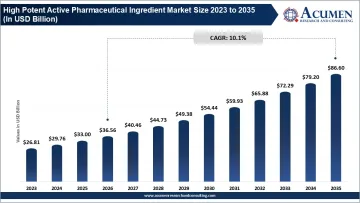
The global high potent active pharmaceutical ingredient market size was valued at USD 33 billion in 2025 and is anticipated to hit around USD 86.60 billion by 2035, growing at a compound annual growth rate (CAGR) of 10.1% over the forecast period from 2026 to 2035. The rising demand of cancer drugs is the high potent active pharmaceutical ingredient market trends that drives the industry demand as they are widely used in target cancer therapies that requires high potency compounds, better efficacy and requires less dosage.
Report Highlights
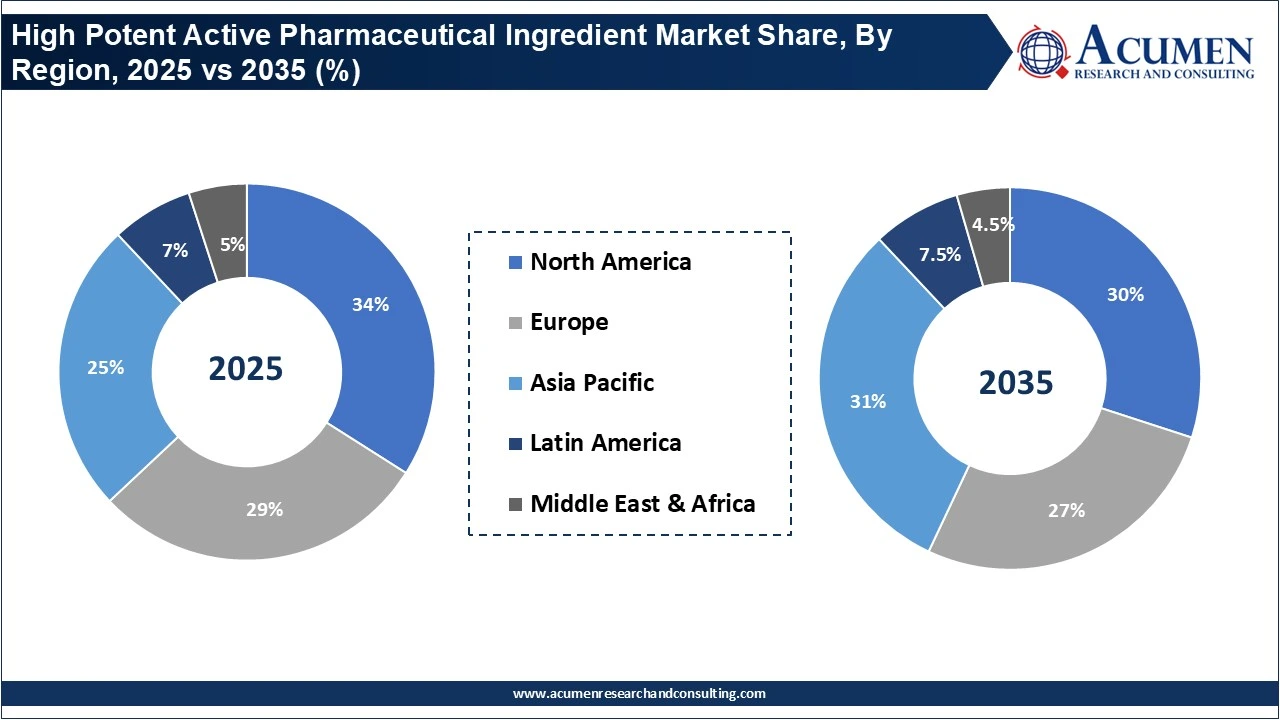
- North America led the market in 2025 with the share of 34% owing to the leading pharmaceutical manufacturer's prominent presence, efficient biologic manufacturing facility and strong investments for the cancer therapies and personalized medicine.
- Asia Pacific is seen to grow at the CAGR of 12.7% during the forecast period, attributed to low cost manufacturing facility, expanding contract manufacturing operations, expanding pharmaceutical exports, government support for API production in India and China.
- The synthetic HPAPI segment constituted about 72% of the market in 2025 and accounted for the largest market share due to its widespread use in oncology therapeutics, hormonal drugs, and high-potency small molecule drugs because of its scalability, stability, and cost-efficiency.
- The biotech HPAPI segment captured about 28% share of market revenues in 2025 and is projected to be the fastest growing segment because of the growing adoption of biologic drugs, ADCs, and precision medicine-based therapies.
- The outsourced segment contributed 52% market share in 2025 based on the manufacturer type, due to increasing reliance on CDMOs by pharmaceutical companies for minimizing capital expenditures and benefiting from dedicated high-containment manufacturing facilities.
- The in-house manufacturing segment held 48% market share in 2025 and is dominated by large pharmaceutical companies who are investing in dedicated manufacturing facilities for ensuring their IP security and strict compliance with the regulatory requirements of manufacturing potent compounds.
- The innovative drug segment generated a 62% market share in 2025 due to growing investments in novel drug discovery, target-oriented cancer therapies, ADCs, and precision medicine-based therapeutics.
- The generic HPAPI segment accounted for a 38% share in the market in 2025 because of the patent expiration of blockbuster cancer and specialty drugs and the demand for affordable treatments.
- The oncology segment held the largest share of 76% of global market in 2025 based on the application, due to rising cancer prevalence, robust cancer drug pipeline, and growing approvals for targeted and biologic therapeutics.
- The hormonal disorders segment contributed about 12% share of the market in 2025 due to the increasing incidence of endocrine disorders, increased usage of hormone replacement therapies, and advanced high-potency hormonal formulation technologies.
Market Dynamics
Market Drivers
Increasing Prevalance of Chronic Diseases Necessitating advanced Therapeutics
- The growing burden of chronic diseases across the globe such as cancer, autoimmune, cardiovascular and hormonal diseases, is fueling the demand for high potent active pharmaceutical ingredients (HPAPIs). These compounds find extensive use in advanced therapeutics due to their high efficacy in low dose that can facilitate targeted therapies, and also help in managing complex diseases. Rising geriatric population, increasing cancer rates and growth in healthcare expenditure world over will lead to widespread use of HPAPI-based drugs in pharmaceutical manufacturing sector.
Improvements in Drug Development Technologies to Enhance HPAPI Manufacturing
- Advancements in drug development technologies such as process chemistry, precision synthesis techniques and containment systems are enhancing the overall efficiency and safety of HPAPI manufacturing processes. Technologies such as continuous manufacturing, automation, and artificial intelligence coupled with drug discovery, are assisting pharmaceutical companies in developing complex and targeted therapies with greater scalability and stringent quality control. Through innovation manufacturers can bring down errors, achieve better yields, and meet global regulations related to potent products.
Increasing Demand for Targeted Cancer Therapies using HPAPIs
- Targeted therapies and precision oncology have witnessed a substantial growth in recent years, thereby accelerating the demand for HPAPIs. HPAPIs serve as indispensable components for antibody-drug conjugates (ADCs), hormonal drugs, and highly specific oncological drugs that are dependent on the potent nature of drugs for controlled dose delivery. High rate of investment in cancer research, increasing number of drugs in development, and growing approvals for targeted therapy will support high growth trajectory for HPAPI market in the forecast period.
Market Restraints
High Costs Associated with the Manufacturing and Handling of HPAPIs
- Manufacturing and handling of HPAPIs is complex and thus demands significant investments in sophisticated and safe containment systems along with specific occupational health and safety guidelines that raise the overall manufacturing costs when compared to conventional APIs. Specialised facilities and clean rooms coupled with specific air filtration systems and strict controls for preventing contamination significantly increases the capital and operational expenses. This might pose as a barrier to entry for small to medium sized firms operating in the HPAPI manufacturing domain.
Stringent Regulatory Requirements and Compliance Challenges
- HPAPI industry has stringent regulations due to toxic potential and strict need for ensuring product quality. U.S. FDA, EMA and PMDA impose specific guidelines related to manufacturing practices, containment, and environment monitoring that manufacturers are required to comply with. With stringent international standards, operational and regulatory costs are anticipated to increase for manufacturers in the coming years.
Market Opportunities
Expansion in Emerging Markets with Rising Healthcare Infrastructure
- Emerging markets in countries like India, China, Brazil and Southeast Asia, are witnessing tremendous upsurge in healthcare infrastructure, pharma manufacturing capabilities and access. Government support in the region to enhance local pharma manufacturing, attracting foreign investments, coupled with growing demand for affordable cancer treatment and specialized medicines are creating vast opportunity for HPAPI market in the long run.
Collaborations and Partnerships for Innovative Drug Development
- Collaborative efforts among pharmaceutical companies, biotechnology firms and contract development and manufacturing organizations (CDMOs) are increasingly focused on accelerating drug discovery and development. Innovative drug development strategies centered on Antibody-drug Conjugates (ADCs), biologics, targeted therapies and personalized medicines are boosting access to unique technical expertise. Through strategic partnerships, manufacturers can establish strong manufacturing capabilities in advanced HPAPI technology across the globe.
Advancements in Containment Technologies to Reduce Production Risks
- The growing trend towards the adoption of advanced technologies such as isolators, closed process equipment and automation to enhance manufacturing processes will also accelerate the development and production of highly potent drugs. Increased safety and reduced risks through effective containment systems will encourage greater manufacturing of highly potent drugs and compounds.
Regional Insights
- The North America high potent active pharmaceutical ingredient market size was valued at USD 11.12 billion in 2025 and is projected to exceed around USD 25.98 billion by 2035, growing at a compound annual growth rate (CAGR) of 8.5% over the forecast period from 2026 to 2035.
- The Europe high potent active pharmaceutical ingredient market size was estimated at USD 9.57 billion in 2025 and is anticipated to surpass around USD 23.38 billion by 2035, reflecting a CAGR of 9.2% from 2026 to 2035.
- The Asia-Pacific high potent active pharmaceutical ingredient market size reached at USD 8.25 billion in 2025 and is expected to hit around USD 26.85 billion by 2035, growing at a CAGR of 12.7% from 2026 to 2035.
For several reasons, the North America dominates high potent active pharmaceutical ingredient market. This is due to the expansion of a facility specifically intended to manufacture HPAPIs and complicated antibody drug conjugates (ADCs). For instance, Millipore Sigma announced a US$65 million expansion facility for its HPAPI manufacturing capability facility in the United States. This is one of the primary factors driving the growth of the high potency active pharmaceutical component market. Additionally, growing cases of chronic diseases, an increase in healthcare spending, and the presence of large manufacturers producing HPAPI in this region further contributes to high potent (API) market growth.
The Asia-Pacific region is the fastest growing in the HPAPI market, driven by increasing investments in healthcare infrastructure and pharmaceutical R&D. The region's burgeoning population and rising prevalence of chronic diseases are boosting demand for advanced therapeutics. Furthermore, favorable government policies and cost-effective manufacturing capabilities attract significant attention from global pharmaceutical companies. For instance, January 2023 - Sai Life Sciences, one of India's fastest growing Contract Research, Development, and Manufacturing Organizations (CRO-CDMOs), announced the opening of a new High-Potency API (HPAPI) manufacturing facility at its cGMP API Manufacturing site in Bidar. This new facility broadens the company's experience in HPAPI development and manufacture, hence expediting its clients' NCE development processes. Overall, this growth is further supported by the expansion of local pharmaceutical companies and a surge in outsourcing activities.
Segmental Insights
Product Insights
The synthetic HPAPI segment led the market with 72% market share owing to its widespread application in the field of oncology, hormonal drugs and highly potent small molecule drugs. Synthetic HPAPIs exhibit excellent stability, high precision and are cost effective and can be manufactured in large scale that leads to higher demand among pharmaceutical companies. Cancer and various chronic diseases prevalence is rapidly growing leading to greater demand in synthetic potent drugs in the fields of targeted cancer therapies, and cytotoxic drugs. Moreover the increasing advances in chemical synthesis technology and huge investment in high containment manufacturing plants have increased the demand for synthetic HPAPIs.
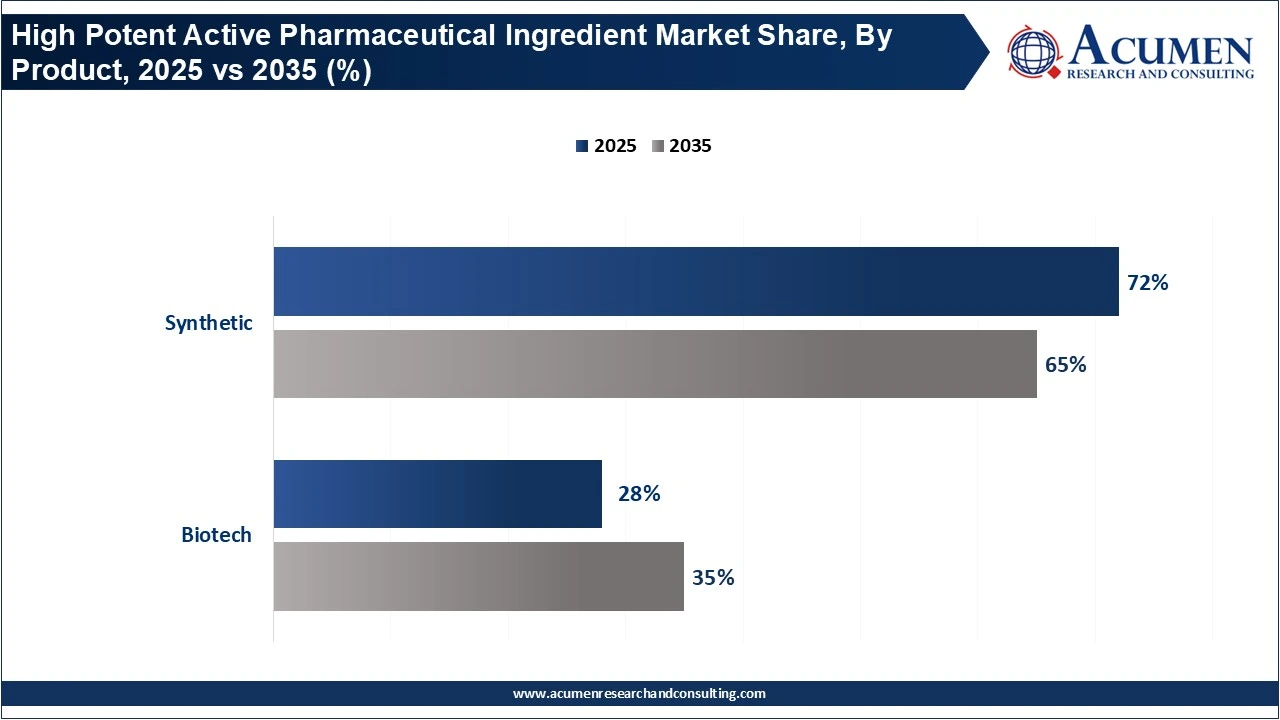
The biotech HPAPI segment held 28% market share and is seen to grow rapidly during the forecast period because of increased demand in biologics, antibody drug conjugates (ADCs), targeted therapy etc. Biotech derived HPAPIs possess high therapeutic efficiency and reduced side effects, especially in oncology and autoimmune diseases compared to conventional drugs. Increased research in the field of biopharmaceuticals and vast growth in the precision medicine have been increasing the demand of the biotech HPAPI segment. Pharmaceutical companies are also extensively growing in the innovative biologic drug pipelines which would create high future demand for biotech HPAPIs.
Manufacturer Type Insights
Outsourced segment held 52% market share in 2025 and is seen to grow rapidly during the forecast period because of increased reliance on CDMO for the HPAPI manufacturing. The capital expenditure associated with high containment manufacturing facility of HPAPIs has driven the pharmaceutical companies to adopt outsourced manufacturing with CDMO. Increasing complexity of drug development combined with a desire for flexible manufacturing capacities have encouraged pharmaceutical companies to rely on third-party manufacturing of HPAPIs.
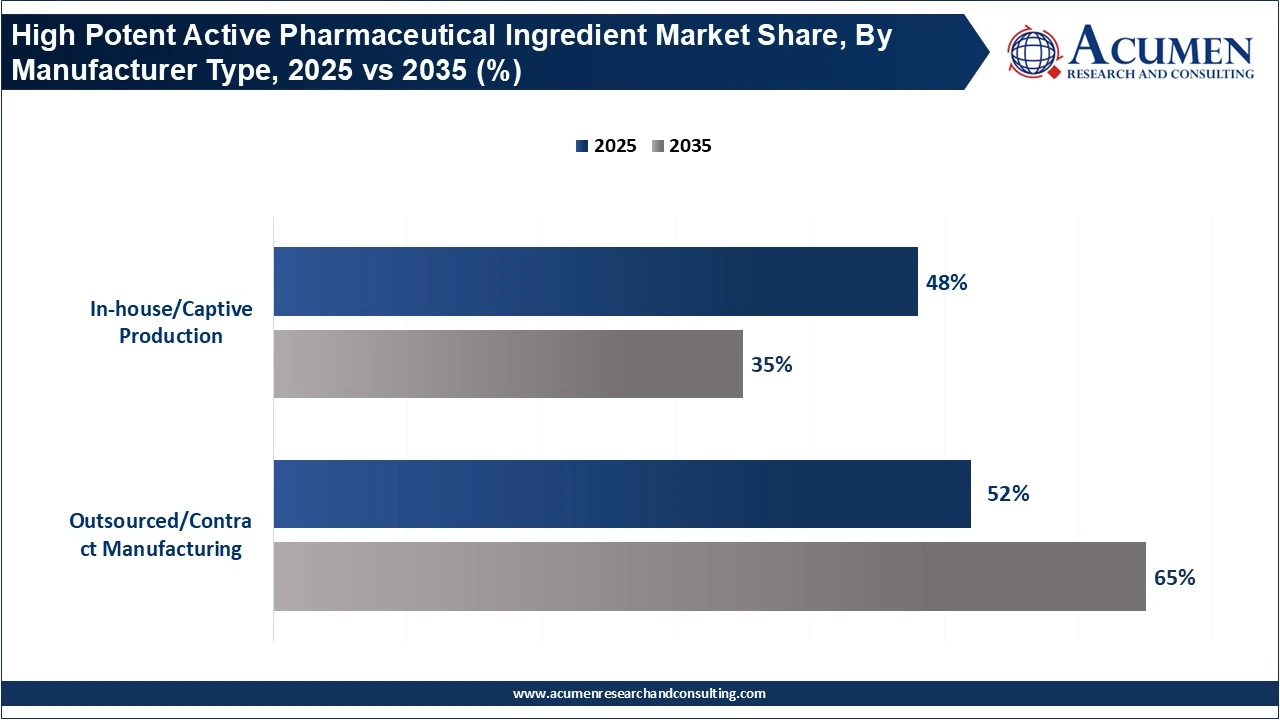
In-house manufacturing segment registered for share of 48% in 2025 due to strict process control maintained by the pharmaceutical companies during the production of highly potent compounds. Higher levels of containment and stringent safety and regulatory requirements of the HPAPIs made the large pharmaceutical companies to establish specialized in-house manufacturing facilities. Companies also prefer to retain in-house manufacturing to protect the intellectual property, for consistent quality assurance and streamlined supply chain management. With the increased focus of proprietary oncology drugs and various novel therapeutics the demand of in-house manufacturing would keep increasing.
Drug Type Insights
Innovative drug segment led the market with 62% in 2025 due to increased investment in new drug discovery and development, especially in targeted therapies. Increased research in novel cancer drugs, antibody-drug conjugates and precision medicines is majorly dependent on HPAPIs. Clinical trials in the potent drugs and approvals in cancer therapy are extensively increasing leading to high demand of the innovative HPAPI based drugs. Regulatory support for the orphan and breakthrough drugs also contribute in market growth.
High Potent API Market Revenue Share, By Drug Type, 2025 (%)
| Drug Type | Revenue Share, 2025 (%) |
|---|---|
| Innovative | 62% |
| Generic | 38% |
Generic HPAPI segment held 38% share in 2025 and is projected to grow at a considerable rate during the forecast period due to the expiration of patent of various blockbuster oncology and specialty drugs. The rising demand for the cost-effective drugs globally will encourage the manufacturers of generic drugs to enter into HPAPI market. Higher manufacturing efficiencies with innovative technology and increased outsourcing of HPAPIs production are also estimated to give more revenue share to the generic HPAPIs market.
Application Insights
Oncology segment captured highest market share of 76% in 2025 because of high prevalence of cancer globally and increased demand for target cancer therapy. HPAPIs are largely used in the field of chemotherapy, antibody drug conjugates and precision oncology drugs. Increased investment in the cancer treatment research and rising number of approvals of oncology biologics in the last decade, increased need for precision medicine will also drive the growth of oncology HPAPIs segment. High numbers of novel oncology drugs in pipeline will further boost the demand.
High Potent API Market Revenue Share, By Application, 2025 (%)
| Application | Revenue Share, 2025 (%) |
|---|---|
| Oncology | 76% |
| Hormonal Disorders | 12% |
| Glaucoma | 4% |
| Others | 8% |
The hormonal disorder segment held 12% share in 2025 for high potent active pharmaceutical ingredient market endowed by rising prevalence of endocrine diseases, higher demand for hormone replacement therapy and growing use of highly potent agents in treatment of disorders like thyroid disorders, adrenal insufficiency and hormonal imbalance. The segment growth is also driven by innovation in pharmaceutical manufacturing technologies and higher efficacy hormone therapies with high-potency active agents in lower doses.
Top Companies
- Merck KGaA
- Pfizer Inc.
- Teva Pharmaceutical Industries Ltd
- Thermo Fisher Scientific Inc.
- Sanofi (EUROAPI)
- F. Hoffmann-La Roche
- Boehringer Ingelheim International GmbH.
- AbbVie
- Eli Lilly and Company
- Aurigene Pharmaceutical Services Limited
- Bristol-Myers Squibb Company
Recent News
- March 2026- Axplora announced plans to invest $60M for an expansion of their HPAPI (highly potent active pharmaceutical ingredient) manufacturing capabilities in Farmabios, Italy. The expansion features a new R&D and laboratory hub to help advance the development of ADCs and other high potency treatments. The company noted HPAPIs now represent more than 30% of the world’s pipeline in drug development.
- October 2025- The Indian pharmaceutical company Hikal opened a new HPAPI laboratory at its Integrated Innovation Centre in Pune. The laboratory aims to boost their CDMO and cancer molecule development services and will focus on complex treatments like antibody-drug conjugates, peptide-drug conjugates and PROTACs. OEB-5 containment technology has been installed for safe handling of highly potent compounds.
Market Segmentation
By Product
- Synthetic
- Biotech
By Manufacturer Type
- In-house
- Outsourced
By Drug Type
- Innovative
- Generic
By Application
- Oncology
- Hormonal Disorders
- Glaucoma
- Others
By Region
- North America
- U.S.
- Canada
- Europe
- U.K.
- Germany
- France
- Spain
- Rest of Europe
- Asia-Pacific
- India
- Japan
- China
- Australia
- South Korea
- Rest of Asia-Pacific
- Latin America
- Brazil
- Mexico
- Rest of Latin America
- Middle East & Africa
- South Africa
- GCC Countries
- Rest of the Middle East & Africa (ME&A)
Looking for discounts, bulk pricing, or custom solutions? Contact us today at sales@acumenresearchandconsulting.com
Frequently Asked Questions

Other Healthcare and Pharmaceuticals Reports
November 2020
April 2025
December 2024
November 2024