
Nutricosmetics Market Size, Share, Trends, Report 2026 To 2035
Nutricosmetics Market (By Product Form: Capsules, Tablets, Gummies/Chews, Liuid Shots/Beverages, Powder, Others; By Ingredient: Carotenoids & Antioxidants, Vitamins and Minerals, Omega-3 Fatty Acids, Collagen & Peptides, Prebiotics, Probiotics & Postbiotics, Hyaluronic Acid & Ceramides, Others; By Application: Skin, Hair, Nail, Others; By Distribution Channel: E-commerce, Pharmacies/drugstore, Supermarkets/hypermarkets, Specialty/beauty stores, Direct-to-Consumer (DTC), Others) - Global Industry Analysis, Size, Share, Growth, Regional Analysis, Trends and Forecast 2026 - 2035
- Last Updated: 25 Aug 2026
- Report Code: ARC3969
- Category: Consumer Goods and Food and Beverages
Nutricosmetics Market Size, Forecast Report 2026 To 2035
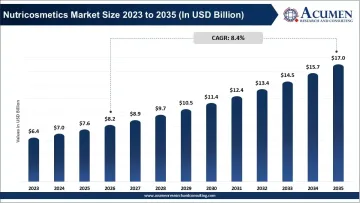
The global nutricosmetics market size was valued at USD 7.56 billion in 2025 and is projected to surge USD 17 billion by 2035, expanding at a compound annual growth rate (CAGR) of 8.4% during the forecast period from 2026 to 2035.
Report Highlights
- By region, Asia-Pacific dominated the global nutricosmetics market with 45% share in 2025, owing to its large consumer base, established beauty-from-within culture, rising disposable incomes, and strong adoption of functional foods and supplements.
- By region, North America is projected to register a CAGR of 8.7% during the forecast period, driven by increasing consumer interest in preventive wellness, healthy aging, functional nutrition, and ingestible beauty products.
- By form, powder segment held the largest share of 27% in 2025, driven by flexible dosing, easy mixing with beverages and smoothies, and growing demand for personalized wellness routines.
- By form, capsules segment accounted for 24% of the market in 2025, supported by convenient consumption, precise dosing, portability, long shelf life, and consistent delivery of active ingredients.
- By ingredient, collagen & peptides segment led the market with 35% share in 2025, driven by rising demand for beauty-from-within solutions targeting skin elasticity, hydration, firmness, and healthy aging.
- By ingredient, vitamins & minerals segment held the second-largest share of 25% in 2025, supported by growing awareness of micronutrients such as vitamin C, vitamin E, and biotin for skin, hair, and nail health.
- By application, skin segment dominated the market with 50% share in 2025, fueled by strong consumer demand for hydration, anti-aging, radiance, and long-term skin health solutions.
- By application, hair segment accounted for 31% share in 2025 and represented the fastest-growing segment, driven by increasing concerns over hair fall, thinning, pollution-related damage, and the nutritional management of hair health.
- By distribution channel, supermarkets & hypermarkets dominated with 29% share in 2025, supported by high product visibility, broad brand availability, promotional offers, competitive pricing, and convenient one-stop shopping.
- By distribution channel, pharmacies & drug stores held the second-largest share of 28% in 2025, reflecting consumer preference for trusted retail environments and professional guidance when purchasing ingestible beauty products.
What is Nutricosmetics Market & How is it Expanding?
The global nutricosmetics market is expected to experience strong growth because of consumers' increasing desire for natural beauty and good health without having any side effects. Nutrition serves as a natural ingredient for maintaining healthy skin, hair, and nails, without any side effects, making it highly attractive to consumers. Todays, Modern consumers are no longer depending only on external beauty products like creams, lotions, and serums. Instead, they are moving towards internal solutions, such as nutritional supplements and functional foods, that support beauty and health from within the body, instead of topical cosmetics. In addition, the growing need for natural, clean-label, and scientifically validated ingredients such as collagen, vitamins, minerals, antioxidants, and omega-3 fatty acids is significantly driving market adoption, as consumers increasingly seek safe, effective, and holistic solutions that support beauty from within.
Another major growth driver for the market is the rapid expansion of e-commerce and digital marketing channels, which have significantly improved product accessibility and consumer engagement. Online platforms allow brands to directly communicate the benefits of nutricosmetics, deliver clear information about the products and their benefits, and offer personalized solutions, enabling them to effectively reach a broader audience, particularly younger, digitally active consumers. This direct-consumer approach not only improves brand visibility but also builds stronger relationships and trust with end users. In addition, sustained investments by leading nutraceutical and cosmetic companies, along with endorsements from dermatologists and wellness influencers, are reinforcing product credibility and consumer confidence.
E-commerce, Pricing & Premiumization Trends
- Online beauty sales are growing 9× faster than in-store sales globally, highlighting the rapid shift toward digital purchasing and creating stronger opportunities for nutricosmetics brands through e-commerce and D2C channels.
- In India, beauty e-commerce and quick-commerce sales increased 39% during June–November 2024, compared with only 3% growth in physical stores, demonstrating the faster momentum of digital beauty retail.
- The share of Indian consumers purchasing beauty products online increased from 13% in 2023 to 17% in 2024, indicating rising consumer acceptance of online beauty shopping.
- Premium products accounted for 55% of India's online beauty sales, compared with 24% through offline channels, indicating stronger consumer willingness to purchase premium beauty products online.
- Online channels accounted for 87% of beauty sales in China and 74% in South Korea, demonstrating the particularly strong role of e-commerce across major Asian beauty markets.
- Beauty and grooming products sold online in India can be 10–30% cheaper than offline products, supported by competitive pricing, wider product assortments, and frequent digital promotions.
- India's quick-commerce beauty category recorded 40% year-over-year growth in average order value, indicating increasing consumer willingness to purchase higher-value beauty products through rapid-delivery platforms.
Nutricosmetics Market Dynamics
Market Drivers
1. Rising Consumer Preference for Holistic Beauty
The increasing preference for holistic beauty solutions is a major driver of the nutricosmetics market. The holistic beauty is an approach that treats beauty as from overall health, focusing on the connection between mind, body, and soul to achieve long-term results rather than just temporary fixes. Consumers are increasingly aware that skin, hair, and nail health are influenced by internal efforts such as dieting, nutrient consumption, and healthy lifestyle habits. As a result, they are transforming towards nutricosmetics that work to provide ingredients such as vitamins, minerals, antioxidants, collagen, and fatty acids that support beauty from within.
2. Increasing Disposable Income and Changing Lifestyle
The rising disposable income and lifestyle transformation have increased demand for beauty and wellness solutions that are both effective and convenient to use. As consumers face busy work schedules, rising stress levels, and greater exposure to pollution, there is a growing need for products that can support skin, hair, and nail health with minimal effort and long-term benefits. Nutricosmetics meet this demand by offering easy-to-consume formats that fit seamlessly into daily routines, while rising disposable income further encourages consumers to invest in premium, nutrition-based beauty solutions. This combination of changing lifestyle and improved spending capacity is significantly driving the expansion of the nutricosmetics market.
Market Restraints
1. High Product Costs and Price Sensitivity
The relatively high cost of nutricosmetics products is one of the significant factors restraining market growth. Nutricosmetics often contain premium ingredients such as collagen peptides, antioxidants, omega-3 fatty acids, and clinically validated nutrients, which increase production and quality assurance costs. In addition, research, formulation innovation, and compliance with safety and labeling standards further add to overall pricing. These higher costs can limit affordability for a large consumer base, particularly in price-sensitive and developing regions, thereby slowing widespread adoption and restricting market expansion.
2. Limited Consumer and Awareness and Regulatory Complexities
Limited consumers understanding of nutricosmetics and inconsistent regulatory frameworks across regions also act as major restraints on market growth. Many consumers remain uncertain about the effectiveness, usage duration, and scientific credibility of nutricosmetic products, which can reduce confidence and delay purchase decisions. At the same time, varying regulations related to health claims, ingredient approvals, and product labeling increase compliance challenges for manufacturers. These regulatory hurdles can delay product launches, raise operational costs, and hinder cross-border market expansion, ultimately restraining the overall growth of the nutricosmetics market.
Market Opportunities
1. Rising demands for Personalized Nutrition and Beauty Solutions
A significant opportunity for the nutricosmetics market lies in the increasing demand for personalized nutrition and beauty solutions. Consumers are moving away from generic supplements and are seeking products that address individual concerns such as skin aging, hair loss, stress, or nutritional deficiencies. Advances in digital health platforms, AI-driven skin analysis, and data-based wellness assessments are enabling companies to develop customized nutricosmetic formulations with targeted ingredients and optimized dosages. These innovations improve product effectiveness, strengthen consumer engagements, and encourage long-term usage, allowing brands to differentiate themselves and unlock higher-value growth opportunities.
2. Expansion in Emerging Markets and Preventive Wellness Adoption
The expanding focus on preventive wellness, particularly in emerging economies, represents another opportunity for the nutricosmetics market growth. Rising disposable incomes, rapid urbanization, and increasing exposure to pollution and lifestyle-related health concerns are driving demand for nutrition-based beauty solutions in regions such as Asia-Pacific, Latin America, and the Middle East. At the same time, the growth of e-commerce, social media influence, and digital awareness campaigns is improving product accessibility and consumer knowledge. These factors are creating a favorable environment for market penetration, enabling companies to tap into a large, underserved consumer base and support long-term industry expansion.
Nutricosmetics Market Segmentation Insights
Product Form Insights
Powder segment held the largest share with 27% in 2025 in nutricosmetics market, as powders offer flexibility, customizable dosages, and the ability to mix with beverages, smoothies, or functional drinks. Innovations in flavor, solubility, and formulation have made powders more convenient and palatable, appealing to health-conscious and modern consumers. The growing trends of personalized wellness routines and DIY nutrition have further accelerated adoption, positioning powder as a high-growth segment in the market.
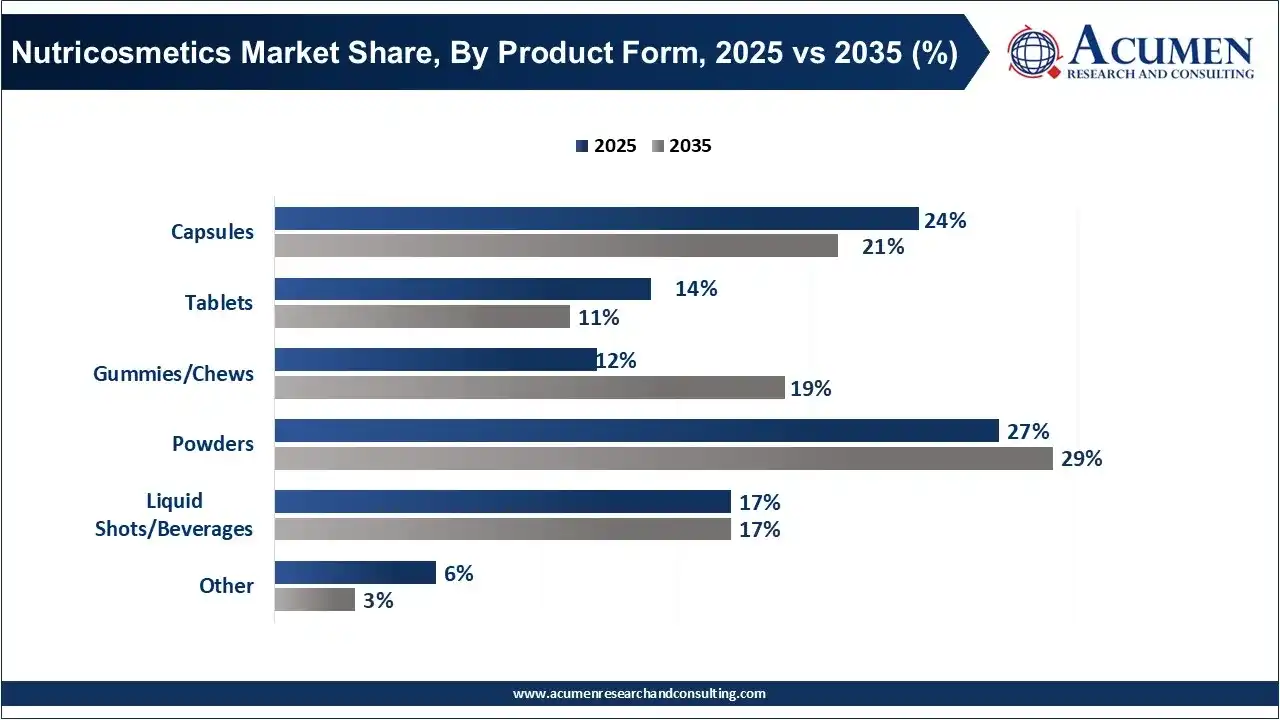
Capsules segment accounted for 24%, of the nutricosmetics market in 2025 and remains the dominant form. Capsules are preferred by consumers due to their convenience, accurate dosing, and long shelf life. They allow consistent intake of active ingredients such as collagen, vitamins, and antioxidants, making them a trusted choice for daily usage and wellness routines. The ease of consumption, portability, and endorsement by health professionals contribute to their continued dominance in the market.
Nutricosmetics Market By Ingredient
Collagen & peptides segment led the market in 2025 with 35%, driven by growing consumer demand for beauty-from-within products that support skin elasticity, hydration, firmness, and healthy aging. Collagen has become one of the most widely recognized nutricosmetic ingredients because of its strong association with anti-aging and skin-health benefits, while collagen peptides offer convenient incorporation into powders, beverages, capsules, gummies, and functional foods.
Nutricosmetics Market Share, By Ingredient, 2025 (%)
| By Ingredient | Revenue Share, 2025 (%) |
|---|---|
| Carotenoids & Antioxidants | 16% |
| Vitamins and Minerals | 25% |
| Omega Fatty Acids | 6% |
| Collagen & Peptides | 35% |
| Probiotics, Prebiotics & Postbiotics | 9% |
| Hyaluronic Acid & Ceramides | 5% |
| Others | 4% |
Vitamins and minerals was the second largest segment, with a share 25% in 2025, driven by increasing consumer awareness of the role of micronutrients in overall health and beauty. Nutrients such as vitamin C, vitamin E, and biotin support skin radiance, hair strength, and nail healthcare, making them highly attractive to consumers. The rise of fortified beverages, gummies, and personalized formulations has accelerated adoption, fueling rapid growth in this segments.
Application Insights
Skin segment accounted for the lead share of the nutricosmetics market with 50% share in 2025, due to strong consumer demand for products that support skin hydration, anti-aging, radiance, and protection against environmental damage. Nutricosmetics targeting skin health often contain widely accepted ingredients such as collagen, antioxidants, and dermatologist recommendations. Additionally, the growing focus on preventive skincare and long-term skin health has encouraged regular consumption of skin-focused nutricosmetic products, reinforcing this segment's leading position in the market.
Nutricosmetics Market Share, By Application, 2025 & 2035 (%)
| Application | Revenue Share, 2025 (%) | Revenue Share, 2035 (%) |
|---|---|---|
| Skin | 50% | 47% |
| Hair | 31% | 34% |
| Nail | 12% | 11% |
| Others | 7% | 8% |
Hair segment is the fastest-growing segment in the nutricosmetics market which also contributed for 31% share in 2025, because of increasing concerns related to hair fall, thinning, stress-induced damage, and pollution exposure. Consumers are actively seeking nutritional solutions that address hair health from within, particularly those enriched with biotin, zinc, amino acids, and vitamins. Rising awareness of the link between nutrition and hair growth, combined with visible results and strong promotion through digital platforms and influencers, is accelerating adoption. These factors are driving rapid growth in the hair segment, despite its smaller base compared to skin applications.
Distribution Channel Insights
Supermarkets and hypermarkets segment dominated the market with 29% share in 2025. This channel offers high product visibility, consumer trust, and the convenience of one-step shopping, which encourages impulse purchases and repeat buying. The availability of a wide range of brands, combined with promotional activities and competitive pricing, makes supermarkets and hypermarkets a preferred choice for consumers purchasing nutricosmetics as part of their regular shopping routines.
Nutricosmetics Market Share, By Distribution Channel, 2025 (%)
| By Distribution Channel | Revenue Share, 2025 (%) |
|---|---|
| E-commerce | 24% |
| Pharmacies/drugstores | 28% |
| Supermarkets/hypermarkets | 29% |
| Specialty/beauty stores | 11% |
| Direct-to-Consumer (DTC) | 4% |
| Beauty Clinics / Dermatology / Professional Channels | 2.2% |
| Other | 1.8% |
Pharmacies/drug stores segment held the second largest share of 28% in 2025, reflecting strong consumer preference for trusted and professionally guided channels when purchasing ingestible beauty products. These outlets provide greater credibility because consumers often associate pharmacies with product authenticity, safety, and health-related expertise. Pharmacists can also guide customers toward products containing ingredients such as collagen, biotin, vitamins, minerals, and hyaluronic acid, based on individual skin, hair, and nail requirements.
Nutricosmetics Market Regional Analysis
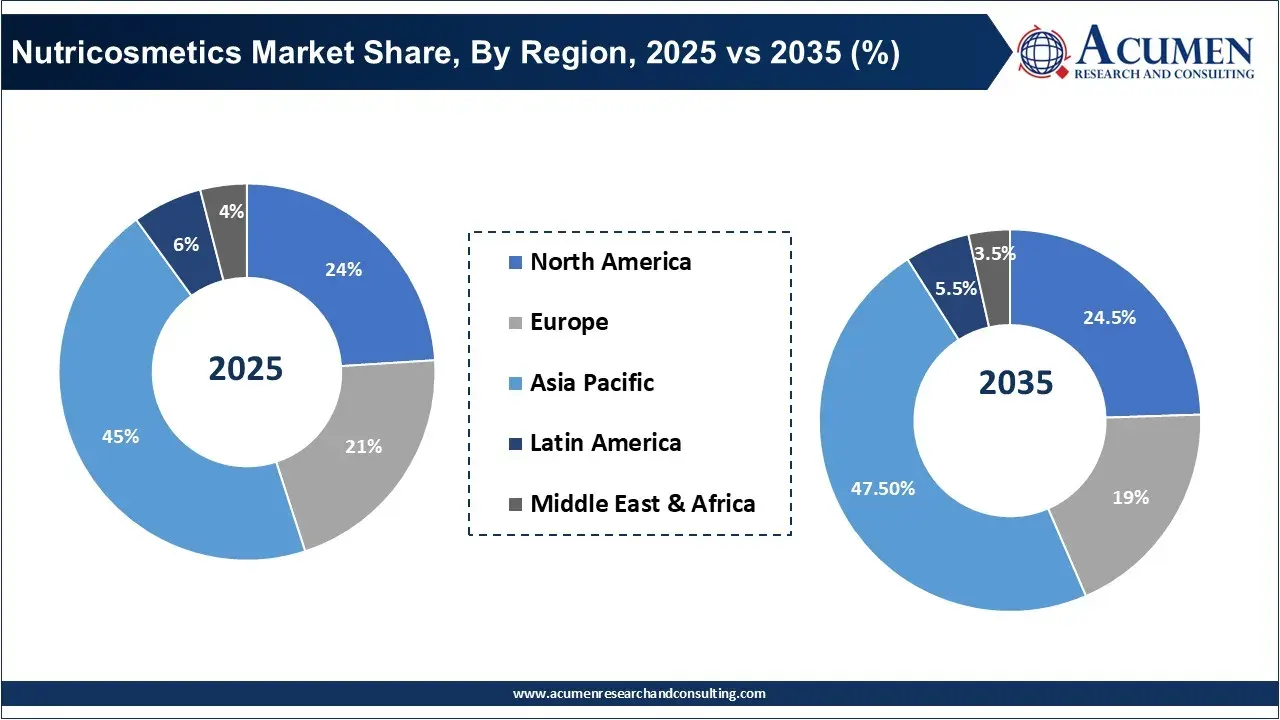
In 2025, Asia-Pacific held the largest share of 45% in nutricosmetics market, due to its large consumer base, strong cultural emphasis on preventive healthcare, and long-standing acceptance of nutrition-based beauty solutions. Countries such as Japan, China, South Korea, and India have a well-established tradition of suing function foods, herbal supplements, and collagen-based products for skin and hair. In addition, rising disposable income, rapid urbanization, and increasing awareness of beauty-from-within concepts are driving widespread adoption across the region. The strong presence of domestic and international manufacturers, coupled with extensive networks and growing e-commerce operations, further reinforces Asia-Pacific's leading position in the global nutricosmetics market.
Top Asian Countries
| Country | Key Market Drivers | Major Nutricosmetics Trends |
|---|---|---|
| Japan | Strong beauty-from-within culture, aging population, high spending on functional foods, and established supplement consumption | Collagen drinks, beauty supplements, anti-aging products, functional beverages |
| China | Large consumer base, rising disposable income, expanding beauty and wellness industry, and growing e-commerce penetration | Collagen supplements, skin-brightening products, beauty gummies, premium ingestible skincare |
| South Korea | Strong K-beauty influence, high consumer awareness of skincare, and rapid adoption of innovative beauty products | Inner-beauty supplements, probiotics, collagen, ceramides, and functional beauty beverages |
| India | Rising middle-class population, increasing health awareness, expanding nutraceutical industry, and growing online retail | Herbal beauty supplements, vitamins, collagen products, biotin supplements, and Ayurvedic formulations |
| Indonesia | Growing young population, increasing wellness awareness, expanding middle class, and rising digital commerce | Halal-certified supplements, collagen drinks, beauty gummies, herbal formulations |
| Thailand | Strong beauty and wellness tourism industry, established supplement market, and growing consumer interest in preventive health | Collagen beverages, whitening supplements, herbal beauty products, and functional drinks |
| Singapore | High purchasing power, developed healthcare infrastructure, and strong demand for premium wellness products | Premium supplements, personalized nutrition, anti-aging products, and clean-label formulations |
| Malaysia | Growing health-conscious population, rising disposable income, and increasing demand for halal-certified health products | Halal nutricosmetics, collagen supplements, vitamins, herbal products, and beauty beverages |
North America is a fast-growing region at the CAGR of 8.7% during the forecast period in the nutricosmetics market, supported by high consumer awareness, strong demand for premium and science-backed wellness products, and rapid innovation in nutraceutical formulation. Consumers in the United States and Canada are increasingly focusing on holistic health, anti-aging, and preventive care, which is accelerating the adoption of nutricosmetics for skin, hair, and overall wellness. The region also benefits from advanced research capabilities, regulatory clarity, and the presence of major nutraceutical and cosmetic companies investing in product innovation and personalized solutions. Additionally, the widespread use of digital marketing, direct-to-consumer platforms, and influencer-driven awareness campaigns is further boosting market growth across North America.
Nutricosmetics Market Key Players
- Amway
- Herbalife Nutrition
- Vitabiotics
- Pfizer Inc.
- BASF SE
- Shiseido Company Limited
- Nestlé S.A.
- L’Oréal S.A.
- Unilever PLC
- Blackmores Ltd.
- GNC Holdings Inc.
- D-LAB Nutricosmetics
Recent Developments
- In April 2025, BASF introduced a new range of aroma ingredients with lower carbon footprints, starting with L-Menthol FCC rPCF, helping to reduce carbon emissions by 10-15% compared to conventional products.
- In August 2025, Shiseido introduced “SHISEIDO Pure Jelly,” a beauty supplement focused on Japanese botanical extracts for skin protection and clarity.
Segments Covered
By Product Form
- Capsules
- Tablets
- Gummies/Chews
- Liuid Shots/Beverages
- Powder
- Others
By Ingredient
- Carotenoids & Antioxidants
- Vitamins and Minerals
- Omega-3 Fatty Acids
- Collagen & Peptides
- Prebiotics, Probiotics & Postbiotics
- Hyaluronic Acid & Ceramides
- Others
By Application
- Skin
- Hair
- Nail
- Others
By Distribution Channel
- E-commerce
- Pharmacies/drugstore
- Supermarkets/hypermarkets
- Specialty/beauty stores
- Direct-to-Consumer (DTC)
- Beauty Clinics/Dermatology/Professional Channels
- Others
By Region
North America
- U.S.
- Canada
Europe
- U.K.
- Germany
- France
- Spain
- Rest of Europe
Asia-Pacific
- India
- Japan
- China
- Australia
- South Korea
- Rest of Asia-Pacific
Latin America
- Brazil
- Mexico
- Rest of LATAM
The Middle East & Africa
- South Africa
- GCC Countries
- Rest of the Middle East & Africa (ME&A)
Looking for discounts, bulk pricing, or custom solutions? Contact us today at sales@acumenresearchandconsulting.com
Frequently Asked Questions

Other Consumer Goods and Food and Beverages Reports
March 2023
September 2023
April 2021
June 2024