December 2020

Plant-Based Beverages Market (By Product: Plain, Flavored; By Source: Coconut, Almond, Soy, Rice, Hemp, Oats, Others; By Type: Plant-Based Milk, Tea and Coffee, Juices, Others; By Distribution Channel: Hypermarkets & Supermarkets, Specialty Stores, Convenience Stores, Online) - Global Industry Analysis, Size, Share, Regional Analysis, Trends and Forecast 2025 To 2033
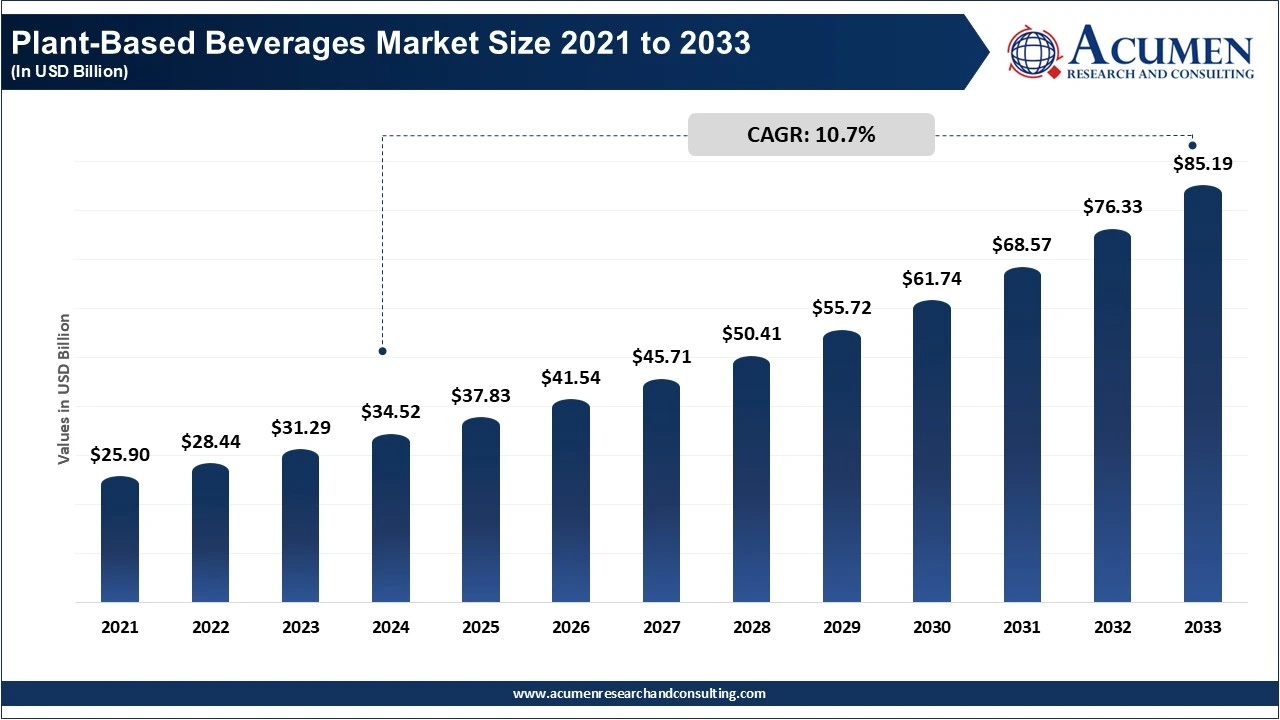
The global plant-based beverages market size was accounted for USD 37.83 billion in 2025 and is estimated to surpass around USD 85.19 billion by 2033 growing at a CAGR of 10.7% from 2025 to 2033. Plant-based beverages are prepared from natural plant ingredients such as nuts, grains, seeds, or legumes. Almond milk, soy milk, oat milk, coconut milk, and rice milk are other popular options. These beverages are commonly used as dairy milk substitutes, particularly by persons who are lactose intolerant, follow a vegan diet, or prefer healthier options. Many plant-based beverages are enriched with important nutrients like calcium, vitamin D, and vitamin B12 to support overall health. They are commonly used in coffee, cereals, smoothies, and cooking. Due to their natural ingredients, health benefits, and lower environmental impact, plant-based beverages are becoming increasingly popular in the global food and beverage industry.
| Attribute | Details |
| Plant-Based Beverages Market Size 2025 | USD 37.83 Billion |
| Plant-Based Beverages Market Forecast 2033 | USD 85.19 Billion |
| Plant-Based Beverages Market CAGR During 2025 - 2033 | 10.7% |
| Analysis Period | 2021 - 2033 |
| Base Year | 2025 |
| Forecast Data | 2025 - 2033 |
| Segments Covered | By Product, By Source, By Type, By Distribution Channel, and By Geography |
| Regional Scope | North America, Europe, Asia Pacific, Latin America, and Middle East & Africa |
| Key Companies Profiled | Harmless Harvest, Noumi Ltd., Blue Diamond Growers, Inc., Koia, Vitasoy International Holdings Ltd., Califia Farms, LLC, The Hain Celestial Group, Inc., Danone S.A., SunOpta, and Pacific Foods of Oregon, LLC. |
| Report Coverage | Market Trends, Drivers, Restraints, Competitive Analysis, Player Profiling, Covid-19 Analysis, Regulation Analysis |
Health, environmental, and ethical issues are causing a significant shift in the global market for plant-based beverages. A notable contributor is the rising prevalence of lactose intolerance, which affects around 65% of the global population and forces many people to seek dairy replacements. Plant-based beverage consumption in the United States increased by 61% between 2012 and 2017, reflecting a larger trend toward plant-based diets.
Environmental sustainability is another critical driver. Studies indicate that producing plant-based beverages like soy and oat milk results in significantly lower greenhouse gas emissions and water usage compared to dairy milk. For example, soy and oat milk production uses significantly less water and land, which contributes to their eco-friendliness.
Consumer demographics are also changing. According to research, there is an increasing number of "flexitarian" homes that consume both plant-based and dairy products. These families are more likely to have young children and adhere to a vegetarian or vegan diet, indicating that plant-based beverages are more broadly accepted by various consumer groups.
Plant-based beverages are becoming increasingly popular in Asia-Pacific countries, particularly China, Thailand, and Japan. A DuPont survey found that more than 75% of local consumers are willing to pay more for plant-based alternatives, with soy milk being the most popular.
In conclusion, the plant-based beverages industry is fast evolving, owing to health concerns, environmental awareness, and shifting customer tastes. These elements, combined, lead to the market's dynamic growth and diversification on a global scale.
The worldwide market for plant-based beverages is split based on product, source, type, distribution channel, and geography.
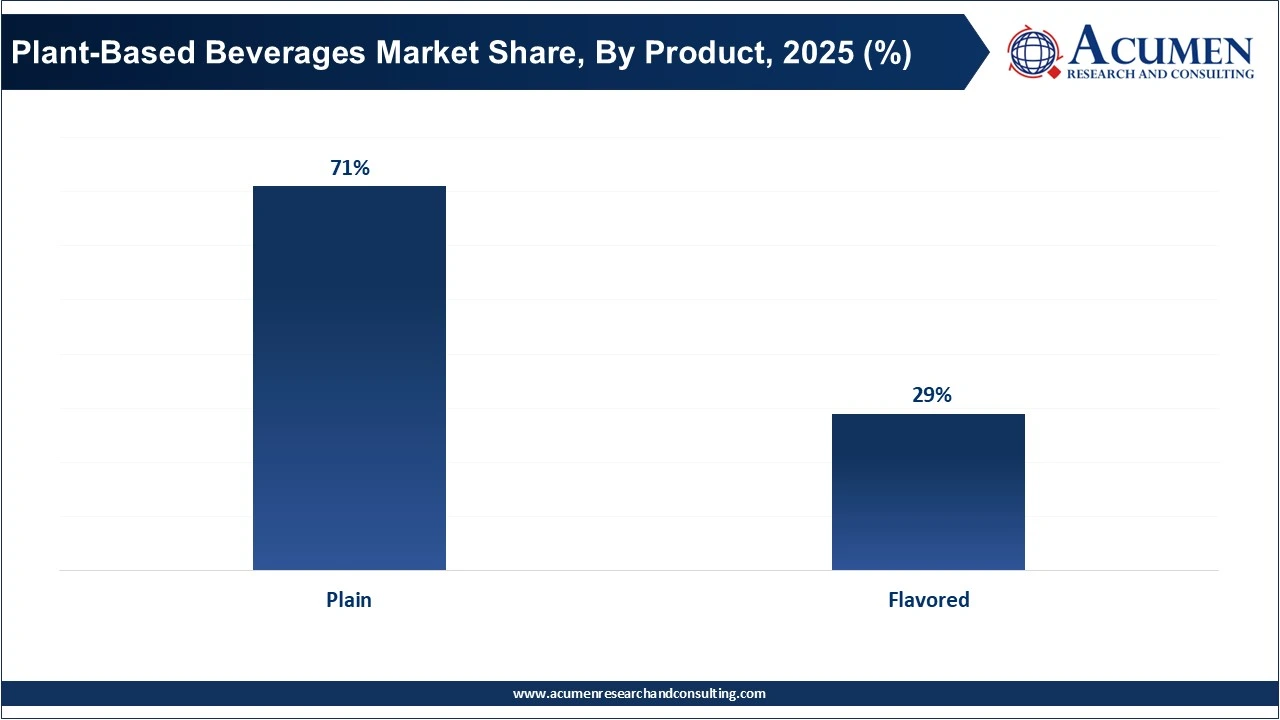
The plain products are the most profitable due to their versatility, health appeal, and universal consumer acceptance. Plain plant-based beverages, such as unflavored soy, almond, or oat milk, are frequently considered as healthier options since they include fewer additives, sugars, and artificial components than flavored alternatives. These beverages are commonly used as dairy substitutes in cooking, baking, and everyday consumption, making them a staple in many households. Moreover, consumers with dietary restrictions or those following clean-label diets prefer plain variants for their minimal processing. The demand is also supported by the foodservice industry, which frequently uses plain plant-based milk in cafes and restaurants, especially for beverages like coffee and tea.
Soy has the largest market share among plant-based beverages due to its lengthy history, high protein content, and low cost. Soy milk has long been a popular dairy replacement, particularly among those looking for nutritional content comparable to cow's milk. It is strong in essential amino acids, making it suitable for vegan and lactose-free diets. Furthermore, soybeans are widely available and inexpensive, making them ideal for global production and consumption. Many Asian countries, particularly China and Japan, rely largely on soy-based beverages, which helps them maintain market supremacy. Its functional versatility in both sweet and savory uses contributes to its widespread commercial appeal across many demographic groups.
The plant-based tea and coffee category is growing rapidly in the plant-based drinks market, owing to shifting consumer preferences for healthier and more sustainable drink options. With the advent of veganism and flexitarianism, people are increasingly choosing beverages that combine functional benefits with plant-based formulations. Ready-to-drink plant-based teas and coffees, often with almond, oat, or coconut milk, are gaining appeal among urban, health-conscious people.
Hypermarkets and supermarkets are likely to be the most important distribution channels in the plant-based beverages market due to their wide reach, product diversity, and convenience. These retail locations provide a diverse range of plant-based beverages, including popular brands and private labels, all in one location. Their established supply networks, promotional incentives, and shelf exposure make them a popular choice for new and returning customers. Consumers like to buy at supermarkets because they can evaluate ingredients, prices, and packaging before making a purchase. In-store sampling and health-oriented promotions also boost sales. The growing customer demand for health-conscious food and beverages is aligned with supermarket efforts to enhance shelf space for plant-based items, reinforcing their market leadership.
Asia-Pacific dominates the global market, accounting for over 42% of total sales. This dominance is related to traditional consumption patterns, particularly soy and rice-based beverages, as well as a high incidence of lactose sensitivity. Countries such as China and India make substantial contributions, with China's large lactose-intolerant population increasing demand for nondairy alternatives. Increased urbanization, more disposable incomes, and a growing middle class looking for healthier nutritional options all contribute to the region's growth.
North America has a substantial market share, because of rising health consciousness and a growing vegan population. The market for almond and oat-based beverages is increasing, particularly in the United States. The region benefits from a significant number of large plant-based beverage manufacturers, as well as a favorable legislative framework that promotes plant-based product development.
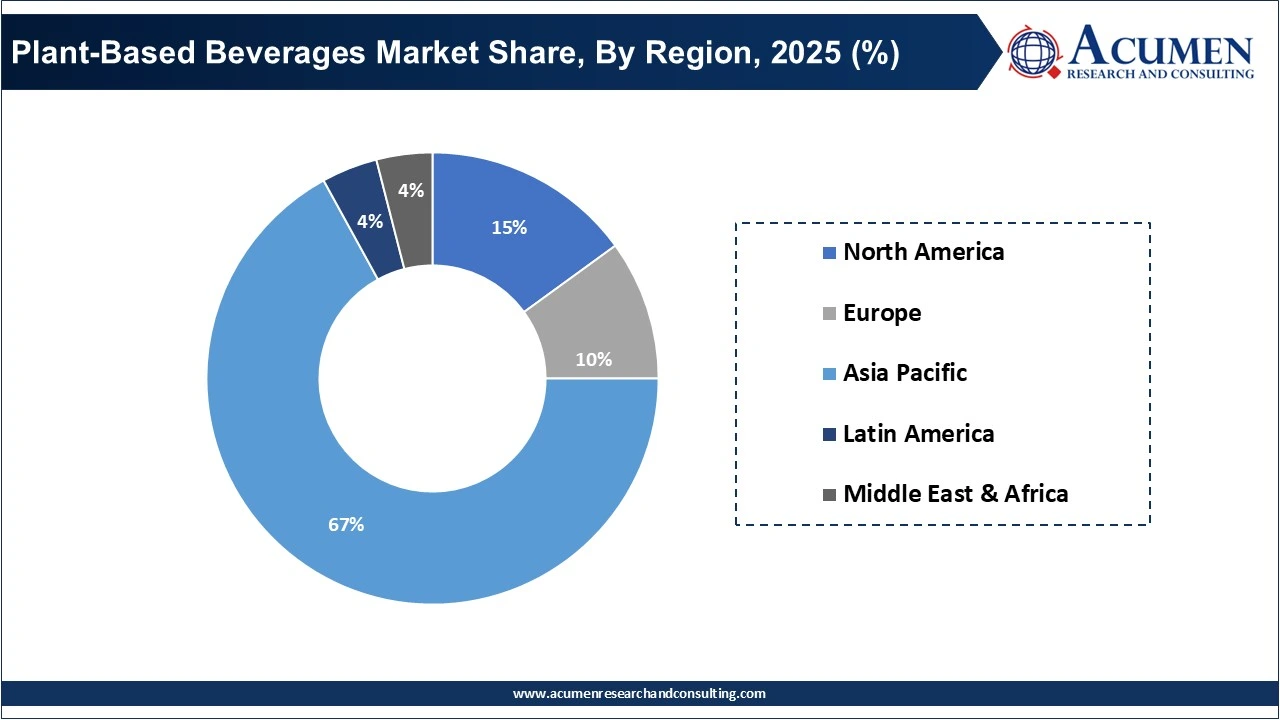
Europe is a fastest growing player, with nations such as Germany, the United Kingdom, and Sweden leading the way in plant-based beverage adoption. The region's market is fueled by increasing environmental awareness and health considerations. Oat milk has emerged as a preferred choice in the UK, driven by its taste, health benefits, and local sourcing initiatives.
These regions are seeing an increase in demand for plant-based beverages, owing to greater health consciousness and a trend toward more sustainable dietary choices. However, issues like pricing and product availability continue. Urban populations in the Middle East and Africa are rapidly adopting plant-based diets, opening up new market potential.
By Product
By Source
By Type
By Distribution Channel
By Region
Looking for discounts, bulk pricing, or custom solutions? Contact us today at [email protected]

December 2020
February 2024
March 2023
December 2025
Trusted Market Intelligence | 2026–2035 Insights | Designed to Support Faster, Smarter Decisions
Thank you! Our team will reach out to you soon.