
Plant-Based Food Market Size, Share, Forecast Report 2025 To 2033
Plant-Based Food Market (By Type: Dairy Alternatives, Meat Alternatives, Egg Substitutes and Condiments, Others; By Nature: Organic, Conventional; By Source: Almond, Soy, Pea, Wheat, Coconut, Others; By Distribution Channel: Supermarkets and Hypermarkets, Convenience Stores, Online Stores, Others) - Global Industry Analysis, Size, Share, Regional Analysis, Trends and Forecast 2025 To 2033
- Last Updated: 27 Apr 2026
- Report Code: ARC3919
- Category: Consumer Goods and Food and Beverages
Plant-Based Food Market Size and Forecast 2025 - 2033
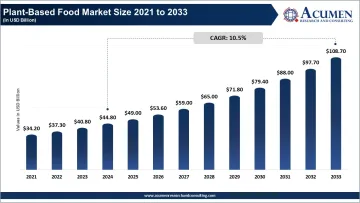
The global plant-based food market size was accounted for USD 49 billion in 2025 and is estimated to exceed USD 108.7 billion by 2033 growing at a CAGR of 10.5% from 2025 to 2033.
Plant-based food products are created fully or mostly from plant-derived substances such as vegetables, grains, legumes, nuts, seeds, and fruits. These foods are intended to replace or minimize the consumption of animal-based goods, specifically meat and dairy. They can range from naturally occurring plant-based foods like tofu and lentils to highly developed alternatives such as plant-based burgers and milk. The emphasis is on improving health, sustainability, and ethical eating practices without sacrificing taste or nutrition.
MD Anderson Cancer Center predicts that plant-based meals have an important role in supporting general health. They boost the immune system, reduce inflammation, help you maintain a healthy weight, and lower your risk of getting a variety of other illnesses.
Plant-Based Food Market Report Highlights
- The global plant-based food market is expected to reach USD 108.7 billion by 2033, with a CAGR of 10.5% from 2025 to 2033.
- The Europe plant-based food market was valued at approximately USD 20.17 billion in 2024.
- The Asia-Pacific market is projected to grow at a CAGR of over 11.3% from 2025 to 2033.
- Among type, dairy alternatives sub-segment accounted for 40% of the market share in 2024.
- Supermarkets and hypermarkets are dominates and holds 60% of share in 2024.
- Companies are expanding beyond meat and dairy alternatives to offer plant-based versions of seafood, eggs, and ready meals is a popular plant-based food market trend.
Plant-Based Food Market Dynamics
Market Drivers
- Rising health consciousness among consumers
- Growing concerns about animal welfare
- Increased environmental awareness and sustainability efforts
Market Restraints
- Higher cost compared to conventional meat
- Limited consumer acceptance in some regions
- Perceived differences in taste and texture
Market Opportunities
- Innovation in plant-based protein technologies
- Expansion into emerging markets
- Strategic partnerships with food service and retail chains
Plant-Based Food Market Report Coverage
| Attribute | Details |
|---|---|
| Plant-Based Food Market Size 2024 | USD 44.8 Billion |
| Plant-Based Food Market Forecast 2033 | USD 108.7 Billion |
| Plant-Based Food Market CAGR During 2025 - 2033 | 10.5% |
| Analysis Period | 2021 - 2033 |
| Base Year | 2025 |
| Forecast Data | 2025 - 2033 |
| Segments Covered | By Type, By Nature, By Source, By Distribution Channel, and By Geography |
| Regional Scope | North America, Europe, Asia Pacific, Latin America, and Middle East & Africa |
| Key Companies Profiled | Nestle S.A., Garden Protein International Inc., Vbite Food Ltd., Amy's Kitchen Inc., Lightlife Foods Inc. (Maple Leaf Foods Inc.), Beyond Meat Inc., Danone SA, Tyson Foods Inc., Atlantic Natural Foods LLC, and Impossible Foods Inc. |
| Report Coverage | Market Trends, Drivers, Restraints, Competitive Analysis, Player Profiling, Covid-19 Analysis, Regulation Analysis |
Plant-Based Food Market Report Insights
More people are prioritizing their health by choosing foods low in saturated fat and cholesterol. According to the International Journal of Creative Research Thoughts (IJCRT), consumer tastes for healthier diets have shifted significantly in recent years. This movement is being driven primarily by increased knowledge of the relationship between nutrition and overall health, as well as rising data linking bad eating habits to chronic illnesses such as obesity, diabetes, heart disease, and some types of cancer. As a result, people are increasingly health-conscious and actively seeking out food options with perceived health benefits. In this environment, plant-based foods are increasingly perceived as healthier options, resulting in rising demand among broad consumer groups.
Additionally, ethical concerns about animal farming influence consumer behavior. The International Fund for Animal Welfare (IFAW) emphasizes that inhumane practices, such as illicit wildlife trading and wild animal transportation, can help to spread diseases that affect both animals and people. These concerns are driving many people to select plant-based alternatives that are cruelty-free and ethically responsible.
Plant-based solutions, on the other hand, are frequently more expensive due to production expenses and the need for ongoing innovation. This price premium may be a barrier for budget-conscious individuals considering a dietary change.
On a positive note, advances in food science are considerably improving the taste, texture, and nutritional content of plant based food market. For example, in March 2024, The Kraft Heinz Not Company LLC launched NotSausages and NotHotDogs, its first plant-based Oscar Mayer products and the first invention from its collaboration with TheNotCompany, Inc. These advancements make plant-based foods more appealing to a broader audience, therefore growing the industry and recruiting new consumers.
Plant-Based Food Market Segmentation Insight
The worldwide market for plant-based food is split based on type, nature, source, distribution channel, and geography.
Type Insight
The dairy alternatives by type account for the greatest share of the plant-based food business, owing to rising lactose intolerance and consumer health concern. Plant-based milk, cheese, yogurt, and ice cream have been widely adopted. These alternatives are suitable for both vegan and flexitarian diets, making them extremely versatile and popular. Their availability through regular retail outlets strengthens their market domination.
Nature Insight
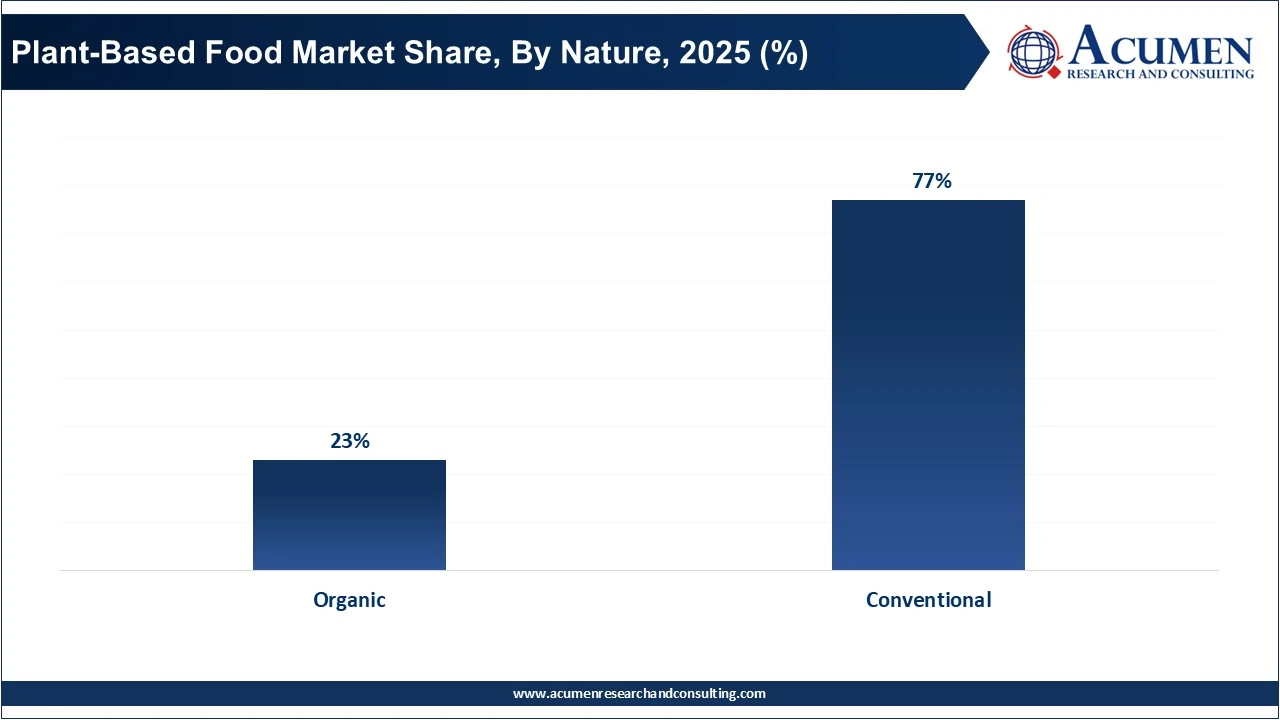
Organic plant-based foods are prized because they are devoid of synthetic pesticides, fertilizers, and GMOs, making them appealing to health-conscious consumers as well as those who value sustainability and clean-label products. This area draws premium shoppers who are willing to pay more for food that they believe is safer and more ecologically friendly. Conventional plant-based meals, on the other hand, are affordable and widely available, making plant-based solutions more accessible to a greater audience and thus encouraging market growth.
Source Insight
The soy is expected to be an industry leader because of its high protein content and versatility in food applications. It's a crucial element in tofu, soy milk, and meat alternatives. Soy has a long history of safe consumption and established supply systems, making it a trusted choice for producers. Its low cost and nutritional value continue to fuel its widespread use worldwide.
Distribution Channel Insight
The supermarkets and hypermarkets are dominates the plant based food market due to their broad reach, diverse product offerings, and attractiveness to health-conscious customers. In April 2024, the grocery giant REWE Group inaugurated its first totally plant-based store, 'REWE voll pflanzlich,' in Berlin's Friedrichshain area. The store, which spans 212 square meters, sells over 2,700 vegan products such as fresh vegetables, baked foods, and health products. It features established companies like REWE Bio + Vegan, Oatly, and Alpro, as well as newbies like Not Guilty and Greenforce. These prominent shops increase the exposure and accessibility of plant-based goods, contributing to their widespread acceptance.
Plant-Based Food Market Regional Insight
In terms of regional segments, Europe leads in this area, owing to strong regulatory support, environmental concerns, and an increase in vegan and flexitarian lifestyles. According to ProVeg International, 38% of Europeans today eat flexitarian, pescatarian, vegan, or vegetarian. Germany has the greatest flexitarian population, at 40%. This diet trend across generations, with 29% of Boomers, 27% of Gen X, 26% of Gen Z, and 28% of Millennials identifying as flexitarians. Major food corporations in Europe are aggressively investing in plant-based technologies, which is fueling industry growth.
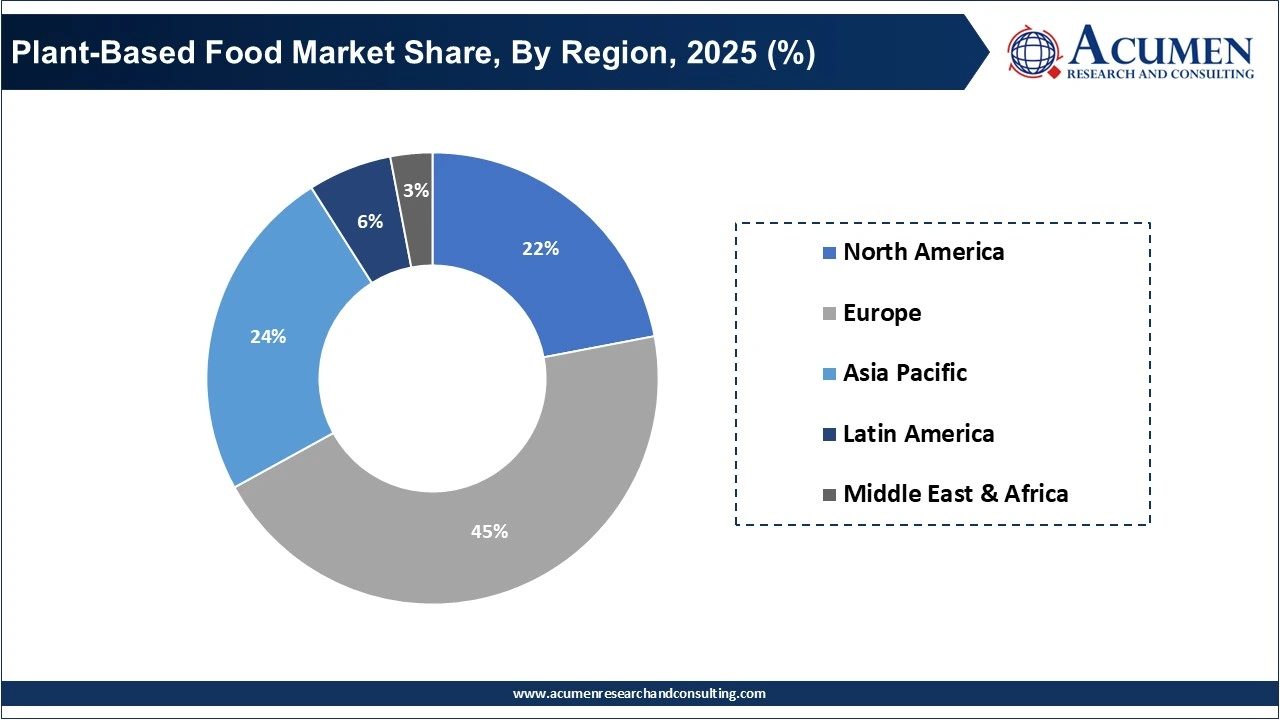
Asia-Pacific, on the other hand, is the fastest-growing region in the plant based food market, owing to its vast population, rising health consciousness, and long-standing plant-based diet habits. Countries such as China and India are seeing a substantial increase in demand for meat alternatives and dairy-free options. According to Assocham India, while China already has high levels of self-sufficiency in meat and dairy, rising earnings and fast urbanization are increasing animal protein demand. China's meat output target for 2025 is 89 million tons, a 15% increase from 2020. This spike in demand for meat is also supporting the growth of the plant-based food business in Asia-Pacific.
The plant based food market in North America is likewise expanding rapidly, owing to increased health and environmental consciousness. The U.S. market is especially lively, with an increase in plant-based companies and product diversity. For example, in October 2023, Nelson-Jameson, a food processing distributor in the United States, collaborated with Vaess, a Dutch food technology business, and Lallemand specialized Cultures, a specialized cultures manufacturer in the United States, to increase plant-based manufacturing capabilities.
Plant-Based Food Market Players
- Nestle S.A.
- Garden Protein International Inc.
- Vbite Food Ltd.
- Amy's Kitchen Inc.
- Lightlife Foods Inc. (Maple Leaf Foods Inc.)
- Beyond Meat Inc.
- Danone SA
- Tyson Foods Inc.
- Atlantic Natural Foods LLC
- Impossible Foods Inc.
Market Segmentation
By Type
- Dairy Alternatives
- Meat Alternatives
- Egg Substitutes and Condiments
- Others
By Nature
- Organic
- Conventional
By Source
- Almond
- Soy
- Pea
- Wheat
- Coconut
- Others
By Distribution Channel
- Supermarkets and Hypermarkets
- Convenience Stores
- Online Stores
- Others
By Region
- North America
- U.S.
- Canada
- Europe
- U.K.
- Germany
- France
- Spain
- Rest of Europe
- Asia-Pacific
- India
- Japan
- China
- Australia
- South Korea
- Rest of Asia-Pacific
- Latin America
- Brazil
- Mexico
- Rest of LATAM
- The Middle East & Africa
- South Africa
- GCC Countries
- Rest of the Middle East & Africa (ME&A)
Looking for discounts, bulk pricing, or custom solutions? Contact us today at sales@acumenresearchandconsulting.com
Frequently Asked Questions

Other Consumer Goods and Food and Beverages Reports
January 2018
February 2024
December 2021
February 2021