
Pulse Oximeter Market Size, Share and Forecast 2025 - 2033
Pulse Oximeter Market (By Type: Portable Pulse Oximeter, Tabletop/Bed Side Pulse Oximeter; By Component: Sensors, Monitors; By Age Group: Pediatric, Adult; By End Use: Hospitals, Outpatient Facilities, Home Care, Others) - Global Industry Analysis, Size, Share, Regional Analysis, Trends and Forecast 2025 - 2033
- Last Updated: 14 May 2026
- Report Code: ARC2161
- Category: Healthcare and Pharmaceuticals
Pulse Oximeter Market Size, Forecast 2025 - 2033
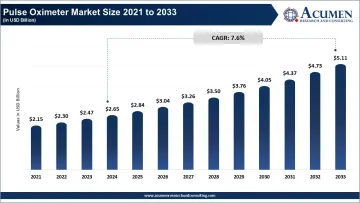
The global pulse oximeter market size was accounted for USD 2.84 billion in 2025 and is estimated to reach around USD 5.11 billion by 2033 growing at a CAGR of 7.6% from 2025 to 2033.
A pulse oximeter is a non-invasive medical device that measures oxygen saturation (SpO₂) and pulse rate. It often connects to a fingertip, toe, or earlobe and uses light sensors to monitor the amount of oxygen given by red blood cells. The device sends light wavelengths through the skin and monitors changes in light absorption that vary with oxygen levels. Pulse oximeters are widely used in hospitals, clinics, and at home to monitor patients with respiratory or cardiac disorders. They are critical for diagnosing hypoxemia (low blood oxygen levels), particularly in instances of COVID-19, COPD, or asthma. The readings assist healthcare providers in determining a patient's respiratory function and guiding treatment recommendations.
Report Highlights
- The global pulse oximeter market is expected to reach USD 5.11 billion by 2033, with a CAGR of 7.6% from 2025 to 2033.
- The North America pulse oximeter market was valued at approximately USD 1.2 billion in 2024.
- The Asia-Pacific market is projected to grow at a CAGR of over 8.9% from 2025 to 2033.
- The tabletop/bed side pulse oximeter type sub-segment accounted for 58% of the pulse oximeter market share in 2024.
- Based on the component, monitors segment held around 66% market share.
- Growing use in fitness and wellness sectors creates new consumer segments is a popular pulse oximeter market trend that fuels the industry demand.
Pulse Oximeter Market Dynamics
Market Drivers
- Rising prevalence of respiratory diseases such as COPD and asthma boosts demand for pulse oximeters
- Increasing adoption of home healthcare and remote patient monitoring fuels market growth
- Technological advancements in wearable and fingertip oximeters enhance user convenience
- Growing awareness about preventive healthcare drives routine oxygen level monitoring
Market Restraints
- Inaccuracy issues in patients with poor circulation or darker skin tones limit reliability
- Regulatory challenges and product recalls can hinder market expansion
- Limited access to pulse oximeters in low-income regions restricts market penetration
Market Opportunities
- Expansion of telehealth services increases integration of oximeters into virtual care systems
- Emerging markets offer untapped potential due to rising healthcare investments
- Development of AI-integrated oximeters enhances real-time data analytics
Report Coverage
| Attribute | Details |
|---|---|
| Pulse Oximeter Market Size 2025 | USD 2.84 Billion |
| Pulse Oximeter Market Forecast 2033 | USD 5.11 Billion |
| Pulse Oximeter Market CAGR During 2025 - 2033 | 7.6% |
| Analysis Period | 2021 - 2033 |
| Base Year | 2025 |
| Forecast Data | 2025 - 2033 |
| Segments Covered | By Type, By Component, By Age Group, By End Use, and By Geography |
| Regional Scope | North America, Europe, Asia Pacific, Latin America, and Middle East & Africa |
| Key Companies Profiled | Drägerwerk AG & Co. KGaA, CONTEC MEDICAL SYSTEMS CO., LTD, OSI Systems, Inc., ICU Medical, Inc., NIHON KOHDEN CORPORATION, Nonin, GE HealthCare, Koninklijke Philips N.V., Masimo, and Medtronic. |
| Report Coverage | Market Trends, Drivers, Restraints, Competitive Analysis, Player Profiling, Covid-19 Analysis, Regulation Analysis |
Pulse Oximeter Market Insights
A noninvasive tool to monitor the oxygen saturation of a person is pulse oximeter. A sensor unit is mounted on a thin section of the patient's body, the most typical deployment mode is the fingertip or earlobe in adults, and it is positioned over a foot in the case of babies. The pulse oximeter indicates the oxygen filled proportion of blood. Pulse oximeter tests the amount of hemoglobin, the oxygen-borne protein in the blood. For constant measurement of blood oxygen saturation, the pulse oximeter is particularly useful. Pulse oximeter may be used in any situation where the oxygenation of the patient is not sufficient, such as in intensive care, procedure, ambulance & hospital treatment, rehabilitation, patients at high altitude for oxygen measurement, and to decide whether additional oxygen is required. In addition, pulse oximeters are of vital significance in urgent or first aid because of the ease of use and capacity to provide constant and instant oxygen saturation values. In those with cardiac attacks, respiratory issues, and chronic obstructive pulmonary diseases pulse oximeter is helpful.
A rapid growth in the industry is expected during the pulse oximeter market forecast period. The major driving force of the industry is the growing incidence of chronic obstructive lung disease, such as asthma. Increased understanding of non-invasive devices and widespread acceptance by population of medical devices are projected to fuel market development. Besides, in the underdeveloped economies, high prices and poor availability of medical equipment constrain market growth. Improvement of developments of surgical supplies will in the immediate term pose a valuable advantage on the market.
Pulse Oximeter Market Segmentation Insights
The worldwide market for pulse oximeter is split based on type, component, age group, end use, and geography.
Type Insights
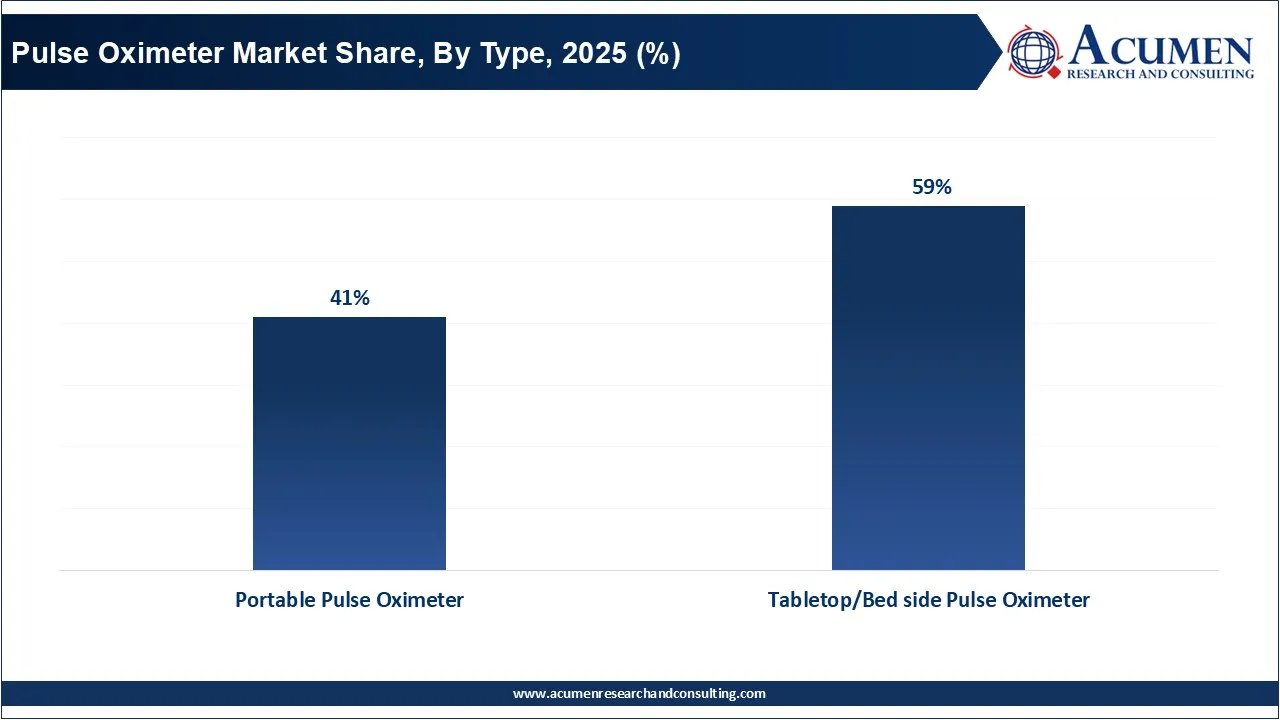
The tabletop/bedside pulse oximeter category has the largest market share because to its superior precision, durability, and widespread use in clinical settings. These devices are commonly used in hospitals, critical care units, and emergency rooms where continuous and accurate monitoring of a patient's oxygen saturation and pulse rate is essential. Their ability to interface with various monitoring systems and electronic health data expands their utility. Furthermore, their advanced features, such as alarm functionalities, real-time data tracking, and compatibility with adult, pediatric, and neonatal patients, make them a top choice among healthcare professionals. The increased demand for dependable patient monitoring solutions in critical care settings maintains this segment's global market dominance. These devices are most commonly used in hospitals.
Component Insights
The monitor sector dominates the pulse oximeter industry, generating roughly USD 1.7 billion in revenue. This dominance stems from its critical function in providing continuous and real-time monitoring of oxygen saturation and pulse rate, particularly in hospitals and clinical settings. These monitors are often used in operating rooms, intensive care units, and emergency circumstances where precision and quick response time are essential. They provide healthcare practitioners high reliability and user-friendly interfaces by including novel display systems, alarms, and data integration capabilities. The monitor segment's good growth and market leadership are driven by the growing need for comprehensive patient monitoring systems, as well as the increased emphasis on patient safety in critical care.
Age Group Insight
The adult segment is estimated to account for a sizable part of the market during the pulse oximeter market forecast period, owing to the increasing prevalence of chronic respiratory and cardiovascular disorders among the adult population. Adults, particularly the aged, are more vulnerable to illnesses like COPD, asthma, and sleep apnea, demanding frequent oxygen saturation monitoring. The growing popularity of home-based healthcare equipment, such as portable and fingertip pulse oximeters, fuels market expansion. Furthermore, increased knowledge of preventive health practices and widespread use of oximeters during the COVID-19 epidemic have reinforced their role in adult care. With healthcare systems increasingly focused on early detection and ongoing monitoring, the adult category is expected to remain a significant revenue driver in the coming years.
End Use Insights
The industry was dominated by hospitals and clinics segment, as the number of operations and emergency department visits increased. In fact, oximetry is an important aspect of newborn screening, which contributes to the amount of instruments received from hospitals in many countries. Masimo 's SET pulse oximeter is one of the most widely used devices in hospitals. The home care sector is expected to see rapid rise over the projected era. An increasing understanding of the value of controlling oxygen levels is one of the key factors for the demand in pulse oximeters. However, people with chronic illnesses tend to search for treatment in their home setting and has created a demand for home pulse oximeters. In the home treatment, fingertip pulse oximeters are considered safe and reliable, as they can help monitor and store patient readings on the oxygen level that can minimize the chance of hospital readmission.
Pulse Oximeter Market Regional Insights
North America emerged as the largest market in the pulse oximeter industry and is projected to maintain steady growth throughout the forecast period. This dominance is attributed to increasing awareness among the general population regarding the importance of monitoring respiratory functions. Additionally, the high prevalence of congenital heart disease in the U.S. one of the most common birth defects has led to mandatory pulse oximetry screening for newborns before discharge from healthcare facilities.
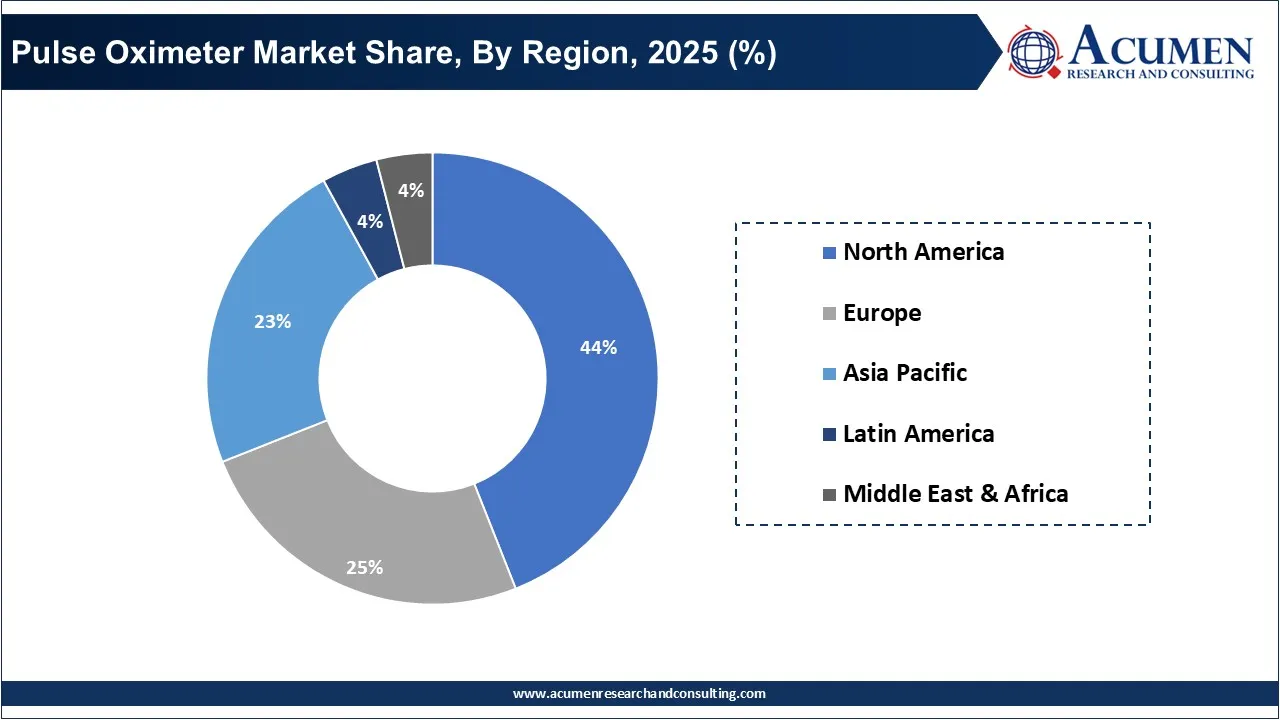
Asia-Pacific is anticipated to be the fastest growing region in the industry during the pulse oximeter market forecast period. In this location, the adoption of pulse oximeters has helped to reduce postoperative hospitalization rates. Medical groups, such as the Indian Society of Anesthesiologists, have recommended for the use of pulse oximetry during all anesthetic procedures. Recognizing the expanding regional need, corporations are producing products customized to emerging economies' demands. For instance, the Rad-97 Pulse-CO Oximeter was introduced in India in January 2017. Meanwhile, it's noteworthy that chronic obstructive pulmonary disease (COPD) remains a significant concern in Europe, with more than 66.0 million people affected, according to the World Health Organization.
Pulse Oximeter Market Key Players
- Drägerwerk AG & Co. KGaA
- CONTEC MEDICAL SYSTEMS CO., LTD
- OSI Systems, Inc.
- ICU Medical, Inc.
- NIHON KOHDEN CORPORATION
- Nonin
- GE HealthCare
- Koninklijke Philips N.V.
- Masimo
- Medtronic
Market Segmentation
By Type
- Portable Pulse Oximeter
- Wearable Pulse Oximeter
- Handheld Pulse Oximeter
- Fingertip Pulse Oximeter
- Tabletop/Bed Side Pulse Oximeter
By Component
- Sensors
- Monitors
By Age Group
- Pediatric
- Adult
By End Use
- Hospitals
- Outpatient Facilities
- Home Care
- Others
By Region
- North America
- U.S.
- Canada
- Europe
- U.K.
- Germany
- France
- Spain
- Rest of Europe
- Asia-Pacific
- India
- Japan
- China
- Australia
- South Korea
- Rest of Asia-Pacific
- Latin America
- Brazil
- Mexico
- Rest of LATAM
- The Middle East & Africa
- South Africa
- GCC Countries
- Rest of the Middle East & Africa (ME&A)
Looking for discounts, bulk pricing, or custom solutions? Contact us today at sales@acumenresearchandconsulting.com
Frequently Asked Questions

Other Healthcare and Pharmaceuticals Reports
August 2023
May 2021
March 2024
January 2025