
Wearable Neurostimulation Devices Market Size - Global Industry, Share, Analysis, Trends and Forecast 2024 - 2032
Wearable Neurostimulation Devices Market (By Application: Stroke, Spinal Cord Injury, Cerebral Palsy, Others, By End-User: Rehabilitation Centers, Hospitals and Clinics, Others (Academic & Research Institute, Home Settings)) - Global Industry Size, Share, Analysis, Trends and Forecast 2024 - 2032
- Last Updated: 23 Feb 2026
- Report Code: ARC3753
- Category: Healthcare and Pharmaceuticals
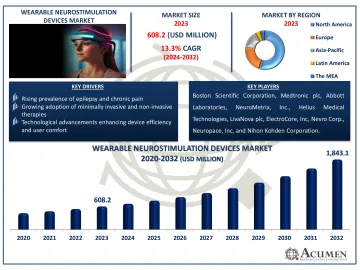
The Global Wearable Neurostimulation Devices Market Size accounted for USD 608.2 Million in 2023 and is estimated to achieve a market size of USD 1,843.1 Million by 2032 growing at a CAGR of 13.3% from 2024 to 2032.
Wearable Neurostimulation Devices Market Highlights
- Global wearable neurostimulation devices market revenue is poised to garner USD 1,843.1 million by 2032 with a CAGR of 13.3% from 2024 to 2032
- According to World Federation of Neurology, over 40% of the global population already suffers from some type of neurological illness, and this burden is expected to nearly double by 2050
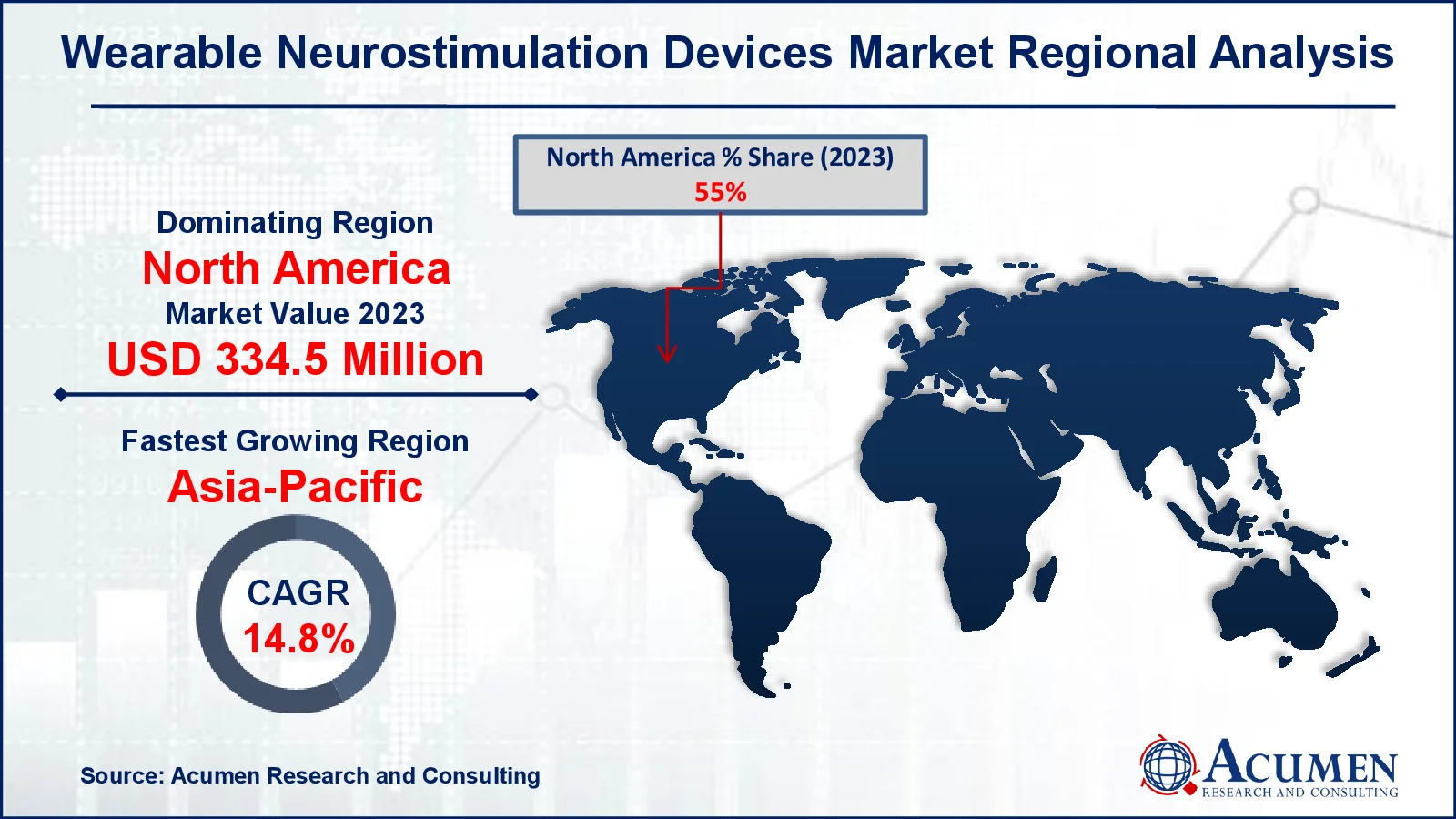
- North America wearable neurostimulation devices market value occupied around USD 334.51 million in 2023
- Asia-Pacific wearable neurostimulation devices market growth will record a CAGR of more than 14.8% from 2024 to 2032
- Based on application, the stroke sub-segment generated 40% market share in 2023
- According to World Stroke Organization, every year, more than 12.2 million new strokes occur. Globally, one in every four persons over the age of 25 will experience a stroke.
- Improved device control and monitoring via smartphone apps and IoT integration is the wearable neurostimulation devices market trend that fuels the industry demand
Wearable neurostimulators are battery-powered devices that offer electrical stimulation to the neurological system. These devices are often worn on the body to treat neurological problems by focusing on specific locations such as the brain, spinal cord, or peripheral nerves.
Wearable neurostimulators are widely used to treat chronic pain, epilepsy, depression, and movement disorders such as Parkinson's disease. According to the National Institute of Health (NIH), a significant number of studies (44 out of 69, or 64%) focused on the use of wearable devices for treating depression, with approximately 90% of these studies utilizing commercial wearable devices.
These technologies, which use non-invasive or minimally invasive approaches, provide patients with a convenient and comfortable alternative to standard therapies. Their ability to tailor therapy and be utilized at home makes them an important tool in current healthcare management.
Global Wearable Neurostimulation Devices Market Dynamics
Market Drivers
- Rising prevalence of epilepsy and chronic pain
- Growing adoption of minimally invasive and non-invasive therapies
- Technological advancements enhancing device efficiency and user comfort
Market Restraints
- High costs associated with wearable neurostimulation devices
- Limited awareness and accessibility in developing regions
- Potential side effects and risks related to prolonged usage
Market Opportunities
- Increasing focus on personalized and home-based healthcare solutions
- Expansion in emerging markets with rising healthcare infrastructure
- Integration of AI and IoT for enhanced device functionality and monitoring
Wearable Neurostimulation Devices Market Report Coverage
|
Market |
Wearable Neurostimulation Devices Market |
|---|---|
|
Wearable Neurostimulation Devices Market Size 2023 |
USD 608.2 Million |
|
Wearable Neurostimulation Devices Market Forecast 2032 |
USD 1,843.1 Million |
|
Wearable Neurostimulation Devices Market CAGR During 2024 - 2032 |
13.3% |
|
Wearable Neurostimulation Devices Market Analysis Period |
2020 - 2032 |
|
Wearable Neurostimulation Devices Market Base Year |
2023 |
|
Wearable Neurostimulation Devices Market Forecast Data |
2024 - 2032 |
|
Segments Covered |
By Application, By End-User, and By Geography |
|
Regional Scope |
North America, Europe, Asia Pacific, Latin America, and Middle East & Africa |
|
Key Companies Profiled |
Boston Scientific Corporation, Medtronic plc, Abbott Laboratories, LivaNova plc, NeuroMetrix, Inc., Nevro Corp., Helius Medical Technologies, ElectroCore, Inc, Neuropace, Inc, and Nihon Kohden Corporation. |
Wearable Neurostimulation Devices Market Insights
The growing frequency of neurological illnesses including epilepsy and chronic pain is a major driver of the wearable brain devices industry. As per World Federation of Neurology, currently, neurological illnesses are the second biggest cause of mortality and disability in the globe. A revolutionary new Global Burden of Disease (GBD) study reveals that the number of individuals suffering from brain disease is predicted to double by 2050. As these disorders become increasingly common, there is a greater need for effective, non-invasive treatments.
The increased use of minimally invasive and non-invasive therapies further enhances the wearable neurostimulator devices market. For instance, Medtronic announced FDA approval for a minimally invasive hypertension treatment device in November 2023. These therapies are recommended over traditional surgical techniques because they have a decreased risk of complications, faster recovery times, and improved patient comfort, hence enhancing market appeal.
High costs associated with product hampers wearable brain devices market growth, this limits access for many patients. This cost problem can impede wider adoption, particularly in lower-income countries or among persons without adequate health coverage. However, the expansion of healthcare infrastructure in emerging nations creates a substantial opportunity for the wearable neurostimulator devices market. For instance, the Indian government intends to launch a credit incentive programme costing INR 50,000 crore (US$ 6.8 billion) to improve the country's healthcare infrastructure. As these regions develop, increased access to advanced medical technologies allows for broader use of neurostimulators, addressing the growing need for neurological therapies.

Wearable Neurostimulation Devices Market Segmentation
The worldwide market for wearable neurostimulation devices is split based on type, application, end-user, distribution channel, and geography.
Wearable Neurostimulation Device Market By Application
- Stroke
- Spinal Cord Injury
- Cerebral Palsy
- Others (Parkinson’s Dieases, Brachial Plexus Injury, Multuple Sclerosis)
According to the wearable neurostimulation devices industry analysis, stroke dominates the market due to its widespread occurrence and increased desire for effective rehabilitation treatments. These devices are critical in stroke rehabilitation because they increase brain plasticity, improve motor function, and reduce post-stroke consequences by tailored stimulation. According to the American Academy of Neurology, stroke is the third greatest cause of mortality in the United States, with Alzheimer's disease coming in sixth. The increasing use of wearable technologies for tailored, home-based stroke rehabilitation drives wearable neurostimulator devices market expansion.
Wearable Neurostimulation Device Market By End-User
- Rehabilitation Centers
- Hospitals and Clinics
- Others (Academic & Research Institute, Home Settings)
According to the wearable neurostimulation devices market forecast, hospitals and clinics segment are growing rapidly because they serve as primary care providers for neurological diseases and acute treatments. These facilities are outfitted with advanced diagnostic instruments and trained specialists to efficiently deliver and monitor neurostimulation therapies. The rising prevalence of illnesses such as stroke, chronic pain, and epilepsy increases patients' reliance on hospitals for initial care and device supervision. However, increased usage in home settings for rehabilitation and long-term care is slowly leveling the market share.
Wearable Neurostimulation Device Market By Regional Outlook
North America
- U.S.
- Canada
Europe
- U.K.
- Germany
- France
- Spain
- Rest of Europe
Asia-Pacific
- India
- Japan
- China
- Australia
- South Korea
- Rest of Asia-Pacific
Latin America
- Brazil
- Mexico
- Rest of Latin America
Middle East & Africa
- South Africa
- GCC Countries
- Rest of the Middle East & Africa (ME&A)
Wearable Neurostimulation Devices Market Regional Analysis
For several reasons, North America leads the wearable brain devices market because to its advanced healthcare infrastructure, widespread adoption of breakthrough medical technologies, and high demand for non-invasive treatment choices. The region also has a well-established market for wearable gadgets, with significant investment in research and development. For instance, according to National Science Foundation, in fiscal year 2023, the 42 federally financed research and development centers (FFRDCs) spent $29.3 billion on research and development (R&D), representing a 12.7% yearly growth in current dollars. Additionally, a large patient population suffering from chronic spinal cord injury drives market growth in North America.
The wearable brain devices market in Asia-Pacific is predicted to rise significantly, owing to improved healthcare infrastructure and increased awareness of modern medical technology. The growing emphasis on expanding healthcare services in nations like China and India creates a favorable climate for the adoption of wearable neurostimulators. For instance, Bonatra introduced the Smart Ring X1, a wearable ring that monitors health metrics like heart rate, blood oxygen levels (SpO₂), and sleep quality. This emphasis on multipurpose and user-friendly products establishes India as an emerging hub for wearable technology, boosting market expansion for wearable devices in healthcare.
Wearable Neurostimulation Devices Market Players
Some of the top wearable neurostimulation devices companies offered in our report include Boston Scientific Corporation, Medtronic plc, Abbott Laboratories, LivaNova plc, NeuroMetrix, Inc., Nevro Corp., Helius Medical Technologies, ElectroCore, Inc, Neuropace, Inc, and Nihon Kohden Corporation.
Looking for discounts, bulk pricing, or custom solutions? Contact us today at sales@acumenresearchandconsulting.com
Frequently Asked Questions

Other Healthcare and Pharmaceuticals Reports
March 2024
January 2024
August 2023
April 2023