
How Supercapacitor Buses Could Transform Smart Cities and Reduce Emissions
Author: Acumen Research And Consulting



As cities struggle with rising pollution and traffic congestion, the search for sustainable transportation alternatives has accelerated. The supercapacitor bus is one of the most innovative vehicles, promising to transform smart city transportation by providing rapid charging, lower emissions, and increased energy efficiency.
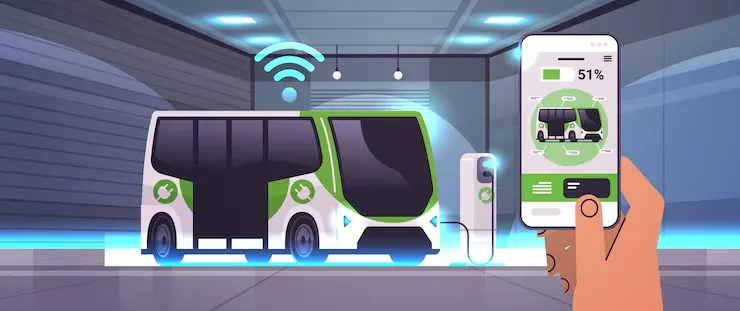
What are the Supercapacitor Buses:
A supercapacitor bus makes use of supercapacitors, which are advanced energy storage devices noted for their high power density and ability to charge and discharge quickly. Supercapacitors are suited for urban transportation systems with frequent stop-and-go operations because they recharge faster than ordinary batteries.
- According to Acumen Research and Consulting, the worldwide Automotive Supercapacitor Market is predicted to reach USD 7.5 billion by 2032.
- In May 2021, US Nuclear's partner Grapheton announced a next-generation supercapacitor made of glassy carbon material, which provides rapid charging benefits for electric vehicles.
This improvement is projected to drive the expansion of automotive supercapacitors, fostering future innovation in supercapacitor-powered buses. Furthermore, such advances by major manufacturers are accelerating the development of smart city transportation and encouraging Low emission public transport options.
Benefits of Supercapacitor Buses:
Rapid Charging: Supercapacitors may be fully charged in minutes, cutting downtime and improving operational efficiency.
Supercapacitors have a longer life duration than ordinary batteries, which means fewer maintenance expenses.
Environmental Impact: By eliminating tailpipe emissions, supercapacitor buses help to promote low emission public transport, which aligns with global sustainability goals.
Energy Efficiency: The great efficiency of supercapacitors enables little energy loss during operation, encouraging green mobility solutions.
Grid Stability: When combined with energy storage technology, supercapacitor buses can assist balance urban power grids and improve smart city transportation networks.
- The Institute of Electrical and Electronics Engineers (IEEE) recommends supercapacitor buses for urban transit, particularly for routes with terminal distances under 20 kilometers. These buses are excellent in repetitive start-stop, acceleration, and deceleration operations. Notably, supercapacitors outperform chemical batteries at low temperatures, making them appropriate for public transportation in colder regions.
Supercapacitor Buses in Action:
The usage of supercapacitor buses is gaining traction globally. Cities in China, such as Shanghai and Ningbo, have deployed fleets of these buses, taking advantage of their quick charging and environmental benefits. Similarly, European towns are looking into supercapacitor buses as part of their green mobility solutions in order to achieve severe emissions standards.
According to the Press Information Bureau (PIB), India's emphasis on electric public transport is evident through programs such as the PM e-Drive scheme. Bengaluru, for example, intends to increase its fleet with 4,500 electric buses, bringing the total to around 10,000. While these are predominantly battery-powered, the use of supercapacitor buses could further strengthen the city's commitment to zero-emission transport technology.
Trends of Eco-Friendly Public Transport 2025:
The year 2025 marks a watershed moment in the advancement of environmentally friendly public transportation trends. Cities throughout the world are prioritizing low emission public transport to mitigate climate change and improve air quality. Supercapacitor buses complement these trends by providing a sustainable alternative to fossil-fuel-powered vehicles.
Furthermore, incorporating supercapacitor buses into smart city transportation frameworks promotes the creation of intelligent transit networks. Features like real-time monitoring, predictive maintenance, and energy-efficient routing become more practical, improving the overall efficiency and dependability of urban transportation.
Challenges and Considerations:
While the possibilities for supercapacitor buses are good, certain issues must be addressed.
Infrastructure Development: Establishing charging stations with the required technologies is critical for wider adoption.
Initial Investment: The initial expenses of supercapacitor buses and their infrastructure might be high, needing government funding and public-private collaborations.
Technological Advancements: Continuous research is important to boost the energy density of supercapacitors, guaranteeing they fulfill the demands of diverse transportation routes.
Conclusion:
- Cities are increasingly turning to energy-efficient solutions for smart city mobility, as the Supercapacitors Market expands and investments in the Supercapacitors Material Market, rise.
These growing markets are spurring innovation in high-capacity, fast-charging energy storage technologies that are appropriate for urban transit systems and smart city transportation networks. As supercapacitor-powered buses become more popular, they offer a cleaner, faster alternative to diesel fleets, thereby helping both emission reduction targets and the construction of smart city transportation infrastructure.
The transition to electric public transport is no longer a choice, but a necessity. Supercapacitor buses offer a viable path forward by combining efficiency, sustainability, and innovation. As cities work to achieve their environmental goals, adding supercapacitor buses into their smart city transportation strategy will contribute to a cleaner, greener future.
Cities that use supercapacitor buses into their transit systems can achieve significant reductions in emissions, operational costs, and energy consumption. As we move ahead to 2025 and beyond, acceptance of this technology will be critical to the growth of environmentally friendly public transportation trends.