
Sustainable Aviation Fuel: The Future or a Flight of Fancy?
Author: Acumen Research And Consulting



As global sectors realign their goals around environmental sustainability, aviation, which has traditionally relied on high-carbon fossil fuels, confronts severe scrutiny. Enter sustainable aviation fuel (SAF), a promising breakthrough heralded as a game changer in the effort to decarbonize aviation transport. While the technology and concept of SAF are excellent, the path to widespread implementation is complicated and fraught with hurdles. Is this the beginning of a new era in flight, or are we overly optimistic?
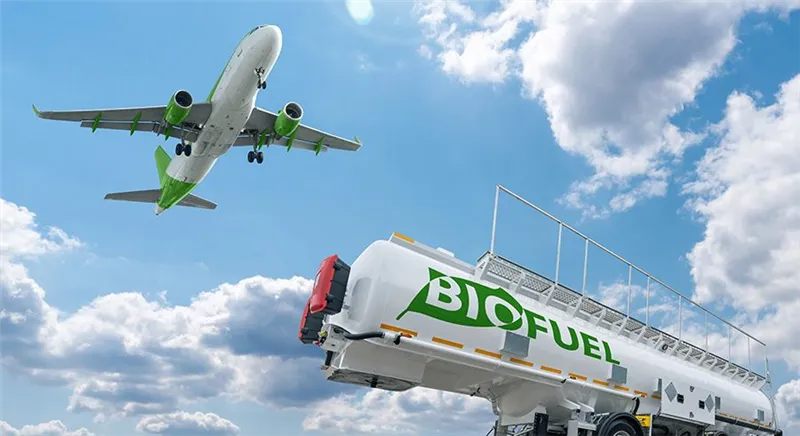
The Science behind Aviation Fuel Sustainable: A Cleaner Path Forward
Sustainable aviation fuel is a renewable substitute for conventional jet fuel, derived from resources such as used cooking oil, municipal solid waste, agricultural residues, and algae. Unlike synthetic fuels, which require engine changes, SAF is a "drop-in" option, which means it closely resembles standard jet fuel and can be utilized without affecting existing aircraft infrastructure.
A key advantage of aviation fuel sustainable lies in its sustainable aviation fuel composition. Its chemical profile is designed to meet demanding requirements like ASTM D7566, assuring compatibility with existing engines. More crucially, the composition of sustainable aviation fuel directly leads to lower emissions, with up to 94% lower lifecycle greenhouse gases compared to fossil-based jet fuels, depending on feedstock and production method.
Meanwhile, sustainable aviation fuel density is an important factor influencing fuel performance and safety. Jet A-1, the most commonly used commercial sustainable aviation fuel, has a density between 775 and 840 kg/m³. SAF's sustainable aviation fuel density is generally compliant with these standards, allowing airlines to use it without recalibrating aircraft systems or sacrificing range or performance.
Environmental Imperatives and Emission Realities
Aviation is responsible for about 2.5% of global carbon dioxide emissions, a figure expected to rise with increasing air travel demand. To combat this, SAF has emerged as a strategic solution for mitigating aviation’s environmental impact. According to the U.S. Department of Energy, sustainable aviation fuel has the potential to cut net carbon emissions by over 80% during its lifecycle when produced from optimal sources.
Beyond carbon reduction, SAF also brings co-benefits: lower particulate emissions, reduced sulfur oxide output, and decreased contrail formation. These elements collectively contribute to improved air quality and reduced radiative forcing factors often overlooked in climate mitigation discussions.
Recent Developments and Policy Pushes
In response to growing environmental pressures, governments and international bodies are mobilizing to scale up SAF. In the U.S., the Federal Aviation Administration (FAA) introduced the SAF Grand Challenge, a pivotal initiative aiming to produce 3 billion gallons of sustainable aviation fuel per year by 2030, scaling up to 35 billion gallons by 2050.
To further incentivize production, the U.S. government now offers tax credits of $1.25–$1.75 per gallon of SAF, depending on its carbon intensity. Additionally, nearly $300 million in grants have been allocated to SAF developers and suppliers through the FAA and Department of Energy. These actions reflect a significant policy shift toward fostering a viable sustainable aviation fuel market.
Globally, similar initiatives are gaining traction. The European Union has mandated increasing SAF blending rates, while Japan and Singapore are investing in bio-refineries. As countries vie to meet net-zero targets, SAF is being positioned as a critical lever in climate strategy.
Market Trajectory and Production Challenges
Despite its strong potential, the sustainable aviation fuel market is still in its infancy. IATA reports that global SAF production in 2024 reached around 1 million tonnes (1.3 billion liters), accounting for just 0.3% of total aviation fuel usage. Projections indicate that output will quadruple to 2.1 million tonnes (2.7 billion liters) by 2025, yet this still represents less than 1% of overall consumption.
To attain net-zero by 2050, IATA predicts that SAF must account for at least 65% of total sustainable aviation fuel. That's a difficult climb that will necessitate extraordinary scale of technology, supply networks, and policy backing.
A major hurdle remains the cost. SAF currently costs two to five times more than conventional jet fuel. Airlines operating on narrow margins find it difficult to justify switching unless mandated or heavily subsidized. According to a 2024 Reuters report, 87% of global airlines have made minimal progress in SAF integration, citing high costs and limited supply as key deterrents.
Airlines and Industry Participation
While certain airlines are at the forefront of SAF adoption, progress has been uneven. United Airlines, Lufthansa, and Air France-KLM have signed multi-year SAF purchase deals and partnered with fuel providers. British Airways and Japan airline technology are considering direct investments in biorefinery infrastructure. These moves demonstrate an increasing realization of SAF's long-term value proposition, both environmentally and reputationally.
However, without larger sector involvement, these efforts will be insufficient. IATA highlights the importance of unified global mandates, coordinated infrastructure investment, and defined sustainability requirements. Without this congruence, SAF adoption may remain fragmented and inefficient.
Innovations Paving the Way
The long-term viability of SAF is highly dependent on technical innovation. Currently, the majority of SAF is manufactured utilizing the HEFA (Hydroprocessed Esters and Fatty Acids) technology. While successful, HEFA is constrained by feedstock availability and frequently competes with other industries like road transport and chemicals.
New approaches, such as Fischer-Tropsch synthesis, Alcohol-to-Jet (AtJ), and Power-to-Liquid (PtL), could provide increased scalability. These technologies use non-edible feedstocks such as municipal solid waste, collected COâ‚‚, and renewable electricity.
Significantly, research is also ongoing to fine-tune sustainable aviation fuel composition and optimize combustion properties, thermal stability, and freeze points. As SAF blends become more sophisticated, maintaining a sustainable aviation fuel density while improving energy output will be pivotal.
Benefits Beyond Emissions
SAF's benefits extend beyond the environment. Economically, sustainable aviation fuel production can rejuvenate rural economies by providing jobs in feedstock gathering, fuel refining, and logistics. A strong local SAF sector improves energy security by minimizing reliance on imported fossil fuels.
Furthermore, as public awareness of climate issues rises, airlines who employ SAF can position themselves as sustainability leaders, offering them a competitive advantage in terms of customer loyalty and investor confidence.
Snapshot: Key Benefits of Sustainable Aviation Fuel
- Emissions: Up to 94% reduction in lifecycle greenhouse gases
- Air Quality: Reduced sulfur oxides and particulates
- Compatibility: Drop-in fuel, requires no engine modification
- Energy Security: Diversifies domestic fuel sources
- Job Creation: Strengthens local economies through new supply chain
Conclusion: A Future Worth Flying Toward?
Sustainable aviation fuel is more than just a technological marvel; it is a critical milestone in the aviation industry's climate action. While its promise is evident, current issues such as high production costs, feedstock restrictions, and regulatory fragmentation pose significant challenges. The upcoming decade will be significant. If governments, industry, and research institutions work together effectively, SAF might grow from a nascent invention to an aviation mainstay.
Ultimately, the success of sustainable aviation fuel will depend not on its scientific merits alone, but on society’s collective will to invest in sustainable transformation. The world is watching. And the sky is no longer the limit—it’s the proving ground.