
Why Climate Change Demands Urgent Disaster Preparedness
Author: Acumen Research And Consulting



Impact of climate change has grown more evident as environmental disasters have increased around the world. Rising global temperatures exacerbate natural phenomena, resulting in more severe and unexpected calamities. The most concerning result is the increased frequency and intensity of floods, wildfires, storms, and droughts, all of which demonstrate the direct impact of climate change on Earth's natural systems. Environmental disasters such as floods are no more uncommon. Extreme weather patterns are causing crises in already vulnerable areas across Europe and Africa.
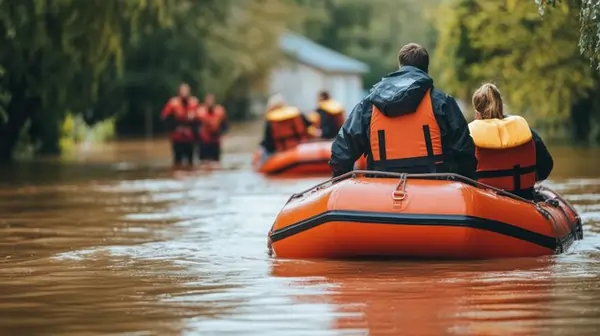
Rising global temperatures are key causes of floods, as they increase atmospheric moisture, resulting in heavier and longer-lasting rainfall. The link between deforestation and flood risk is clear: clearing forests removes a natural barrier that slows water flow, increasing flood risk.
- The United States Geological Survey (USGS) warns that rising global temperatures will lead to more frequent droughts and stronger storms. Increased water vapor feeds violent storms, while warmer air and ocean temperatures accelerate tropical storm winds. Rising sea levels expose higher places to the eroding effects of waves and currents.
Furthermore, many governments, particularly those in developing regions, continue to make insufficient attempts to adapt to climate adaptation and preparedness. Without proper planning, communities will continue to suffer from the growing impact of climate change.
Floods on the Rise
Flooding is growing more common and severe, making it one of the most conspicuous environmental disasters induced by climate change. In recent years, countries such as Pakistan, India, Congo, and even areas of the United States have experienced disastrous flooding, displacing millions.
- According to the National Disaster Management Authority (NDMA), India is particularly vulnerable to flooding. Over 40 million hectares of the country's overall geographical area (329 million hectares) are flood-prone. Floods annually impact 7.5 million hectares of land, killing 1,600 people and causing ₹1,805 crore in damage to crops, homes, and infrastructure.
- In August 2022, Pakistan saw enormous monsoon rainfall, resulting in catastrophic floods affecting over 33 million people. The floods were caused by climate change, with rainfall levels up to 2.5 times the usual, according to World Weather Attribution.
- In February 2022, heavy rains caused extensive flooding in southeast Queensland and New South Wales.
- In February 2023, São Paulo experienced flooding and landslides caused by torrential rains, resulting in multiple fatalities. São Paulo state was among the hardest damaged.
Governments must prioritize climate adaptation and preparedness efforts, particularly in flood-prone areas. Without investments in sustainable infrastructure and forestry, the causes of floods will only multiply, worsening these environmental disasters.
Why Emergency Preparedness Is Critical Now
The increase in environmental disasters demonstrates that disaster preparedness management is not an option; it is a need. Disaster preparedness management includes early warning systems, risk assessments, evacuation plans, and public education. It is also about strengthening disaster-resilient infrastructure and lowering causes of floods, such as improving drainage and replanting trees to reduce deforestation and flood risk.
- According to Acumen Research and Consulting, the global Disaster Preparedness Systems Market was estimated at USD 187.3 billion in 2024. It is expected to expand at a CAGR of 8.4% between 2025 and 2033, reaching around USD 384.9 billion by 2033.
- Bangladesh has made significant improvements in Disaster Preparedness Management by investing in early warning systems and cyclone shelters, despite being previously vulnerable to floods. This technique, which is consistent with climate adaptation and preparedness, has saved thousands of lives.
The urgency is growing, particularly because the impact of climate change is not slowing. The increasing number of environmental disasters highlights the same issue: our current level of disaster preparedness management is insufficient. To lessen the causes of floods, we must address land mismanagement and restore ecosystems. Without addressing deforestation and flood risk, emergency plans will fail.
The Severe Flooding Claims Over 100 Lives in Eastern Congo
- On May 11, 2025, massive flooding in eastern Democratic Republic of Congo claimed the lives of over 100 people, as confirmed by local officials. The deluge, produced by excessive rains, flooded rivers and surged across settlements, wreaking havoc.
Local authorities indicated that rescue activities are still underway, while access to the most impacted districts remains difficult due to destroyed roads and infrastructure. Homes were washed away, families were uprooted, and the death toll is anticipated to grow as emergency personnel continue to search for missing people.
This calamity serves as a sharp warning of the rising frequency and severity of climate-related occurrences in vulnerable places, where inadequate resources impede rapid recovery and response efforts.
Conclusion
In today's world, impact of climate change is the common thread that connects global suffering from catastrophic disasters. Flooding, in particular, has emerged as one of the most destructive environmental disasters. The rising frequency of such incidents demonstrates that our world is rapidly changing, and not for the better.
Repeated causes of floods, such as unrestrained urban expansion, deforestation and flood risk, and climate-driven rainfall surges, reveal a worrying pattern. If neglected, the loss of life and property will only increase. To interrupt this pattern, we must make a significant commitment to disaster preparedness management. This entails investment, planning, and, most importantly, climate adaptation and readiness that prioritize long-term sustainability rather than immediate response.
As the impact of climate change worsens, the question isn't whether another tragedy will occur, but when. Let this be a call to action before the next flood, fire, or storm. Only by implementing educated policies, promoting green development, and raising community awareness can we combat the core causes of floods and prevent future environmental disasters.