
Widespread Impact of Melting Glaciers on Sea Levels, Ecosystems, and Human Survival
Author: Acumen Research And Consulting



Glaciers are among of the most potent and apparent indicators of climate change. These vast, slow-moving rivers of ice, which have built over ages, are melting and crashing at unprecedented speeds. Impact of melting glaciers has a far-reaching on global sea levels, freshwater supplies, ecosystems, and populations around the world.
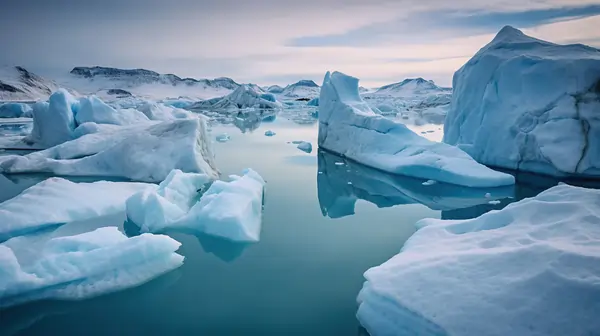
Scientists warn that the impact of melting glaciers may worsen if global temperatures continue to climb. Understanding the impact of melting glaciers is critical to creating climate resilience solutions. The escalating impact of melting glaciers is a global concern that requires immediate environmental response.
Melting Glaciers Indication of a Warming Planet
Scientists have seen a substantial acceleration in the melting glaciers around the world over the last few decades.
- According to NASA's Earth Observatory, glaciers have been progressively retreating as global temperatures rise, mostly as a result of human-caused climate change.
This phenomenon, known as glacier retreat, is most noticeable in places like the Himalayas, Andes, Alaska, and the Arctic.
- According to NOAA data, glaciers around the world have lost an estimated 9 trillion tons of ice since the early twentieth century.
This Climate change effects on glaciers that many have decreased to less than half of their initial size.
Melting Marvel: Perito Moreno Glacier's Alarming Ice Falls
Argentina's Perito Moreno Glacier, a well-known natural wonder, has captivated visitors with its spectacular ice calving occurrences. Scientists and local guides have recently expressed alarm about the scale of these events.
- On 15 May 2025, Large chunks of ice, some as large as 70 meters, are breaking off more regularly, indicating probable environmental changes.
The glacier was once thought to be stable, but it has been retreating over the past five years. According to research, since 2020, Perito Moreno has lost one to two meters of water equivalent per year. This increased mass loss, which has averaged 0.85 meters per year since 2015, is the fastest in over half a century and may be linked to rising regional temperatures and decreased precipitation.
Glacier Turns Risky for Tourists
Perito Moreno Glacier in Argentina has long been a popular tourist destination, attracting visitors to see its stunning ice failures. However, recent huge ice falls have caused severe safety concerns. As chunks of ice up to 70 meters high fall into the ocean, the risk to close spectators grows. Tour guides are now emphasizing the need of maintaining a safe distance from viewing platforms. The glacier's increased instability, probably due to climate change, contributes to the unpredictability of these natural phenomena.
Glacier Collapse and Icefall Are Deadly Events
Aside from progressive melting, glaciers also endure abrupt and catastrophic episodes known as glacier collapse or ice fall. These catastrophes happen when massive chunks of ice break off and fall into valleys or oceans, creating tsunamis or flooding downstream.
- The 2015 glacier collapse in Tibet, which resulted in severe floods and loss of life, served as a sharp reminder of the terrible consequences.
Ice fall events not only hasten the loss of glacier mass, but they also pose major risks to neighboring communities and ecosystems. Glaciers collapse, releasing massive volumes of ice and meltwater that destabilize mountain slopes and increase the risk of landslides and floods.
Impact of Glacier Melting on Sea Levels and Freshwater Resources
One of the most serious impacts of melting glaciers is raising global sea levels.
- According to the Intergovernmental Panel on Climate Change (IPCC), glacier melt accounts for around 25-30% of current sea-level rise, posing a hazard to coastal cities and islands. Rising seas cause coastal erosion, greater floods, and saltwater intrusion into freshwater systems.
Furthermore, glaciers serve as natural reservoirs, releasing meltwater during dry seasons to keep rivers flowing. The impact of glacier melting on freshwater supply is most severe in places that rely on glacier-fed rivers, such as South Asia and parts of South America. Reduced glacier volume results in less meltwater, endangering agriculture, drinking water, and hydropower.
Ecosystem Disruption and Biodiversity Loss
Impact of glacier melting on fragile ecosystems as well. Alpine and arctic animals that rely on chilly environments are losing their homes. As glaciers recede, unique ecosystems in ice-covered areas vanish, altering food chains and contributing to biodiversity loss.
- For example, glacier retreat in the European Alps has changed habitats for species such as the snow vole and alpine salamander. Melting ice in the Arctic has an impact on polar bears and seals, while also opening previously inaccessible areas to human activity, increasing pollution and habitat fragmentation.
What Does Glacier Retreat Mean for the Future?
With the present trajectory, researchers warn that many of the world's glaciers may disappear by the end of the century.
- The United States Geological Survey (USGS) predicts that some glaciers in Glacier National Park, Montana, will vanish entirely over the next 50 years if current trends persist.
Remote Sensing Services and cold chain monitoring are essential for accurately monitoring glacier retreat and ice mass loss. Satellite photography and climate models allow scientists to track changes in real time, providing early warnings of environmental dangers. Meanwhile, investing in Renewable Energy is critical to tackling the core cause of climate change, which is driven by fossil fuels. We can minimize greenhouse gas emissions and slow glacier melts by switching to sustainable energy sources such as wind, solar, and hydropower. These technologies provide the foundation of global climate response efforts.
Conclusion
Glaciers are among of the most potent and apparent indicators of climate change. These vast, slow-moving rivers of ice, which have built over ages, are melting and crashing at unprecedented speeds. Impact of melting glaciers, influencing global sea levels, freshwater supplies, ecosystems, and populations all over the world. Scientists continue to investigate the impact of melting glaciers in order to better comprehend long-term environmental threats.
The impact of melting glaciers is particularly severe in areas that rely largely on glacial runoff for agriculture and drinking water. Addressing the impact of melting glaciers is critical for maintaining natural systems and human livelihoods.