
Clavulanic Acid Market Size, Share, Forecast 2026 - 2035
Clavulanic Acid Market (By Type: Powder, Solution; By End Use: Hospitals, Research Institutes, Veterinary Clinics, Others) - Global Industry Analysis, Size, Share, Trends and Forecast 2026 to 2035
- Last Updated: 23 Dec 2025
- Report Code: ARC3875
- Category: Healthcare and Pharmaceuticals
Clavulanic Acid Market Size and Forecast 2026 to 2035
The global clavulanic acid market registered a size of USD 1,029.9 million in 2025 and is estimated to reach around USD 1,800.6 million by 2035, growing at a CAGR of 5.9% from 2026 to 2035. The increasing cases of antibiotic-resistant infections is boosting the growth or the clavulanic acid market. In addition, the expansion of healthcare infrastructure in emerging economies is projected to open new growth avenues for the market.
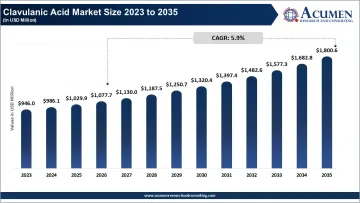
Report Highlights
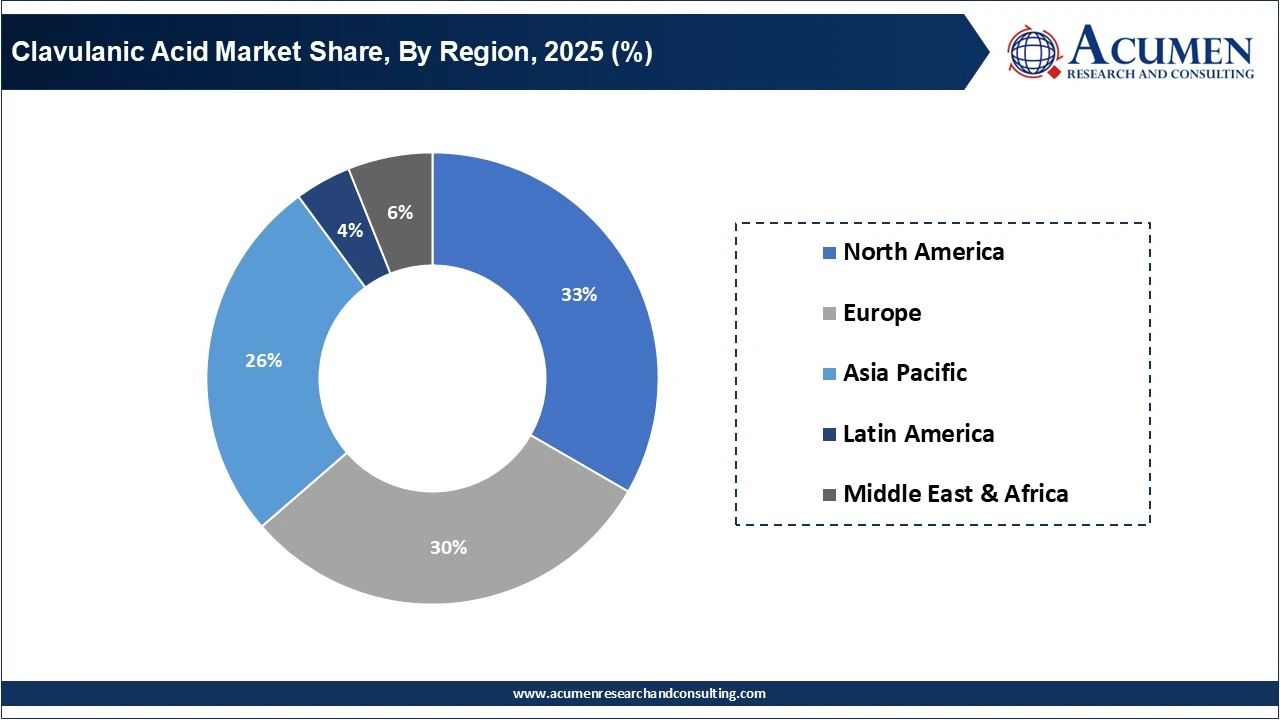
- By Region, the North American clavulanic acid market garnered a revenue of USD 342.0 million in 2025.
- By Region, the Asia-Pacific clavulanic acid market is anticipated to witness a profitable growth rate of about 6.9% from 2026 to 2035.
- By Type, the powder segment accounted for 66% of the total market share in 2025.
- By End Use, the hospitals sector accrued 35% of the clavulanic acid market share in 2025.
One of the factors evident in the market for clavulanic acid is the increasing incidence of bacterial infection resistance to antibiotics. Present-day antibiotics have become less effective because of evolving bacteria, which have become resistant to these drugs and needs a combination of antibiotics incorporating beta-lactam inhibitors like clavulanic acid. The increasing resistance to antibiotics has impacted research and development programs to improve the mechanism of existing antibiotic formulations and identify other combinations to combat resistant bacteria. The global healthcare industry is engaged in responsible usage of antibiotics with a focus on incorporating inhibitors such as clavulanic acid in existing formulations to make existing drugs function for a longer time without relying on an immediate production facility of new generation antibiotics.
Clavulanic Acid Market Dynamics
Market Drivers
Growth in Antibiotic-resistant Infections
- As a result of evolution, pathogens become resistant to conventional antibiotics. Due to this fact, the need for combination therapies which include beta-lactamase inhibitors, such as clavulanic acid, is increasing in demand. In turn, this urges pharmaceutical companies to constantly develop and readapt antibiotic products which include clavulanic acid to maintain the efficiency and life span of important anti-infective drugs.
Healthcare Infrastructure Expansion
- The strong growth of healthcare infrastructure and increased access to medical treatments in emerging economies are strongly driving the market. Further, increasing diagnostic capabilities and awareness of infectious diseases translate into higher prescription volumes for novel antibiotic formulations. Similarly, consistent investment in pharmaceutical-related research and development with the focus on uncovering new applications or further improving the existing clavulanic acid-based solutions continues to add to the market's potential, securing its place in contemporary medicine.
Market Restraints
Stringent Regulatory Approval
- Stringent processes for regulatory approval for new drug formulations that contain clavulanic acid represent a major restraint to the market growth. The demanding requirements for safety data, clinical trials, and manufacturing standards typically result in prolonged development timelines and high costs, thereby discouraging market entry and advancements for some market players. These regulatory complexities differ by region, thereby adding a challenge for global market expansion.
High Costs Associated with Research & Development
- High cost linked with research and development, as well as the dedicated production processes required for the manufacturing of clavulanic acid is a significant hurdle. Producing high-purity clavulanic acid and integrating it into even pharmaceutical combinations demands advanced technological expertise and prominent capital investment. Additionally, the advent of alternative treatments could divert R&D focus and market share, potentially subsiding the growth rate of the clavulanic acid market. Vulnerabilities in supply chain for precursor materials also denote a continuous threat, leading to production delays and potential price volatility.
Market Opportunities
Increasing Use in Veterinary Medicine
- The growing use of clavulanic acid in veterinary medicine is opportunistic for the growth of the market. As pet ownership is increasing across the globe and livestock farming is expanding in order to meet the rising demand for food, the use of combinations of antibiotic for treating infections in animals is becoming more predominant. Veterinary applications of clavulanic acid also play an important role in maintaining animal health and preventing zoonotic diseases that could affect the human population. Stringent regulations regarding the use of antibiotics in animals-which usually demand that beta-lactamase inhibitors be added to such antibiotics to enhance their efficiency and prevent drug resistance. These factors support the growth of the veterinary segment.
Increasing R&D Investments
- The continued investments in research and development initiatives also act as prominent opportunities for the discovery of new antibiotic combinations that include clavulanic acid to make them more effective. As pharmaceutical companies focus on the development of next-gen antibiotics, there arises a growing need for advanced solutions to combat resistant strains of bacteria. Products containing clavulanic acid are at the frontline of these efforts. In addition, the increasing focus on customized medicines and targeted therapies is opening up further opportunities to formulate specialized antibiotic treatments developed as per individual patient needs.
Clavulanic Acid Market Report Scope
| Attribute | Details |
|---|---|
| Clavulanic Acid Market Size 2025 | USD 1,029.9 Million |
| Clavulanic Acid Market Forecast 2035 | USD 1,800.6 Million |
| Clavulanic Acid Market CAGR During 2026 – 2035 | 5.9% |
| Analysis Period | 2023 – 2035 |
| Base Year | 2025 |
| Forecast Data | 2026 – 2035 |
| Segments Covered | By Type, By End Use, and By Geography |
| Regional Scope | North America, Europe, Asia-Pacific, Latin America, and Middle East & Africa |
| Key Companies Profiled | GlaxoSmithKline plc, Merck & Co., Inc., Pfizer Inc., Sanofi S.A., Novartis AG, Bayer AG, Abbott Laboratories, Roche Holding AG, AstraZeneca plc, and Johnson & Johnson |
| Report Coverage | Market Trends, Drivers, Restraints, Competitive Analysis, Player Profiling, Covid-19 Analysis, Regulation Analysis |
Clavulanic Acid Market Segmentation
The worldwide market for clavulanic acid is split based on type, end use, and geography.
Type Insights
The powder segment accounted for a leading share in the market. The powdered form of clavulanic acid finds major application in the pharmaceutical industry because of its hardness and ease of conversion into various forms such as capsules and tablets. The powdered form of clavulanic acid can be easily transported because of a longer shelf life, which makes it a preferable option for mass production. At the application stage, the powdered form of clavulanic acid can be dissolved in liquid form in order to ensure that the constituent remains potent before administration. The demand for powdered clavulanic acid can be attributed to its versatile nature in pharmaceutical applications where it can be mixed with other active pharmaceutical ingredients to make an ideal antibiotic composition.
| Type | Market Share (%) | Key Highlights |
|---|---|---|
| Powder | 66% | The powder form demand is driven by its adaptability in pharmaceutical applications, where it can be integrated with different active pharmaceutical ingredients (APIs) to formulate effective antibiotic therapies. |
| Solution | 34% | Prominently used in hospital settings and for certain medical applications that require immediate administration. |
End Use Insights
The hospitals segment is expected to lead the industry, according to the clavulanic acid market forecast. Hospitals represent the frontline in the treatment of infections caused by bacteria, which, in turn, require the most aggressive antibiotic therapies. Clavulanic acid finds its application in hospitals especially for its potential to enhance the action of antibiotics, and hence, it becomes critical in the treatment of resistant and severe infections. The demand for clavulanic acid arises from the requirement by hospitals for effective and reliable treatments; it forms an essential part of the antibiotic regimens of inpatient care.
| End Use | Market Share (%) | Key Highlights |
|---|---|---|
| Hospitals | 35% | Hospitals are at the forefront of treating infections caused by bacteria, that necessitate robust antibiotic therapies. |
| Research Institutes | 30% | Research institutes are involved in advanced research that is aimed at understanding how clavulanic acid is able to enhance existing antibiotics and create cutting-edge treatments. |
| Veterinary Clinics | 19% | The usage of clavulanic acid in veterinary clinics is fueled by the increasing need to ensure animal health and alleviate the disease transmission rate from animals to humans. |
| Others | 16% | Others comprise specialized healthcare facilities and different industrial sectors. These end-uses deploy the compound in niche applications, necessitating advanced antibiotic solutions. |
Clavulanic Acid Market Regional Analysis
Geography-wise, the largest share of the clavulanic acid market is occupied by North America. The North America market is a leading market because of the high awareness level with respect to the challenge of antibiotic resistance, a developed healthcare setup, and robust investment in research and development in pharmaceuticals. Furthermore, the presence of major pharmaceutical companies and research institutions in this region has a positive impact on this market. The market in this region is expected to grow at a stable rate because of increased instances of bacterial diseases and relentless efforts being put in for research into advanced antibiotic drugs.
| End Use | Market Share (%) | Key Highlights |
|---|---|---|
| North America | 33% | North America remains a dominant region owing to the high awareness of antibiotic resistance issues, a well-established healthcare infrastructure, and substantial investment in pharmaceutical-driven research and development. |
| Europe | 30% | A major trend in the European region is the realization of the importance of clavulanic acid with respect to antimicrobial resistance, driven by support from regulations for antibiotic combination therapy. |
| Veterinary Clinics | 26% | The market is driven by increasingly expanding healthcare infrastructure, increasing healthcare expenditures, and rising population. |
| MEA | 6% | The MEA market is moving towards consuming more of clavulanic acid, with governments developing their healthcare infrastructure and ensuring better accessibility to antibiotics. |
| Latin America | 4% | Latin America is observing an increasing use of clavulanic acid-based antibiotics. This is attributed to improving accessibility of medical care services, rising incidences of infectious diseases, and the use of generic combinations. |
A substantial growth rate in the market for clavulanic acid is anticipated in the Asia-Pacific region. The growing healthcare infrastructure, increased healthcare expenditure, and escalating population are major factors fueling this market. The countries leading the charge in this expansion include China and India, with major investments in the development of pharmaceutical solutions and heightened awareness with regards to resistant challenges in varying antibiotic environments. The demand for clavulanic acid is fueled by an increasing incidence of bacterial infections and a heightened necessity for advanced treatment mechanism. A high CAGR is anticipated in the region, which holds a strategic significance in the global market for clavulanic acid.
Clavulanic Acid Market Key Players
- GlaxoSmithKline plc
- Merck & Co., Inc.
- Pfizer Inc.
- Sanofi S.A.
- Novartis AG
- Bayer AG
- Abbott Laboratories
- Roche Holding AG
- AstraZeneca plc
- Johnson & Johnson
Clavulanic Acid Market Segmentation
By Type
- Powder
- Solution
By End Use
- Hospitals
- Research Institutes
- Veterinary Clinics
- Others
By Region
- North America
- U.S.
- Canada
- Europe
- U.K.
- Germany
- France
- Spain
- Rest of Europe
- Asia-Pacific
- India
- Japan
- China
- Australia
- South Korea
- Rest of Asia-Pacific
- Latin America
- Brazil
- Mexico
- Rest of LATAM
- The Middle East & Africa
- South Africa
- GCC Countries
- Rest of the Middle East & Africa (ME&A)
Looking for discounts, bulk pricing, or custom solutions? Contact us today at sales@acumenresearchandconsulting.com
Frequently Asked Questions

Other Healthcare and Pharmaceuticals Reports
October 2024
May 2023
March 2023
June 2024