
Electric Mobility Market Size, Share, Trends and Forecast 2026-2035
Electric Mobility Market (By Product: Electric Car, Electric Bikes, Electric Scooters, Electric Motorcycles, Electric Motorized Scooters, Electric Wheelchair; By Drive: Belt Drive, Chain Drive; Hub Drive: By Battery, Lead Acid Battery, Li-Ion Battery, Others; By End-Use: Personal, Commercial) - Global Industry Analysis, Size, Share, Analysis, Trends and Forecast 2026 - 2035
- Last Updated: 05 Jan 2026
- Report Code: ARC3879
- Category: Automotive And Transportation
Electric Mobility Market Size and Forecast 2026-2035
The global electric mobility market was valued at USD 725.92 billion in 2025 and is estimated to reach around USD 5773.18 billion by 2035 growing at a CAGR of 23.2% from 2026 to 2035.
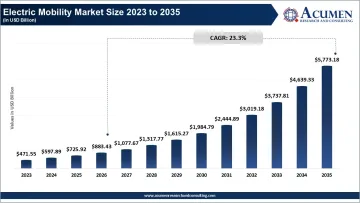
Electric Mobility Market Highlights
- Asia Pacific holds approximately 63% of the global Electric Mobility Market share in 2025.
- North America region accounts for about 15% market share and is projected to grow at a CAGR of 27.2% from 2026 to 2035.
- By product, the electric car segment represents 40% of the total market share in 2025.
- By end-use, personal account for 75% of the total market share, while commercial hold 25%.
- By battery, the li-ion battery segment holds 82% market share, followed by lead acid battery with 10%, and others with 8%.
Electric Mobility Market Overview
The significant growth of the electric mobility market is due to increasing global push toward carbon reduction, cleaner transportation, and increased emission regulation around the globe. Countries across the world have enacted supportive policies on EVs which include tax credits, EV subsidies, and investment in the electric vehicle grid. The increase in the price of fuel, the increase in urban congestion, and consumer demand for inexpensive methods of transportation are also driving many consumers to adopt electric two-wheelers and small electric cars, particularly within the Asia Pacific region. Simultaneously, advances in lithium-ion battery technology, the resultant reduction in the cost of batteries, and continuing R&D in lightweight materials and more efficient motoring systems will enhance the performance and affordability of electric vehicles.
Another major factor for growth is the expansion of charging infrastructure, increasing of ride-sharing and delivery fleets, and rapid adoption of electric mobility in commercial applications are fueling the market’s long-term growth. The development of smart mobility ecosystems, including connected EVs, app-based vehicle management, and the use of artificial intelligence (AI) for fleet optimization is creating additional promotional impetus to the electric mobility marketplace. Emerging markets in Latin America, Southeast Asia, and the Middle East and Africa (MEA) are also enjoying increased growth due to the availability of instances of electric two-wheeled vehicles being sold at low-cost and government sponsored electrification programs. These factors, create an environment for electric mobility to be considered as one of the fastest growing segments of the global transportation industry.
Electric Mobility Market Dynamics
Market Drivers
Government Policies and Emission Regulations
- The implementation of global strategies to reduce carbon emissions is a primary factor to the growth of electric mobility market. Across Asia, Europe, and North America, many Governments have developed incentive systems such as subsidies, tax credits and benefits. Also, consumers' and businesses' concerns regarding urban emissions and the establishment of timelines to phase out the use of ICEs are placing increased pressure on them to convert to electric mobility. The regulatory constraints from these pressures create an environment of stability and the foundation to create a significant long-term opportunity for the electric mobility market.
Advancements in Battery and Charging Technologies
- The advancement of lithium-ion batteries, solid-state technology and energy dense chemistries has allowed substantial gains in all aspects of electric vehicles (EV) performance and cost effectiveness. Decreased costs of lithium-ion batteries, greater range and quicker charging technology are enabling consumers and businesses to embrace electric mobility on an everyday basis. At the same time, both the establishment of smart charging networks and the growth of infrastructure investment, access to electric mobility will be expanded across urban and semi-urban areas. As a result of these technological advances, both consumer confidence in EVs and the growth of the market continue to increase substantially.
Market Restraints
Limited Charging Infrastructure & Range Constraints
- Despite rapid growth, charging infrastructure is still a major barrier to EV adoption, particularly in less-developed markets. In many parts of the world fast-charging stations and reliable electric grids which leads to consumer "range anxiety." The impact of the absence of EV charging infrastructure on commercial fleets can be particularly acute given that uptime is a key factor in the success of commercial fleets. Without a sufficient number of charging networks available globally, we will probably see a much slower rate of EV adoption in cities and regions with limited or no publicly or privately owned EV charging infrastructure.
High Upfront Costs & Battery Replacement Expenses
- The price of electric vehicle (EV) models is much higher than conventional vehicle models. This is primarily due to the initial cost of the battery and the higher costs of advanced electronic power control and drive systems required for operating an electric vehicle. Higher cost per mile travelled with electric vehicles compared to traditional gasoline powered vehicles may be less appealing to consumers in price sensitive markets, although electric vehicles typically have lower operating expenses. Furthermore, the high cost of replacing electric vehicle batteries after extended usage may deter many consumers from purchasing an electric vehicle and negatively impact demand for these vehicles in lower income markets.
Market Opportunities
Growing Commercial Electric Fleet & Delivery Ecosystem
- The expansion of e-commerce, last-mile delivery, and shared mobility services provide key opportunities for electric two-wheelers, scooters, and light commercial electric vehicles. Fleet operators have adopted electric vehicle technology due to the reduced cost of fuel & maintenance, predictable operating expense and environmental compliance. Additionally, government programs are increasingly supporting commercial fleet electrification through policy incentives creating opportunities for manufacturers to target logistics, food delivery & mobility-based services and to develop multiple products that complement these services.
Emerging Markets & Low-Cost Electric Two-Wheeler Adoption
- The rapid urbanization in Asian, African, and Latin American markets continues at an accelerated rate, coupled with price increases in fuel sources, there will be increasing demand for economical electric two-wheelers within these regions. There is substantial untapped potential in these developing regions, especially with respect to low-speed scooters and e-bikes as well as city-based transportation. The growth of local manufacturing and government support, combined with the growing awareness of EVs among consumers, is helping to facilitate the growth of these markets. As infrastructure improves, these three identified regions will become a great concentration of electric mobility growth opportunities.
Electric Mobility Market Report Scope
| Attribute | Details |
|---|---|
| Electric Mobility Market Size 2025 | USD 725.92 Billion |
| Electric Mobility Market Forecast 2035 | USD 5773.18 Billion |
| Electric Mobility Market CAGR During 2026 - 2035 | 23.2% |
| Analysis Period | 2023 - 2035 |
| Base Year | 2025 |
| Forecast Data | 2026 - 2035 |
| Segments Covered | By Product, By Drive, By Battery, By End-Use, and By Geography |
| Regional Scope | North America, Europe, Asia Pacific, Latin America, and Middle East & Africa |
| Key Companies Profiled | ALTA Motors, BMW Motorrad International, Terra Motors Corporation, Suzuki Motor Corporation, Honda Motor Co. Ltd., Mahindra Group, KTM AG, Gogoro Inc., Ninebot Ltd., Vmoto Limited, Zero Motorcycles, and Yamaha Motor Company Limited. |
| Report Coverage | Market Trends, Drivers, Restraints, Competitive Analysis, Player Profiling, Covid-19 Analysis, Regulation Analysis |
Electric Mobility Market Regional Analysis
Asia Pacific currently dominates the electric mobility due to high populations of two-wheelers, large manufacturing ecosystems, and great support from governments to adopt electric vehicles throughout the region. All the countries in the region have produced many electric bicycles, scooters, and motorcycles. China has the largest number of these types of electric vehicles and has developed an extensive charging infrastructure with highly competitive pricing for those who purchase electric bicycles, scooters, and motorcycles. India, Taiwan, Vietnam, and Japan also are experiencing rapid growth in their production of electric two-wheelers due to rising fuel prices, urban congestion, and extensive government electric vehicle incentives. Additionally, the Asia Pacific region is being supported by strong integration of supply chains for battery manufacturers, motor manufacturers, and component suppliers of electric vehicles, which provides affordability and accessibility across the region. Thus, Asia Pacific will become the primary production and consumption centre of electric mobility products, both personally and commercially.

North America is the fastest-growing region, because increasing adoption rates of electric motorcycle and high performance e-bikes, and the electrification of commercial fleet vehicles, this region has achieved rapid technological advancement. In addition, both the United States and Canada are investing heavily into building charging networks, providing tax incentives to promote the use of clean transportation, and providing support for both individual users and corporate fleets. The growth of the market is further supported by the growing popularity of premium electric two-wheelers with high speeds and a substantial investment in research & development from automotive manufacturers and technology companies. Increased e-commerce activity and electric powered delivery services at the last mile have also increased the demand for electric scooters and lightweight vehicles. Although the North American market is currently smaller in comparison to Asia Pacific, it is projected that the North American market will be the fastest growing regional market for the next 10 years as a result of rapid technological development, a willingness to buy high performance electric vehicles, and growing micro-mobility solutions.
Electric Mobility Market Segmental Insights
The worldwide market for electric mobility is split based on product, drive, battery, end-use, and geography.
Product Insights
Electric cars dominate the market due to expanding government incentives, the growth of charging stations, and aggressive adoption of electric vehicles by the largest automotive companies. The high unit value, longer range, and growing preference by consumers for a viable and sustainable means of personal transport have solidified electric vehicles in every global market, especially in the Asia Pacific, Europe, and North America. The broad level of electric vehicle adoption in these regions has now been further bolstered by mandates to reduce emissions and larger sums of tax incentives to help promote the continued success of electric vehicles in the marketplace.
| Product | Market Share (%) | Key Highlights |
|---|---|---|
| Electric Cars | 40% | Dominated segment driven by government incentives, expanding charging infrastructure, and strong adoption across APAC, Europe & North America. |
| Electric Bikes | 25% | High adoption in Asia-Pacific and Europe; affordable, low-maintenance, preferred for daily commuting. |
| Electric Scooters | 15% | Popular for short-distance city travel; widely used in shared mobility and last-mile transport. |
| Electric Motorcycles | 10% | Strong growth driven by performance demand, improved Li-ion batteries, and rising commercial use. |
| Electric Motorized Scooters | 6% | Niche micro-mobility option; used for recreational and ultra-short travel needs. |
| Electric Wheelchair | 4% | Smaller segment focused on personal mobility and healthcare support systems. |
Electric motorcycles are the fastest-growing segment, driven by consumer demand for more performance, longer range and better powertrains. Emerging markets will see a major increase in electric motorcycle adoption rates because in these markets motorcycles are used on a daily basis transportation. In addition, advancements in the efficiency of lithium-ion batteries, the development of strong fast-charge capabilities and the building of durable drivetrains have all contributed to making electric motorcycles affordable and accessible for personal and commercial use. As a result, as manufacturers begin to introduce low-priced products with superior acceleration and lower overall operating expenses, this segment will have the fastest rate of growth over the next ten years.

Drive Insights
Chain drives dominate the market due to their proven ability to safely transfer energy efficiently and without excessive weight has led to their extensive use of this type of interface in regular two-wheelers and the most widespread adoption as an entry-level solution for low-cost electric mobility. Manufacturers in Asia Pacific have turned to chain drive systems due to their established supply chain, ease of maintenance, and simplicity of engineering, which allows them to maintain their leadership position in both entry-level (e-bikes) and mid-range electric vehicles (e-scooters).
| Drive | Market Share (%) | Key Highlights |
|---|---|---|
| Chain Drive | 45% | Dominant because of cost-effectiveness, reliability, and strong presence in entry-level and mid-tier EVs. |
| Belt Drive | 32% | Fastest-growing due to quiet operation, low maintenance, longer lifespan, and rising adoption in premium models. |
| Hub Drive | 23% | Preferred for lightweight scooters/e-bikes due to simple structure and low maintenance. |
Belt drive is fastest growing segment due to the desirability for easier maintenance, a quieter ride, and smoother operation of mobility solutions. Belt drives eliminate the need for lubrication, offer longer operational life, and provide a cleaner riding experience than chain systems. Premium electric motorcycles and high-end e-scooters are increasingly adopting belt-driven architecture. The trend in urban mobility toward comfort & durability has driven the emergence of belt drive technology as the preferred solution for next generation electric mobility models, confirming that this is the most rapidly growing segment of the drive category.
Battery Insights
Lithium-ion batteries dominate the market due to high energy density, low weight, and rapid recharge capability. When producing an electric vehicle the lithium batteries provide the greatest range, the greatest efficiency and the longest-lasting capacity when compared to lead-acid and other competing technologies. As various nations commit to developing lithium battery manufacturing, the cost of lithium-ion technology has dropped significantly, offering consumers less expensive options. Furthermore, lithium batteries are crucial to electric bicycles, electric scooters, electric motorcycles and the overall electric vehicle fleet, solidifying lithium-ion battery dominance as the most cutting-edge battery option available globally.
| Battery | Market Share (%) | Key Highlights |
|---|---|---|
| Li-Ion Battery | 82% | Dominates due to high energy density, lightweight design, long cycle life, and declining manufacturing costs. |
| Lead Acid Battery | 10% | Fast-growing in low-cost EVs, widely used in emerging markets because of affordability. |
| Others | 8% | Includes solid-state and NiMH, gaining traction for specialized applications. |
Lead-acid batteries is the fastest-growing segment in selected low-cost and developing markets because of their affordability and easy availability. They are commonly found in low-speed electric scooters, lower-end electric bicycles, and entry-level personal mobility solutions where the most important consideration when purchasing an electric vehicle is the initial purchase price. The lead-acid segment continues to see growth in price-sensitive areas of Asia and Africa, despite having lower energy density. Additionally, the lead-acid battery's ease of recycling, simple design, and ability to integrate with low-end budget-friendly electric vehicles will continue to fuel this growth among lower-end electric mobility applications.
End-use Insights
Personal use dominates the market as consumers looking towards more eco-friendly transportation options such as electric two-wheelers and compact electric vehicles (EVs) for everyday use. Consumers are gravitating towards personal EVs because of rising fuel costs, traffic congestion, and a growing trend towards convenience in transportation. Because e-bikes, e-scooters, and electric motorcycles can provide low-cost alternatives to traditional modes of transportation and the ability to travel anywhere there is an electrical outlet, they are expected to become increasingly popular among consumers worldwide. Countries such as China, India and Europe already have well-established markets for personal EVs. Therefore, these countries will continue to create strong demand for this segment of the industry.
| End-use | Market Share (%) | Key Highlights |
|---|---|---|
| Personal | 75% | Dominates as consumers shift to e-bikes, scooters, and motorcycles for daily commuting and cost savings. |
| Commercial | 25% | Fastest-growing driven by last-mile delivery, shared mobility fleets, logistics, and government-supported fleet electrification. |
Commercial use is the fastest-growing segment due to growing electrification of last-mile deliveries, logistics, shared mobility services, and fleet operations. There are many benefits to businesses adopting electric vehicles, such as lower fuel costs, decreased maintenance costs, and compliance with government regulations regarding greenhouse gas emissions. The growth of e-commerce, delivery services, and ridesharing companies have driven much more rapid electric fleet adoption especially in concentrated urban areas, and governments are encouraging these businesses through financial incentives such as tax credits and grants in order to allow fleets to grow quickly. With more businesses focusing on sustainability and cost efficiency, the commercial electric mobility sector will continue to experience the highest growth rate.
Electric Mobility Market Players
- ALTA Motors
- BMW Motorrad International
- Terra Motors Corporation
- Suzuki Motor Corporation
- Honda Motor Co. Ltd.
- Mahindra Group
- KTM AG
- Gogoro Inc.
- Ninebot Ltd.
- Vmoto Limited
- Zero Motorcycles
- Yamaha Motor Company Limited
Electric Mobility Market Segmentation
By Product
- Electric Car
- Electric Bikes
- Electric Scooters
- Electric Motorcycles
- Electric Motorized Scooters
- Electric Wheelchair
By Drive
- Belt Drive
- Chain Drive
- Hub Drive
By Battery
- Lead Acid Battery
- Li-Ion Battery
- Others
By End-Use
- Personal
- Commercial
By Region
- North America
- U.S.
- Canada
- Europe
- U.K.
- Germany
- France
- Spain
- Rest of Europe
- Asia-Pacific
- India
- Japan
- China
- Australia
- South Korea
- Rest of Asia-Pacific
- Latin America
- Brazil
- Mexico
- Rest of LATAM
- The Middle East & Africa
- South Africa
- GCC Countries
- Rest of the Middle East & Africa (ME&A)
Looking for discounts, bulk pricing, or custom solutions? Contact us today at sales@acumenresearchandconsulting.com
Frequently Asked Questions

Other Automotive And Transportation Reports
August 2020
October 2024
November 2024
August 2026