
Energy Transition Market Size, Share, Forecast 2026 To 2035
Energy Transition Market (By Type: Renewable Energy, Electrification, Energy Efficiency, Others; By Sector: Power & Utility, Transportation, Others) - Global Industry Analysis, Size, Share, Trends and Forecast 2026 to 2035
- Last Updated: 04 Dec 2025
- Report Code: ARC3863
- Category: Energy and Power
Energy Transition Market Size and Forecast 2026 To 2035
The global energy transition market size was valued at USD 2.58 trillion in 2025 and is estimated to surpass around USD 6.24 trillion by 2035 growing at a CAGR of 8.9% from 2026 to 2035.
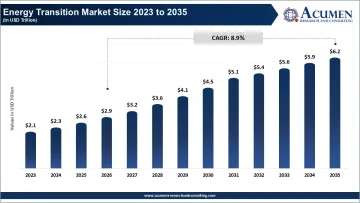
Energy Transition Market Highlights
- By Region, Asia Pacific holds approximately 42% of the global energy transition market share in 2025.
- By Region, Asia Pacific region is the fastest-growing, projected to grow at a CAGR of 9.1% from 2026 to 2035.
- By Type, the renewable energy segment represents 48% of the total market share in 2025, followed by electrification at 27%, energy efficiency at 18%, and others at 7%.
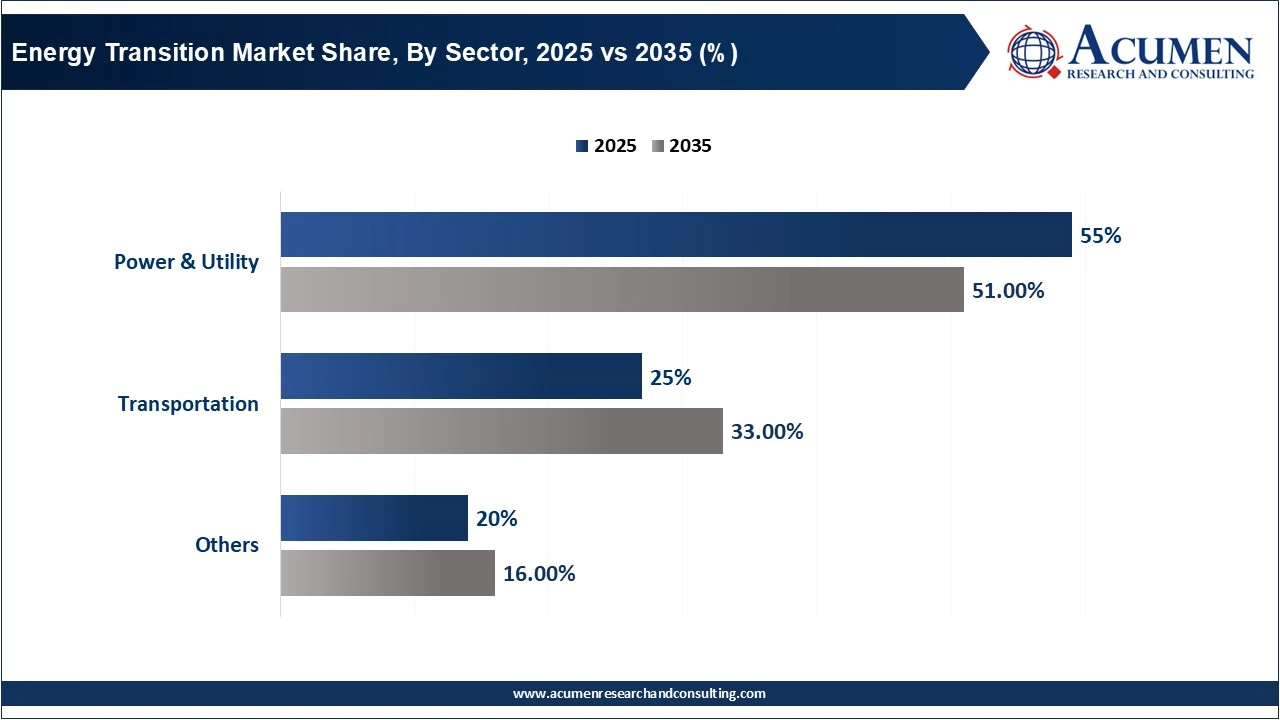
- By Sector, power & utility accounts for 59% of the market share, transportation holds 27%, and other sectors represent 14%.
Energy Transition Market Insights
The primary factors driving the growth of the energy transition market are rapid de-carbonization efforts, advances in renewable technology adoption and the implementation of stringent statutory regulations towards achieving net-zero emissions. Countries around the world are enacting favorable legislation such as installation mandates for CO2 reduction, tax advantages for companies that produce green energy and subsidy programs which support the integration of solar, wind, hydro and other renewable energy sources. Increased global energy consumption coupled with the severe effects of climate change and increasing dependency on fossil fuels will create a larger energy transition market. Emerging technology will allow for more dependable and effective integration of renewable energy sources using increased battery storage technology, smart grid technology and distributed generation technology.
Another major market driver of the energy transition market is the global initiative to generate electrification of specific industries including transportation, by developing a vast ecosystem of the electric vehicle market through investments in charging stations. The declining cost of developing renewable energy technologies and the increasing corporate pledges toward improved sustainability have created much opportunity for public, private and not-for-profit organizations to invest heavily in renewable energy. Digitalization is also contributing to increasing operational performance and transparency through advanced artificial intelligence-based management of grid operations, Internet of Things (IoT)-enabled energy management systems and real-time analytics. Collectively, these forces are generating continual market momentum, positioning the Energy Transition Market as one of the fastest-growing markets in the worldwide clean-tech sector.
The energy transition market refers to the international transition away from fuel-based energy systems to more sustainable, lower carbon sources of power such as renewable energy, electrification, energy-efficient products, and improved grid technology. Along with financing and technology, it will include actions being taken in both the public and private sectors to promote decarbonization, sustainability and modernization of energy systems in the world.
Energy Transition Market Dynamics
Market Drivers
Rapid Global Decarbonization Targets & Policy Support
- There is significant momentum behind the implementation of aggressive national decarbonization plans and related policy initiatives in almost every country in the world. National energy markets are changing dramatically due to this trend, with the introduction of additional incentives for renewable sources of energy only strengthening their position as the predominant form of energy used in the future. A tightening regulatory environment, aimed at reducing carbon emissions and increasing the use of renewable and non-emitting energy sources by utility and industrial operations, will accelerate the development of national energy transition plans and create new markets for commercially viable sustainable technologies. Commercial viability will lead to faster adoption rates across all main sectors.
Declining Costs of Renewable & Storage Technologies
- Advancements in large-scale manufacturing efficiencies, as well as technology advancements, are further driving down the costs of renewable technologies and storage devices. The rapid decline in prices for solar photovoltaic, wind, battery energy storage systems, and the electric vehicle supply chain is making clean energy products more competitively priced against traditional fossil fuels. As more and more areas reach the point of "grid parity," or when the cost of generating electricity from a renewable source is less than the cost of generating electricity from a fossil fuel, the economic case for using renewable sources becomes very compelling for residential, business and industrial consumers. These increasing value curves are accelerating the worldwide deployment of renewable energy and driving greater levels of investment and expansion of the overall clean-energy transition marketplace.
Market Restraints
High Upfront Investment & Long Payback Periods
- Despite prices of technology continue to decrease, the need for upfront investment continues to be a barrier for many renewable energy projects, grid modernization efforts, hydrogen infrastructure and electric vehicle (EV) charging networks. Developing countries, in particular, lack the availability of lower cost capital. Thus, limiting their ability to adopt these systems. Additionally, since there is so much uncertainty regarding future energy regulations, industries are often unwilling to invest in clean energy systems due to their long payback periods and the associated risk. These financial limitations restrict the growth of renewable energy specifically in fledgling markets.
Grid Stability Issues & Limited Transmission Infrastructure
- Integrating high levels of variable renewable energy, especially from solar and wind energy, requires greater flexibility in the electrical grid as well as improved transmission systems and large-scale energy storage capabilities. Many emerging economies and other regions of the world that have not modernized their electrical grids and experience difficulties in integrating variable renewable energy such as wind and solar power into the existing system. This leads to the existence of the following issues, limited transmission capacity and an outdated electrical grid system that hinders the ability of electric utilities and implementing variable renewable energy projects.
Market Opportunities
Expansion of Electrification Across Transportation & Industry
- Increased use of EVs, electric heating systems, and electric power in the industrial sector provides a large long-term opportunity. Countries are establishing national EV charging networks, investing in smart mobility, and providing electric transportation through electric public transit systems. Industries are converting to electric processes and away from fossil-fuel-based processes, thereby driving up the demand for renewable energy sources, and for battery or energy storage systems. Therefore, the increase of electric power within the transportation and industrial sectors provides an opportunity for growth in over the next decade.
Rising Investments in Emerging Technologies (Hydrogen, CCS, AI-Driven Grids)
- Next-generation technologies like green hydrogen, carbon capture and storage (CCS), long duration energy storage, microgrids and AI-enabled grid optimization will drive expanded opportunities across the market. As technology matures and its cost falls, new, high-growth opportunities will be created from using these technologies to build more flexible, resilient and low-carbon energy systems. As a result of the growing interest from both corporations and governments, investment in emerging technologies has been rapidly increasing.
Energy Transition Market Report Scope
| Area of Focus | Details |
|---|---|
| Energy Transition Market Size 2025 | USD 2.30 Trillion |
| Energy Transition Market Forecast 2035 | USD 6.24 Trillion |
| Projected CAGR During 2026 - 2035 | 8.9% |
| Analysis Period | 2021 - 2035 |
| Base Year | 2025 |
| Segments Covered | By Type, By Sector, and By Geography |
| Regional Scope | North America, Europe, Asia Pacific, Latin America, and Middle East & Africa |
| Key Companies Profiled | GE Vernova, Iberdrola, S.A., NextEra Energy, Inc., Constellation, First Solar, Ørsted A/S, Dongfang Electric Corporation, ABB, Eaton, Siemens AG, Danfoss, and Enel X S.r.l. |
| Report Coverage | Market Trends, Drivers, Restraints, Competitive Analysis, Player Profiling, Covid-19 Analysis, Regulation Analysis |
Energy Transition Market Regional Analysis
Asia Pacific region dominates the energy transition market with a larger share than all other major world regions. This is primarily due to China, India, Japan, and South Korea's massive investments in renewable energy sources, which are making the region the largest contributor to global solar/wind capacity additions. China manufactures and builds renewable capacity and creates opportunities for utilities through large-scale tenders and robust domestic greenhouse gas reduction efforts. In addition to solar, India continues to construct solar parks, green hydrogen plants, and electric vehicle (EV) platforms; and Japan and South Korea both continue to heavily invest in smart grids, offshore wind power, distributed solar, and energy-efficient technologies. Rapidly growing urban areas, rising electricity demand, and increasing number of governments supporting renewable energy goals position the Asia Pacific region as a leader in global energy transition growth.
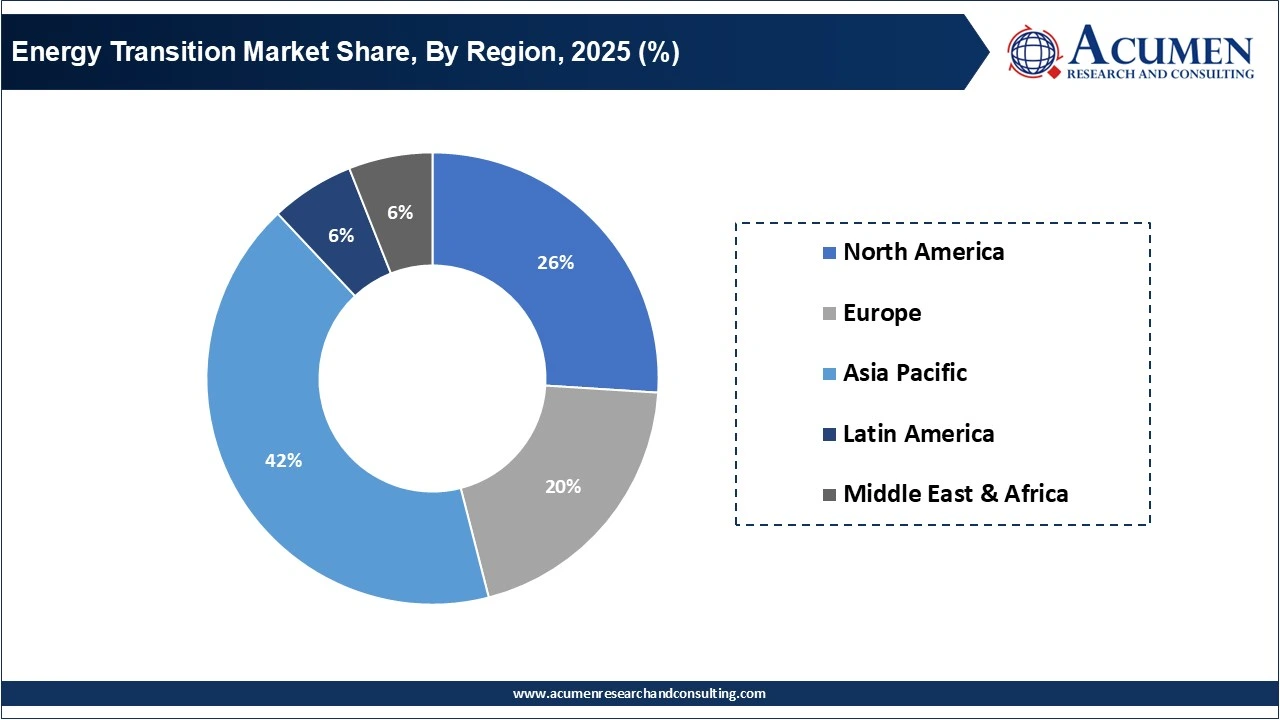
Moreover, Asia Pacific has the highest growth of market due to increasing electrification of transportation, transitioning of industry, and large-scale integration of renewable energy into electric grids throughout the region. Countries in the Asia Pacific are developing comprehensive policy roadmaps that include China's Carbon Neutrality Roadmap, India's National Mission for Transformative Mobility, and Japan's Green Growth Initiative to accelerate clean energy infrastructure investments across the region. In contrast, the North American and European regions demonstrate slower but mature growth patterns characterized by continued emphasis on grid modernization, significantly expanded energy storage capabilities and increasing hydrogen use while also focusing on decarbonizing heavy industrial sectors. Latin America is becoming an increasingly important market for both solar and wind energy sources, especially in Brazil, Chile, and Mexico, while the Middle East and Africa countries are working toward developing renewable energy capabilities through long-term national strategies aimed at boosting renewable capacity.
Energy Transition Market Segmental Insight
The worldwide market for energy transition is split based on type, sector, and geography.
Type Insights
Renewable Energy holds the largest share in the energy transition market because global investment in decarbonization through Solar, Wind, Hydro and Bioenergy. In order to achieve net-zero goals, many countries are quickly expanding their use of Utility-Scale Solar Photovoltaic (PV), Offshore / Onshore Wind, and Hybrid Renewable Energy Systems. The availability of affordable technology and continued development via government support (subsidy) programs creates an excellent opportunity for continued growth within this sector, creating a compelling case for continued investment and adoption as the largest segment in the energy transition market.
| Type | Market Share, 2025 (%) | Key Highlights |
|---|---|---|
| Renewable Energy | 48% | Dominant segment due to large-scale solar, wind, and hydro installations driven by national decarbonization mandates and falling technology costs. |
| Electrification | 27% | Fastest-growing type segment, supported by EV adoption, industrial electrification, and expansion of charging & smart-grid infrastructure. |
| Energy Efficiency | 18% | Steady growth due to demand for efficient buildings, smart appliances, and industrial optimization technologies. |
| Others | 7% | Includes hydrogen, CCS, bioenergy, and microgrids gaining traction in long-term transition strategies. |
Electrification is the fastest-growing segment, driven by increasing demand for electric vehicles, electric heating systems, industrial electrification, and an expanding network of charging stations. The transition from traditional fossil fuel-based to all electric manufacturing, transportation and residential systems, as well as the development of smart grids and digital energy tools combined, makes the electrification segment a very dynamic and fastest growing segment of the market. Industries and other businesses moving to electricity-based operations will make electrification the most rapidly growing segment of the market.
Sector Insights
The Power & Utility sector holds the dominant share due to the substantial amount of renewable energy installed, grid modernization projects, and the number of energy storage systems installed in this sector. The utility companies are a prime focus of the national energy transition plan and currently lead the way in investing in solar farms, wind energy farms, electricity transmission upgrade to more advanced technology, and smart grid systems. In addition, the large capital investment required and legislative pressures for the transition to clean energy are the primary drivers for this industry's position as the largest contributor to electric power revenue.
| Sector | Market Share, 2025 (%) | Key Highlights |
|---|---|---|
| Power & Utility | 59% | Dominant sector driven by heavy investments in solar/wind farms, energy storage, grid modernization, and renewable integration projects. |
| Transportation | 27% | Fastest-growing sector fueled by electric mobility expansion, charging networks, and fleet electrification across public & commercial transport. |
| Others | 14% | Includes industrial decarbonization, heating electrification, hydrogen blending, and digital energy management solutions. |
Transportation is the fastest-growing segment as a result of the worldwide movement towards electric mobility. In order to support this market growth, governments are implementing electric vehicle (EV) adoption targets, increasing the number of charging stations available, and providing financial incentives for purchasing an EV. The electrification of commercial fleets, public transit buses, and delivery vehicles will also help to accelerate the adoption of EVs throughout the transportation system. As automotive OEMs continue to efficiently convert to manufacturing zero-emissions vehicles, the transportation sector as a whole will experience the highest CAGR of any sector.
Energy Transition Market Players
- GE Vernova
- Iberdrola, S.A.
- NextEra Energy, Inc.
- Constellation
- First Solar
- Ørsted A/S
- Dongfang Electric Corporation
- ABB
- Eaton
- Siemens AG
- Danfoss
- Enel X S.r.l.
Energy Transition Market Segmentation
By Type
- Renewable Energy
- Electrification
- Energy Efficiency
- Others
By Sector
- Power & Utility
- Transportation
- Others
By Region
- North America
- U.S.
- Canada
- Europe
- U.K.
- Germany
- France
- Spain
- Rest of Europe
- Asia-Pacific
- India
- Japan
- China
- Australia
- South Korea
- Rest of Asia-Pacific
- Latin America
- Brazil
- Mexico
- Rest of LATAM
- The Middle East & Africa
- South Africa
- GCC Countries
- Rest of the Middle East & Africa (ME&A)
Looking for discounts, bulk pricing, or custom solutions? Contact us today at sales@acumenresearchandconsulting.com
Frequently Asked Questions
Other Energy and Power Reports
November 2022
February 2024
March 2023
November 2022