November 2025

Organic Food Market (By Category: Fruits and Vegetables, Dairy Products, Meat, Fish and Poultry, Frozen Foods; By Product: Processed, Unprocessed; By Distribution Channel: Supermarkets/Hypermarkets, Specialty Store, Convenient Stores, Online, Others) - Global Industry Analysis, Size, Share, Regional Analysis, Trends and Forecast 2025 To 2033
The global organic food market size was accounted for USD 247.55 billion in 2025 and is estimated to reach around USD 583.74 billion by 2033 growing at a CAGR of 11.3% from 2025 to 2033.
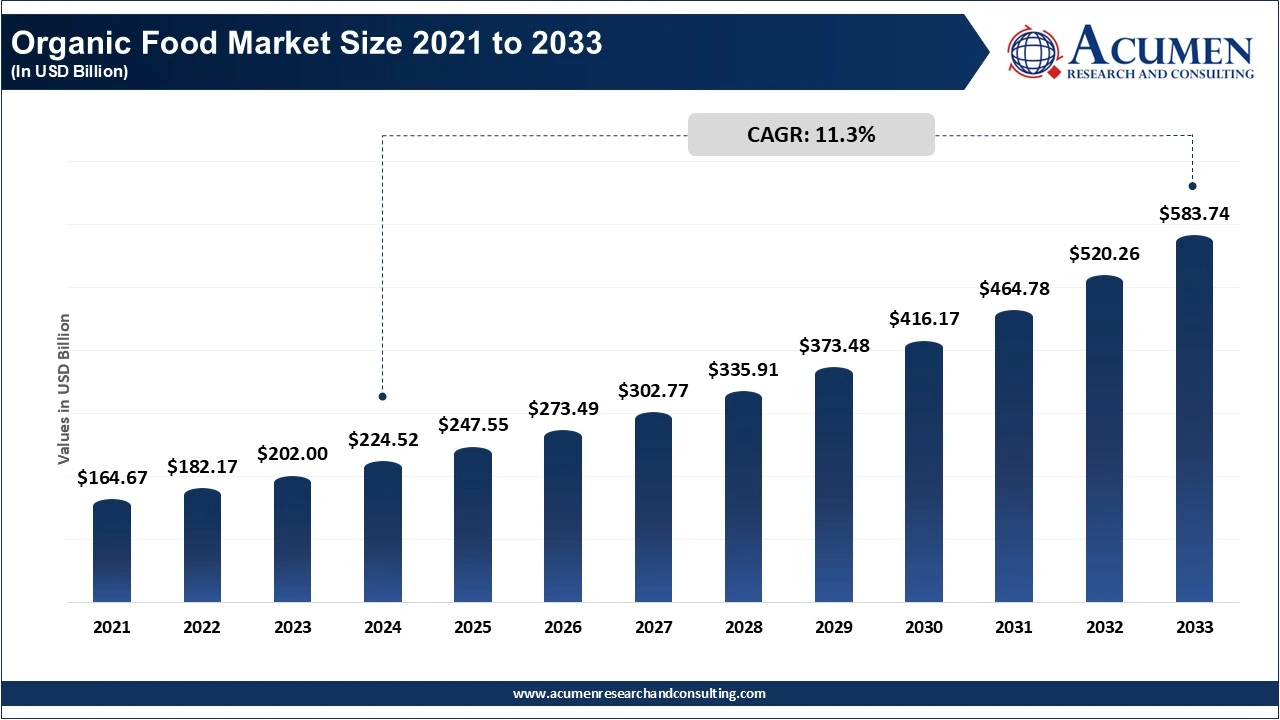
Organic food is defined as agricultural goods cultivated and processed without the use of synthetic chemicals such as fertilizers, pesticides, or genetically modified organisms. Crop rotation, composting, and biological pest management are among the activities emphasized as environmentally sustainable. Organic livestock is reared without the use of antibiotics or growth hormones and fed with organic feed. These products are typically certified by official authorities to ensure that they meet organic standards. Organic food is gaining popularity among customers due to concerns about health, food safety, and the environment. Fruits, vegetables, dairy, grains, snacks, and beverages are some of the options available. The organic food industry has grown significantly in response to rising global demand for natural, chemical-free, and ecologically friendly foods.
| Attribute | Details |
| Organic Food Market Size 2025 | USD 247.55 Billion |
| Organic Food Market Forecast 2033 | USD 583.74 Billion |
| Organic Food Market CAGR During 2025 - 2033 | 11.3% |
| Analysis Period | 2021 - 2033 |
| Base Year | 2024 |
| Forecast Data | 2025 - 2033 |
| Segments Covered | By Category, By Product, By Distribution Channel, and By Geography |
| Regional Scope | North America, Europe, Asia Pacific, Latin America, and Middle East & Africa |
| Key Companies Profiled | Unilever, Eden Foods, Nestlé, Whole Foods Market, Annie's, General Mills, Dr. Bronner's, Guinness, Kellogg's, Danone, and Organic Valley. |
| Report Coverage | Market Trends, Drivers, Restraints, Competitive Analysis, Player Profiling, Covid-19 Analysis, Regulation Analysis |
The organic food market is rapidly changing, owing to shifting consumer preferences, regulatory frameworks, and supply chain developments. Growing health consciousness is a significant motivator, with more people preferring food free of petrochemical fertilizers, pesticides, and genetically modified organisms (GMOs). Certified organic cropland in the United States increased by 79% between 2011 and 2021, reaching 3.6 million acres, while certified organic enterprises increased by more than 90%, to 17,445 farms, indicating strong demand and institutional backing. However, organic pastureland decreased by 22%, indicating a need for improved resource allocation in animal farming.
India has also experienced substantial development, with 9.12 million hectares under organic certification as of March 2022, producing 3.43 million metric tons of certified organic food. During 2021-22, the country exported 460,320 metric tons, with the majority going to the United States, the European Union, and Canada, highlighting its global position in organic agriculture.
Retail channels are expanding, with conventional grocery stores accounting significant of organic food sales in the United States in 2024, while internet sales increased. Direct-to-consumer methods also gained traction, accounting notable of total sales.
To complement this momentum, the USDA developed the $300 million organic transition initiative to help farmers transition to organic farming. Nonetheless, the market faces challenges such as high certification costs, short shelf life, and supply chain constraints. Despite these challenges, continued innovation and legislative support are projected to keep the organic food business growing.
The organic food market is expanding rapidly across all major regions, with North America accounting for the majority of the market. The region's dominance is partly due to increased health awareness, a well-established retail infrastructure, and favorable government laws that encourage organic farming. The United States, in particular, accounts for a significant portion because to high consumer expenditure, tight organic certification regulations, and a growing preference for clean-label products.
Europe follows closely, with countries such as Germany, France, and the United Kingdom demonstrating strong demand for organic foods. The European market has strong regulatory frameworks, environmentally conscious clients, and a diverse choice of organic products available through both retail and online channels. EU efforts that promote sustainable agriculture and environmental conservation help to expand the market.
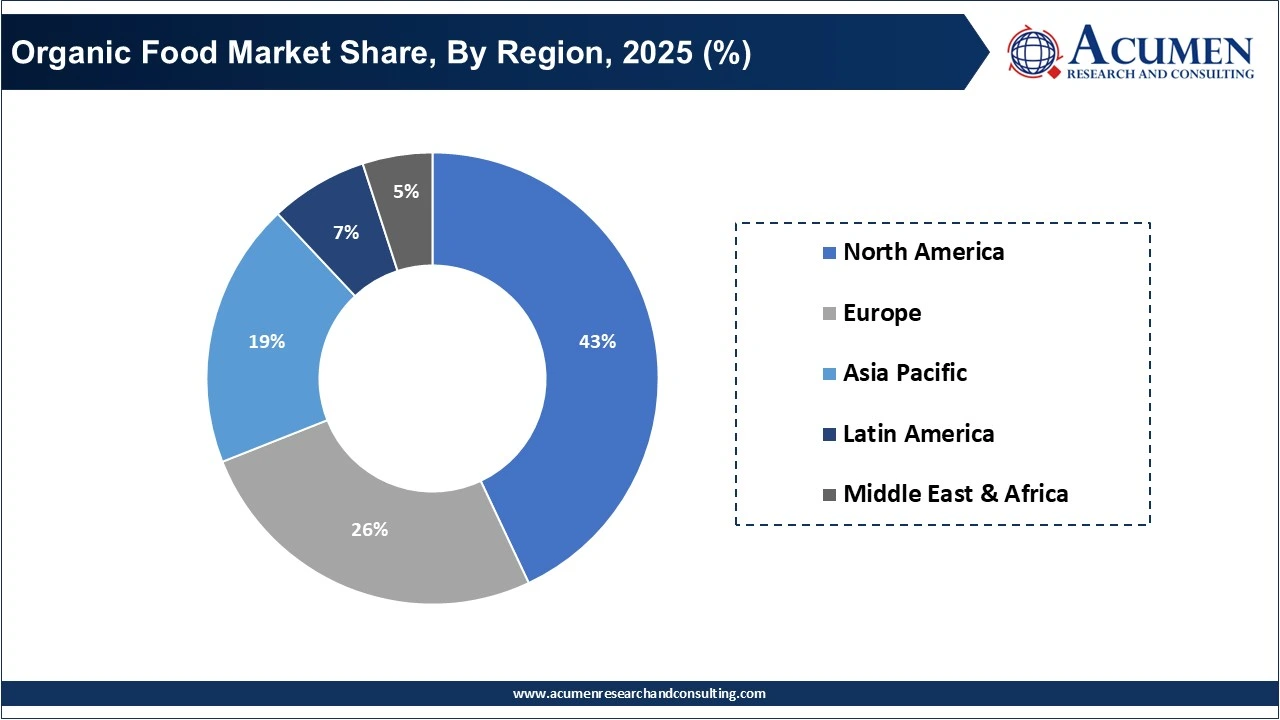
The Asia-Pacific region is expected to witness the fastest growth during the organic food market forecast period. This is due to rising disposable incomes, increased food safety knowledge, and growing urban populations in nations like China, India, and Japan. Government measures encouraging organic farming techniques, as well as certification programs, help to drive market expansion.
Latin America and the Middle East & Africa are emerging markets with growing potential, supported by increasing health awareness and the development of organic agriculture. However, limited consumer awareness and higher prices remain challenges in these regions. Overall, the global outlook for the organic food market remains highly positive across regions.
The worldwide market for organic food is split based on category, product, distribution channel, and geography.
The dairy products are expected to have the highest share due to increased consumer awareness of health and sustainability. Consumers are increasingly turning to organic milk, cheese, yogurt, and butter because they are thought to be devoid of synthetic hormones, antibiotics, and genetically modified organisms. Clean-label products are particularly popular among families with young children, as well as those who are lactose intolerant or have dietary restrictions. Furthermore, this category is being driven by increased concerns about animal welfare and the allure of farm-to-table concepts. Supermarkets, organic stores, and online merchants are expanding their organic dairy offerings, leading to greater availability and consumption in both developed and emerging economies.
The organic food market's unprocessed sector is predicted to develop significantly throughout the forecast period. This expansion is primarily the result of increased consumer understanding of health and nutrition. Organic foods that have not been processed, such as fresh fruits and vegetables, cereals, and nuts, are said to be healthier since they lack artificial additives, preservatives, and chemicals. Concerns about the long-term impacts of processed foods are also motivating individuals to choose more natural and minimally processed alternatives. Government assistance in the form of certifications and labeling enables consumers to make educated decisions. As a result, demand for unprocessed organic food remains high across all age groups and locations.
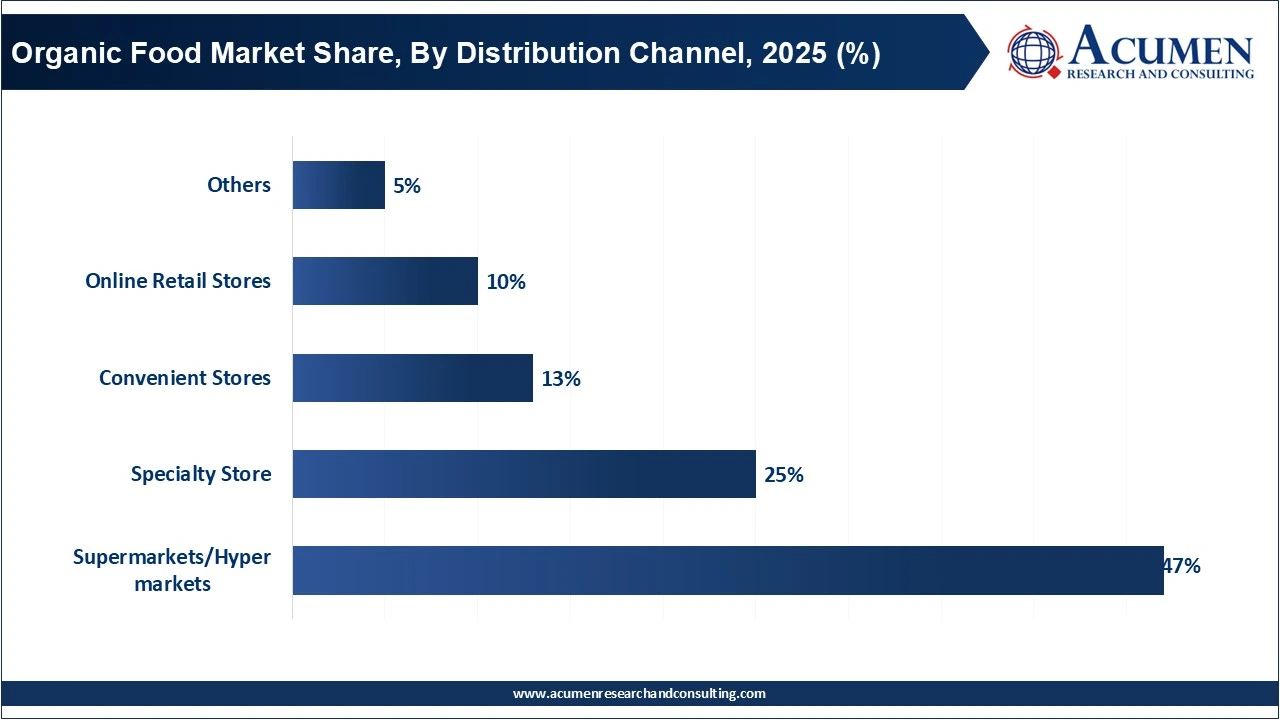
Supermarkets and hypermarkets held the maximum share in the organic food market forecast period due to their wide product offers, strong supply network, and customer convenience. These businesses provide a one-stop shopping experience, allowing customers to purchase a variety of organic food goods under one roof. They also offer improved product awareness, competitive pricing, and promotional offers, attracting a huge number of health-conscious customers. The growing availability of certified organic products in supermarkets has increased consumer trust and purchasing. Collaborations with organic food manufacturers and specialist organic sections in major retail stores have further improved accessibility. As urbanization and disposable incomes rise, supermarkets and hypermarkets remain the favored places to purchase organic food products around the world.
By Category
By Product
By Distribution Channel
By Region
Looking for discounts, bulk pricing, or custom solutions? Contact us today at [email protected]

November 2025
September 2024
August 2018
July 2022
Trusted Market Intelligence | 2026–2035 Insights | Designed to Support Faster, Smarter Decisions
Thank you! Our team will reach out to you soon.