
Global Conflicts and The Importance Of Air Defence Systems
Author: Acumen Research And Consulting



Understanding Air Defense Systems
In an era where aerial threats vary from ballistic missiles to unmanned drones, the necessity of air defense systems has increased dramatically in safeguarding national borders.
- According to Acumen Research and Consulting, the Air Defense Systems Market is projected to reach a value of USD 79 billion by 2032, expanding at a CAGR of 5.9% from 2024 to 2032.
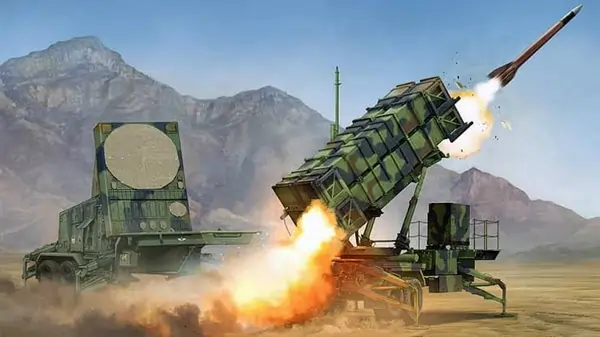
These systems are meant to identify, track, intercept, and destroy potential threats before they reach their intended targets. They use advanced air defense equipment, such as radar networks, interceptor missiles, and anti-aircraft weapons, to form a multi-layered protective barrier in the sky.
The fast development of air defense reflects the changing nature of global conflicts and modern warfare. Air defense systems are now a global requirement, not just a strategic option in security.
- Recent military developments, like as the NATO-Ukraine partnership 2025, underline the importance of air defense systems, with a particular emphasis on increasing missile and drone defense capabilities.
Why Air Defense Systems Matters?
The importance of air defense systems has grown significantly as nations face evolving aerial threats, including missiles and drone.
Comprehensive Defense Mechanism
- The FAS Project on Government Secrecy emphasizes the need of air defense systems in detecting, tracking, and countering aerial threats to ensure national security. As offensive air and missile capabilities improve, air defense systems must adapt to properly resist these rising threats.
Essential for Deterrence and Defense
- NATO prioritizes Integrated Air and Missile Defense (IAMD) as a key component of its deterrence and defense strategy. IAMD contributes to the Alliance's security by deterring air and missile threats and limiting their effectiveness, enabling NATO's capacity to reinforce deployments and respond strategically.
Enhances Decision-Making Time During Crises
- NATO argues that effective ballistic missile defense complicates potential rivals' hostile plans. During a crisis, these technologies give civilian and military officials with greater time to consider suitable responses to threats, hence improving overall crisis management and response methods.
Ukraine’s Air Defense Strategy
- As the NATO summit in June 2025 approaches, Ukraine's partners are attempting to get an agreement to provide more Patriot air defense systems to Ukraine to safeguard it from Russian missile attacks. Ukraine's President Zelenskiy has stated that they are ready to acquire ten Patriot systems from the United States. Right now, Ukraine has seven operational Patriot systems. The US and Greece considered sending additional, but Greece decided not to because it needs the systems for its own defense.
Ukraine's strategy revolves around integrating air defense technology to improve its ability to detect, intercept, and neutralize hostile threats. Ukraine intends to strengthen its defense infrastructure through developments in air defense, such as more sophisticated missile defense systems. The NATO-Ukraine partnership 2025 plays an important role in this development, as Western countries continue to give critical support for Ukraine's air defense system development. These measures are critical in ensuring Ukraine maintains control over its airspace and protects both military and civilian assets from aircraft attacks.
Recent Advancements in Air Defense Technologies
The NATO-Ukraine collaboration 2025 has pushed innovation in missile interception and radar systems, highlighting the critical role of air defense systems in modern combat. The NATO-Ukraine partnership 2025 has increased threat detection through cooperative exercises and technology sharing. Nations are now prioritizing multilayered defenses, which are supported by the NATO-Ukraine partnership 2025 objectives. These accomplishments highlight the importance of air defense systems, particularly as the NATO-Ukraine partnership 2025 influences future security policies.
- August 2024: Germany announced that it will deliver Ukraine with four additional IRIS-T air defense systems with varying ranges by the end of the year.
- August 2024: The Indian Air Force (IAF) planned to modernize its MiG-29 UPG fighter jets with new avionics, control systems, and new stand-off ground attack weaponry.
- In August 2024, the United States developed a new air-to-air missile for its military. The AIM-174B is the United States' longest-range missile ever fielded.
Preparing for the Future: Government Initiatives for National Security
- On February 10, 2025, Raksha Mantri Rajnath Singh will open Aero India 2025, at the Yelahanka Air Force Station in Bengaluru. The five-day event will assist Viksit Bharat's vision for 2047. It's going to be the largest Aero India event yet, with over 90 countries and 900+ exhibitors participating. Defence output is expected to reach ₹1.6 lakh crore, with exports exceeding ₹30,000 crore by 2025-26.
- Congress has appropriated about $250 billion for the Missile Defense Agency's programs between fiscal years 1985 and 2023, according to ACA calculations based on Missile Defense Agency (MDA) projections and the legislative record.
- In March 2023, the Ministry of Defence inked a deal with Bharat Electronics Limited (BEL) to build and supply the Akashteer system, which will improve the Indian Army's air defence capabilities. Akashteer is intended to offer tactical command and control, allowing for effective monitoring of low-level airspace and integration of multiple ground-based air defense armament systems.
Conclusion
With the advent of global wars, particularly the Russia-Ukraine conflict, and rising tensions in the Indo-Pacific, the relevance of air defense systems has become clear. To protect themselves from aerial threats, nations are investing heavily in the development of air defense systems. The NATO-Ukraine Partnership 2025 exemplifies how coordinated defense strategies are evolving. These advancements reflect modern militaries' increasing reliance on missile defense systems.
With rising global tensions, there is a greater demand for precision components in the Aerospace and Defense C-Class Parts Market, stressing the importance of air defense systems worldwide. Rapid advancements in air defense and technology advances highlight the importance of air defense systems even further. Countries are focusing on indigenous solutions, highlighting the importance of air defense systems in national security strategy. As threats become increasingly complex, the importance of air defense systems grows globally.