
The Future Battlefield: How Tactical Networks Are Revolutionizing Modern Warfare
Author: Acumen Research And Consulting



In the fast-changing face of modern warfare, tactical networks are at the forefront of revolutionizing military operations. By incorporating modern technologies, these networks enhance battlefield communication, coordination, and situational awareness.
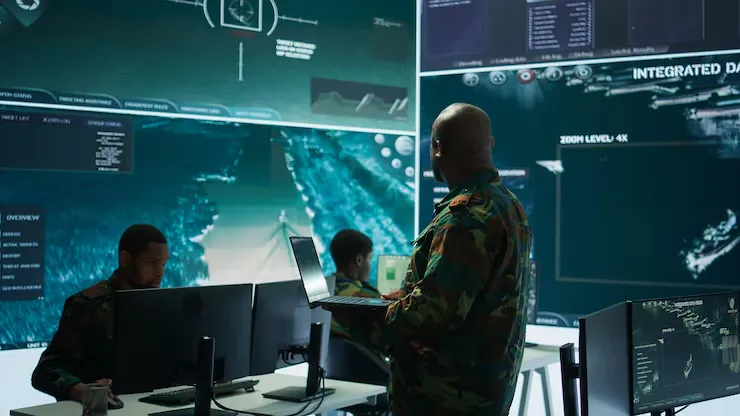
- Integrating AI into Tactical Networks: AI improves tactical networks by increasing secure data exchange, real-time situational awareness, and autonomous decision-making capabilities.
- Next-Generation Tactical Network Development: Companies such as Nokia and Blackned are collaborating to develop next-generation tactical networks for military forces like the German armed forces, combining 5G technology with software expertise to improve battlefield communication and coordination.
- Advancements in Secure Tactical Communication: Systems such as the Defense Red Switch Network (DRSN) offer secure, multilevel communication services to the United States Armed Forces while retaining secrecy and dependability in command and control organizations.
- Implementation of Future Battlefield technologies: The United States Army’s Unified Network Operations (UNO) concept includes technologies such as 5G, software-defined networking, and quantum-resistant cryptography to facilitate multi-domain operations across all combat scenarios.
Nokia and Blackned Will Power Next-Generation Tactical Networks for the German Military
Nokia has teamed with Blackned, a defense technology corporation majority-owned by Rheinmetall, to co-develop next-generation tactical networks for the German armed forces. These mobile communication systems will be custom-built for Germany's military requirements, with the potential for wider global defense applications. By combining Nokia's 5G and software capabilities with Rheinmetall's Battlesuite digital platform, the cooperation hopes to improve battlefield coordination and real-time data exchange.
These next-generation tactical networks are designed to operate in hostile combat environments, ensuring connectivity even in the absence of traditional infrastructure. The decision aligns with Europe's expanding defense budgets, where secure and responsive communication has become a strategic priority. This collaboration exemplifies how superior next-generation tactical networks are becoming increasingly vital in the future of modern, complex combat.
Nokia Improves Military Communications through Strategic Acquisitions and NATO Participation
In May 2024, Nokia took a significant step toward improving its defense communications capabilities by acquiring Fenix Group, a US-based company that specialized in tactical communication systems for military operations. This strategic move brings Fenix's breakthrough broadband tactical communication systems, including the Banshee line and Talon MANET radios, into Nokia's growing portfolio.
These developments position Nokia to provide a broad range of 3GPP-based solutions to worldwide defense customers, thereby accelerating the digital transformation of military communications. These projects collectively demonstrate Nokia's expanding commitment to next-generation tactical networks, as well as its leadership in the evolution of defense communications.
Next-Generation Tactical Networks
Many defense organizations place a high premium on developing next-generation tactical networks. For example, Nokia and blackned are working together to develop new communication systems for the German military forces, combining 5G technology and software expertise to improve battlefield communication.
- According to orfonline.org, India's Armed Forces are developing tactical information-communication networks tailored to their specific battlefield requirements.
These efforts include the integration of software-defined radios and mobile ad hoc networks to increase interoperability and secure data sharing.
Secure Tactical Communication
Ensuring secure tactical communication is critical in modern combat. Systems like as the Defense Red Switch Network (DRSN) enable multilevel secure phone and conferencing capabilities for the United States Armed Forces, facilitating secret communication among top-level command structures.
Similarly, the Mobile User Objective System (MUOS) provides worldwide narrowband connectivity to mobile devices, expanding voice, data, and video communications beyond line-of-sight. This secure tactical communication replaces earlier communication infrastructures, improving security and mobility for tactical operations.
Modern Warfare Technology
Modern warfare technology includes a variety of advances designed to improve operational efficiency and effectiveness. The US Army's Unified Network Operations (UNO) concept exhibits this by combining technologies like 5G, software-defined networking, and quantum-resistant cryptography. These innovations allow for multi-domain operations and safe, robust communication in all operational settings.
Furthermore, the Battlefield Airborne Communications Node (BACN) allows for real-time information flow across the battlefield by bridging communication gaps between various tactical data connection and speech systems. This feature improves the situational awareness and coordination between air and ground units.
Future Battlefield Technology
Looking ahead, future battlefield technology in AI, cybersecurity, and network integration will drive further evolution of combat technology. Implementing AI-driven decision support systems and intelligent spectrum allocation will improve tactical networks agility and robustness.
Furthermore, the deployment of zero trust architecture within military communication systems ensures ongoing verification of people and devices, increasing the security posture against evolving cyber threats.
Military Communication Systems and Defense Communication Networks
Military communication systems and defense communication networks are critical to the effectiveness of contemporary military operations. They provide the infrastructure required for secure, dependable, and efficient communication across multiple domains. The constant development and integration of these systems ensures that military forces remain agile and responsive to emerging threats.
Conclusion
In conclusion, tactical networks are transforming modern combat by improving communication, coordination, and situational awareness. Armed forces are better prepared to navigate the complexities of the future battlefield by establishing next-generation tactical networks, ensuring secure tactical communication, and incorporating modern warfare technology.
The entry of 5G in the defense market has hastened the development of high-speed, low-latency tactical networks, which are crucial for real-time communication and combat awareness. These networks provide seamless data sharing between ground people, drones, and command centers. At the same time, the Aerospace and Defense C-Class Parts Market, which contains minor but critical components such as fasteners and seals, guarantees the dependability and efficiency of advanced technology utilized in networked warfare systems. These advancements, when combined, pave the way for a future battlefield that is smarter, faster, and more resilient.