
CRISPR CDMO Market Size, Forecast Report 2026 To 2035
CRISPR CDMO Market (By Product: Guide RNA, Editor mRNA Manufacturing, Cas Protein / RNP Manufacturing, LNP Formulation & Fill-Finish, Viral Vector Manufacturing, Edited Cell Therapy Manufacturing, Analytical, Off-Target Testing & Process Development; By Editing Modality: Ex Vivo Editing, In Vivo Editing; By Editing Technology: CRISPR-Cas9 Nuclease, Base Editing, Prime Editing, Others; By Development Phase: Preclinical & IND-Enabling, Clinical (Phase I–III), Commercial; By Therapeutic Area: Hematology, Oncology, Cardiovascular & Metabolic, Rare Genetic & Liver Diseases, Ophthalmology & Neurology, Others; By Client Type: Small & Mid-Sized Biotechnology Companies, Large Pharmaceutical Companies, Academic & Research Institutes) - Global Industry Analysis, Size, Share, Analysis, Trends and Forecast 2026 - 2035
- Last Updated: 09 Nov 2026
- Report Code: ARC4005
- Category: Healthcare and Pharmaceuticals
CRISPR CDMO Market Size, and Growth 2026 to 2035
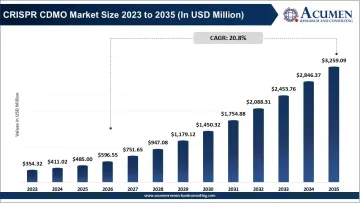
The global CRISPR CDMO market size was valued at $485 million in 2025 and is expected to reach at $3,259.09 million by 2035; expanding at a CAGR of 20.8% during the forecast period of 2026-2035. Increasing investment in CRISPR-based therapeutics, expansion of gene editing clinical pipelines, rising demand for GMP-grade manufacturing, and growing pharmaceutical outsourcing are driving the CRISPR CDMO market. Advancements in gene-editing technologies and delivery systems further support demand for specialized development and manufacturing services.
CRISPR CDMO Market Size & Forecast
- Base Year Market Size (2025): $485 million
- Current Year Market Size (2026): $596.55 million
- Estimated Year Market Size (2035): $3,259.09 million
- Forecast Period CAGR (2026-2035): 20.8%
Key Takeaways
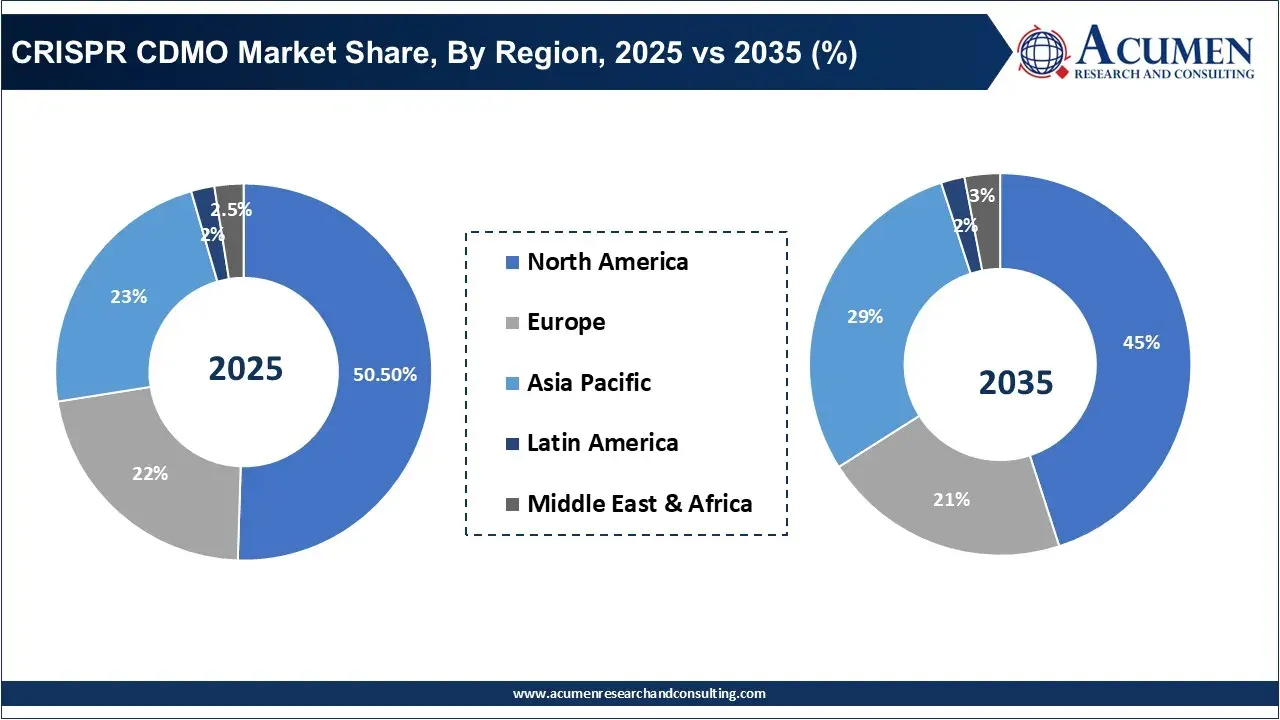
- By Region: North America dominated the regional segment with a 50.5% share in 2025, equivalent to USD 244.93 million. Its share is projected to reach 45.0% by 2035, supported by an established biotechnology ecosystem, advanced gene-editing research, and strong demand for specialized manufacturing services.
- By Product/Service Type: Edited cell therapy manufacturing dominated the product/service segment with a 25.0% share in 2025, valued at USD 121.25 million. Its demand is supported by the development of ex vivo CRISPR therapies and the need for specialized cell processing and GMP manufacturing capabilities.
- By Editing Modality: Ex vivo editing dominated the editing modality segment with a 55.0% share in 2025, valued at USD 266.75 million. Its leadership reflects established clinical development pathways and the growing use of modified cells in hematological and oncology applications.
- By Editing Technology: CRISPR-Cas9 nuclease dominated the editing technology segment with a 68.0% share in 2025, valued at USD 329.80 million. Its established research base, broad applicability, and extensive clinical development experience support its leading position.
- By Development Phase: Clinical development (Phase I–III) dominated the development phase segment with a 62.0% share in 2025, valued at USD 300.70 million. The segment's leadership reflects the growing number of CRISPR-based candidates progressing through clinical trials and the demand for clinical-grade manufacturing.
- By Therapeutic Area: Hematology dominated the therapeutic area segment with a 32.0% share in 2025, valued at USD 155.20 million. Demand is supported by CRISPR-based treatment development for sickle cell disease, beta thalassemia, and other inherited blood disorders.
- By Client Type: Small and mid-sized biotechnology companies dominated the client type segment with a 64.0% share in 2025, valued at USD 310.40 million. Limited in-house manufacturing infrastructure and the need for specialized gene-editing expertise encourage these companies to outsource development and production to CRISPR CDMOs.
Industry Overview
The CRISPR CDMO market comprises contract development and manufacturing organizations that provide specialized services for the development, production, testing, and scale-up of CRISPR-based gene-editing products and therapeutic components. These services include guide RNA synthesis, Cas protein production, plasmid DNA manufacturing, delivery-system development, process optimization, analytical testing, and GMP-compliant manufacturing for preclinical, clinical, and commercial applications.
As biotechnology and pharmaceutical companies advance CRISPR-based therapies for genetic disorders, cancer, and other diseases, demand is increasing for specialized manufacturing partners with expertise in gene-editing workflows, quality control, and regulatory compliance. CRISPR CDMOs help reduce infrastructure investment, support technology transfer, and provide access to specialized manufacturing capabilities.
Therapeutic Pipeline and Clinical Development Analysis
| Parameter | Statistical data | Market significance |
|---|---|---|
| Active CRISPR-based clinical trials | 136 trials as of December 2025 | Indicates the expanding clinical development pipeline and demand for specialized manufacturing services. |
| Ex vivo CRISPR clinical trials | 100 trials as of December 2025 | Represents a substantial manufacturing opportunity in cell collection, gene editing, expansion, and processing. |
| First approved CRISPR-based therapy | Casgevy, approved in 2023 | Established the transition of CRISPR technology from clinical research to commercial therapeutic manufacturing. |
| Casgevy clinical efficacy | 29 of 30 patients (97%) in the primary efficacy population remained free from severe vaso-occlusive crises for at least 12 consecutive months | Demonstrates clinical validation of CRISPR-based treatment for severe sickle cell disease. |
| Casgevy treatment initiation | More than 750 patients had initiated treatment worldwide by Q3 2026 | Signals increasing commercial manufacturing and treatment-delivery requirements. |
| Casgevy geographic approvals | Approved in 39 countries as reported in Q3 2026 | Expanding geographic access creates additional requirements for manufacturing, distribution, and supply-chain coordination. |
Market Dynamics
Growth Drivers
- Increasing Demand for CRISPR-Based Gene Editing Therapies: Growing research into genetic disorders, cancer, rare diseases, and inherited conditions is driving demand for CRISPR-based therapeutics. Pharmaceutical and biotechnology companies are increasingly relying on specialized CDMOs for gene-editing development, process optimization, analytical testing, and GMP manufacturing to accelerate clinical development and commercialization.
- Rising Outsourcing of Cell and Gene Therapy Manufacturing: The technical complexity of CRISPR-based therapies is encouraging biotechnology companies to outsource specialized manufacturing activities. CRISPR CDMOs provide expertise in gene editing, cell processing, viral and non-viral delivery systems, analytical characterization, and regulatory compliance, helping developers reduce infrastructure investments and manufacturing risks.
- Advancements in Gene Editing and Delivery Technologies: Continuous improvements in CRISPR-Cas systems, base editing, prime editing, guide RNA design, and lipid nanoparticle delivery are expanding the potential applications of gene-editing therapeutics. These developments are increasing demand for CDMOs capable of translating advanced research processes into reproducible, scalable, and regulatory-compliant manufacturing operations.
Restraints
- High Development and Manufacturing Costs: CRISPR-based manufacturing involves specialized equipment, advanced laboratory infrastructure, skilled personnel, and extensive analytical testing. Developing GMP-compliant processes, optimizing gene-editing efficiency, and validating manufacturing consistency require substantial investments, creating financial barriers for emerging biotechnology companies and smaller therapeutic developers.
- Regulatory Complexity and Safety Concerns: CRISPR-based therapies face stringent regulatory requirements related to off-target editing, genomic integrity, editing efficiency, product characterization, and long-term patient safety. Differences in regulatory expectations across countries can complicate clinical development, manufacturing validation, and commercialization, increasing compliance costs and development timelines
- Technical Challenges in Gene Editing and Delivery: Achieving precise gene modification while maintaining high cell viability and consistent editing efficiency remains challenging. Limitations associated with delivery systems, unwanted genetic alterations, immune responses, and variability in biological starting materials can affect manufacturing reproducibility and therapeutic outcomes.
Key Opportunities
- Expansion of Personalized and Ex Vivo Gene Therapies: Growing development of patient-specific gene-editing treatments creates opportunities for CDMOs offering specialized ex vivo cell processing and manufacturing services. Increasing demand for CRISPR-modified hematopoietic stem cells, immune cells, and other cellular therapies is creating opportunities in individualized manufacturing, process automation, and integrated supply-chain management.
- Development of Allogeneic and In Vivo CRISPR Therapies: Progress in allogeneic cell therapies and in vivo gene editing creates opportunities for CDMOs to develop scalable manufacturing platforms. Advances in lipid nanoparticles, viral vectors, and other delivery technologies are expanding the potential for off-the-shelf and directly administered CRISPR treatments, increasing demand for specialized formulation, process development, and GMP production capabilities.
Challenges
- Ensuring Consistent Manufacturing Quality and Editing Efficiency: Maintaining consistent gene-editing performance across manufacturing batches remains a major challenge. Variations in cell sources, guide RNA quality, editing conditions, delivery efficiency, and biological responses can affect product quality, requiring robust process controls and advanced analytical characterization.
- Scaling Manufacturing from Clinical to Commercial Production: Translating small-scale CRISPR manufacturing processes into large-scale GMP operations involves challenges related to process standardization, automation, batch reproducibility, and production economics. CDMOs must develop scalable platforms without compromising editing accuracy, cell viability, product purity, or therapeutic potency.
Services and Outsourcing Analysis
Key CRISPR CDMO Services
- Guide RNA Synthesis and Optimization: Design support, synthesis, purification, modification, and quality testing of guide RNA to improve editing efficiency, consistency, and manufacturing reproducibility.
- Plasmid DNA Manufacturing: Development and GMP-grade production of plasmid DNA used in gene-editing workflows, research, and therapeutic manufacturing.
- Viral and Non-Viral Delivery Development: Development and manufacturing support for delivery technologies, including adeno-associated viral vectors, lipid nanoparticles, and other non-viral delivery systems.
- GMP Clinical Manufacturing: Production of CRISPR components and gene-edited therapeutic materials under Good Manufacturing Practice requirements for preclinical and clinical programs.
- Technology Transfer and Scale-Up: Transfer of manufacturing processes from biotechnology developers to CDMO facilities, followed by process qualification, scale-up, and manufacturing validation.
CRISPR CDMO Outsourcing Trends
- Increasing Outsourcing Among Emerging Biotech Companies: Small and clinical-stage biotechnology companies increasingly rely on external manufacturing partners to access specialized gene-editing infrastructure without investing in expensive GMP facilities.
- Growing Demand for Integrated CDMO Services: Pharmaceutical developers are seeking partners capable of providing process development, analytical testing, component manufacturing, and clinical supply under integrated service agreements.
- Expansion of GMP Manufacturing Outsourcing: As CRISPR candidates advance through clinical development, demand is increasing for GMP-grade guide RNA, Cas proteins, plasmid DNA, and gene-edited cellular products.
- Preference for Specialized Manufacturing Partners: Companies are prioritizing CDMOs with established experience in gene editing, advanced therapeutics, analytical characterization, and regulatory compliance.
CRISPR CDMO Market Segmental Insights
Product / Service Type Insights
Edited Cell Therapy Manufacturing (Ex Vivo): Edited cell therapy manufacturing dominated the product and service type segment with a 25.0% share in 2025, generating USD 121.25 million. Demand is supported by CRISPR-based cell therapies requiring specialized cell collection, editing, expansion, quality testing, and cryopreservation. The segment is projected to reach USD 651.82 million by 2035, registering an 18.1% CAGR.
Guide RNA (sgRNA/crRNA) Manufacturing: Guide RNA manufacturing represented the second-largest category with a 20.0% share in 2025 and revenue of USD 97.00 million. Guide RNA is a critical component of CRISPR systems, creating demand for synthesis, purification, modification, analytical characterization, and GMP-grade production. Revenue is projected to reach USD 586.64 million by 2035, at a 19.5% CAGR.
CRISPR CDMO Market Share, By Product / Service Type, 2025 & 2035 (%)
| Product / Service Type | Revenue Share, 2025 (%) | Revenue Share, 2035 (%) |
|---|---|---|
| Guide RNA (sgRNA/crRNA) manufacturing | 20% | 18% |
| Editor mRNA manufacturing | 16% | 20% |
| Cas protein / RNP manufacturing | 7% | 5% |
| LNP formulation & fill-finish | 11% | 18% |
| Viral vector manufacturing | 9% | 9% |
| Edited cell therapy manufacturing | 25% | 20% |
| Analytical, off-target testing & process development | 12% | 10% |
LNP Formulation & Fill-Finish: LNP formulation and fill-finish is expected to be the fastest-growing service category, registering a 26.7% CAGR from 2026 to 2035. Its market share is projected to increase from 11.0% in 2025 to 18.0% in 2035. Growth is driven by increasing interest in in vivo gene editing, which requires effective delivery of CRISPR components through lipid nanoparticles. The segment is forecast to reach USD 586.64 million by 2035.
Editing Modality Insights
Ex Vivo Editing: Ex vivo editing dominated the segment with a 55.0% share in 2025, generating USD 266.75 million. Its leadership reflects established development pathways for genetically modified cells, particularly in hematological disorders and oncology. These therapies require specialized CDMO capabilities for cell processing, editing, expansion, analytical testing, and cryogenic storage. The segment is projected to reach USD 1,238.45 million by 2035, at a 16.3% CAGR.
CRISPR CDMO Market Share, By Editing Modality, 2025 & 2035 (%)
| Editing Modality | Revenue Share 2025 (%) | Revenue Share 2035 (%) |
|---|---|---|
| Ex Vivo Editing | 55% | 38% |
| In Vivo Editing | 45% | 62% |
In Vivo Editing: In vivo editing accounted for the remaining 45.0% share in 2025, with revenue of USD 218.25 million. It is expected to become the fastest-growing and largest editing modality by 2035, reaching a projected 62.0% share and USD 2,020.63 million in revenue. Its growth is supported by advances in targeted delivery systems, lipid nanoparticles, and the development of therapies designed to edit genetic targets directly inside the body. The segment is projected to register a 24.6% CAGR.
Editing Technology Insights
CRISPR-Cas9 Nuclease: CRISPR-Cas9 dominated the editing technology segment with a 68.0% share in 2025, generating USD 329.80 million. Its established research foundation, broad applicability, and comparatively mature development ecosystem support demand for Cas9 proteins, guide RNA, plasmid DNA, and related manufacturing services. The segment is projected to reach USD 1,499.18 million by 2035, at a 16.1% CAGR.
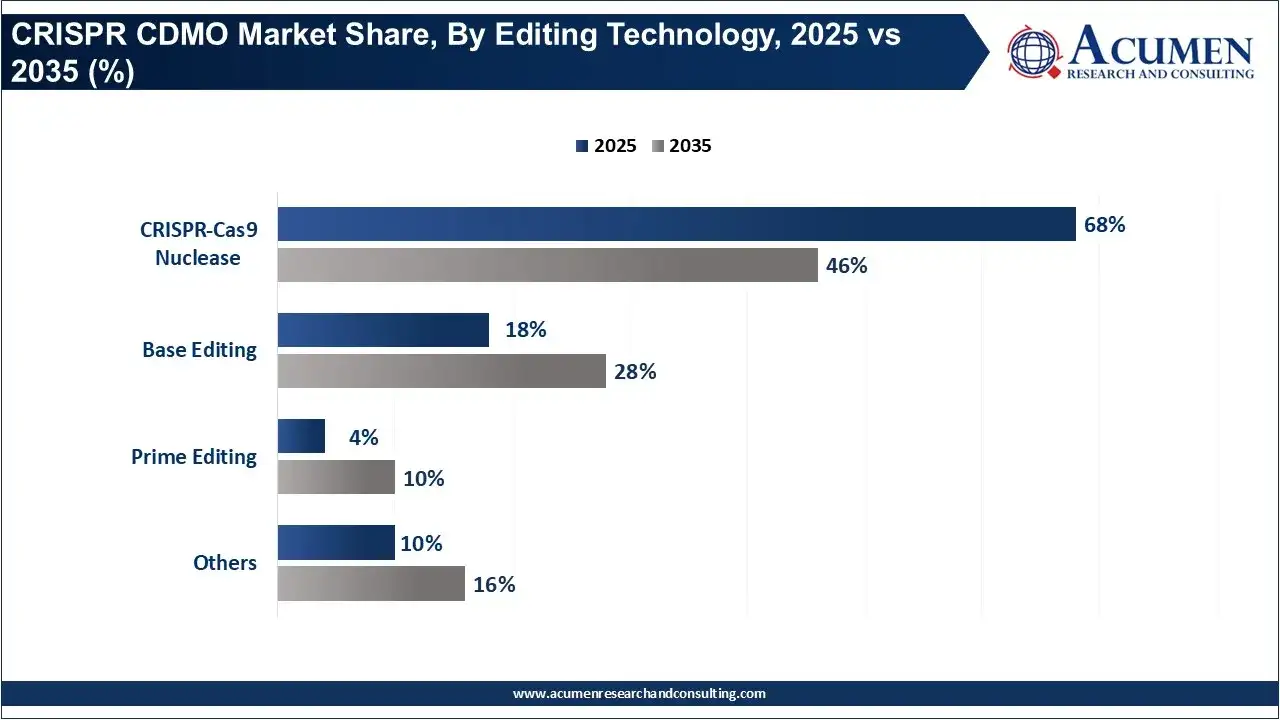
Prime Editing: Prime editing is expected to be the fastest-growing technology category, with a projected CAGR of 31.6% from 2026 to 2035. Its share is expected to increase from 4.0% in 2025 to 10.0% in 2035. Growing research into precise genetic modifications and more complex editing applications is creating demand for specialized editor mRNA, guide RNA, formulation, and analytical development services. Revenue is projected to reach USD 325.91 million by 2035.
Development Phase Insights
Clinical (Phase I–III): Clinical-stage manufacturing dominated the development phase segment with a 62.0% share in 2025, generating USD 300.70 million. CRISPR candidates in clinical development require GMP-compliant production, analytical characterization, batch testing, and reliable clinical supply. The segment is projected to reach USD 1,368.82 million by 2035, registering a 16.1% CAGR.
Preclinical & IND-Enabling: Preclinical and IND-enabling manufacturing accounted for the second-largest share at 30.0% in 2025, with revenue of USD 145.50 million. Demand is supported by early-stage biotechnology companies requiring process development, candidate characterization, toxicology material production, and manufacturing documentation before clinical entry. Revenue is forecast to reach USD 651.82 million by 2035, at a 15.9% CAGR.
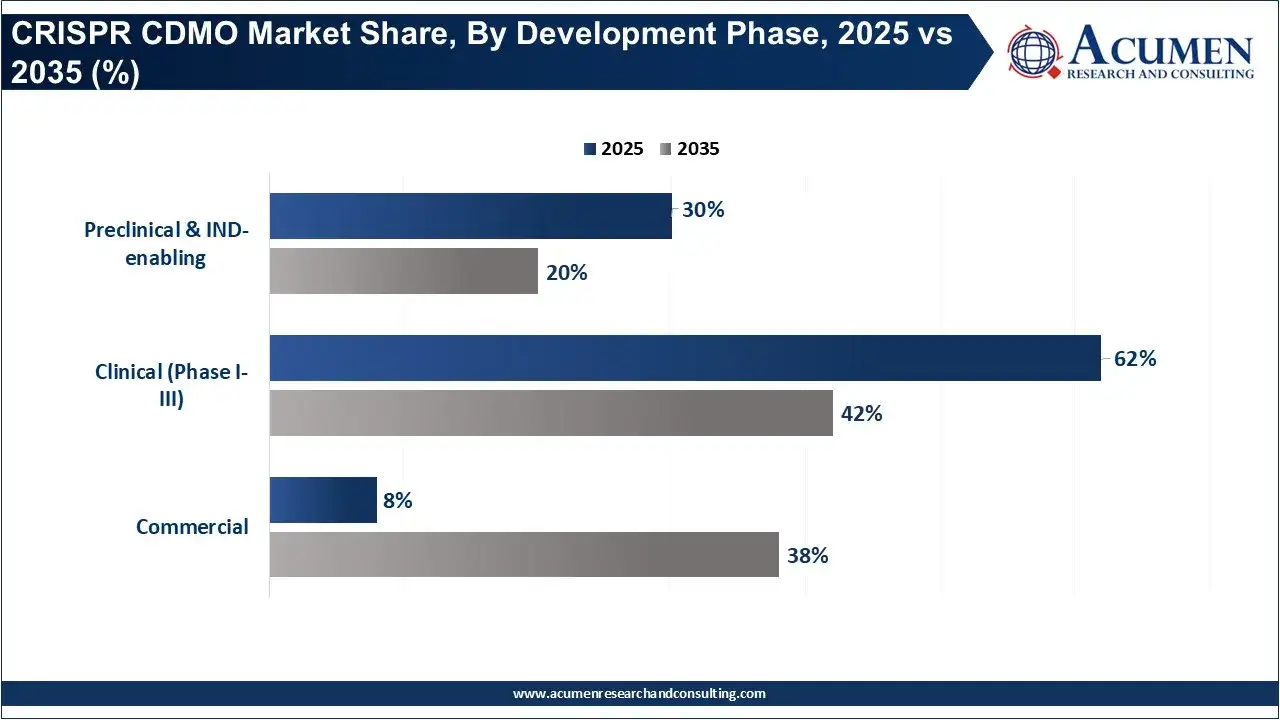
Commercial: Commercial manufacturing is expected to be the fastest-growing development phase, registering a 38.6% CAGR from 2026 to 2035. Its market share is projected to rise from 8.0% in 2025 to 38.0% in 2035. Growth is linked to the progression of CRISPR-based therapies toward regulatory approval and commercialization, increasing demand for validated processes, larger manufacturing volumes, and long-term supply agreements. Revenue is projected to reach USD 1,238.45 million by 2035.
Therapeutic Area Insights
Hematology: Hematology dominated the therapeutic area segment with a 32.0% share in 2025, generating USD 155.20 million. Demand is supported by CRISPR-based therapeutic development for sickle cell disease and beta thalassemia, which requires specialized ex vivo cell editing, manufacturing, quality testing, and cryopreservation. The segment is projected to reach USD 586.64 million by 2035, registering a 13.9% CAGR.
Oncology: Oncology represented the second-largest therapeutic area with a 24.0% share in 2025 and revenue of USD 116.40 million. Development of CRISPR-edited CAR-T and natural killer cell therapies is driving demand for cell engineering, process development, GMP manufacturing, and analytical testing. Revenue is projected to reach USD 651.82 million by 2035, at an 18.6% CAGR.
CRISPR CDMO Market Share, By Therapeutic Area, 2025 & 2035 (%)
| Therapeutic Area | Revenue Share 2025 (%) | Revenue Share 2035 (%) |
|---|---|---|
| Hematology | 24% | 20% |
| Cardiovascular & metabolic | 14% | 26% |
| Rare genetic & liver diseases | 18% | 22% |
| Ophthalmology & neurology | 6% | 7% |
| Others | 6% | 7% |
Cardiovascular & Metabolic: Cardiovascular and metabolic applications are expected to be the fastest-growing therapeutic category, registering a 28.2% CAGR from 2026 to 2035. Its share is projected to increase from 14.0% in 2025 to 26.0% in 2035. Research into gene-editing targets such as PCSK9, ANGPTL3, and TTR is supporting demand for in vivo editing components, editor mRNA, guide RNA, and lipid nanoparticle formulation. Revenue is forecast to reach USD 847.36 million by 2035.
Client Type Insights
Small & Mid-Sized Biotechnology Companies: Small and mid-sized biotechnology companies dominated the client type segment with a 64.0% share in 2025, generating USD 310.40 million. These companies frequently depend on external partners for specialized manufacturing infrastructure, GMP production, analytical development, and regulatory support. Outsourcing enables them to manage capital requirements while advancing clinical-stage gene-editing programs. The segment is projected to reach USD 1,694.73 million by 2035, at an 18.3% CAGR.
Large Pharmaceutical Companies: Large pharmaceutical companies represented the second-largest client category with a 24.0% share in 2025 and revenue of USD 116.40 million. Their demand is supported by strategic investments in gene editing, licensing agreements, pipeline expansion, and partnerships with biotechnology developers. This category is expected to be the fastest-growing client segment, registering a 26.3% CAGR and reaching USD 1,238.45 million by 2035.
CRISPR CDMO Market Share, By Client Type, 2025 & 2035 (%)
| Client Type | Revenue Share 2025 (%) | Revenue Share 2035 (%) |
|---|---|---|
| Small & mid-sized biotech companies | 64% | 52% |
| Large pharmaceutical companies | 24% | 38% |
| Academic & research institutes | 12% | 10% |
Academic & Research Institutes: Academic and research institutes accounted for a 12.0% share in 2025, generating USD 58.20 million. Their demand is associated with early-stage CRISPR research, technology development, preclinical studies, and access to specialized analytical and manufacturing capabilities. Revenue is projected to reach USD 325.91 million by 2035, at an 18.6% CAGR.
CRISPR CDMO Market Regional Insights
Which Region Dominated the CRISPR CDMO Market in 2025?
North America dominated the CRISPR CDMO market in 2025, accounting for a 50.5% share and generating revenue of USD 244.93 million. The region's leadership is supported by its well-established biotechnology ecosystem, substantial pharmaceutical research investments, and concentration of companies developing gene-editing therapeutics. The United States is the primary contributor, with strong activity across CRISPR-based clinical development, advanced therapy research, and specialized biomanufacturing.
The presence of established life sciences service providers and specialized manufacturing infrastructure further supports outsourcing opportunities. North America also benefits from pharmaceutical partnerships, venture capital investment, and continued development of clinical-stage gene-editing candidates.
As more CRISPR therapies advance toward commercialization, demand for validated manufacturing processes, analytical testing, and scalable production capacity is expected to increase. The regional market is projected to reach USD 1,466.59 million by 2035, growing at a 19.4% CAGR from 2026 to 2035. Despite a projected decline in its market share to 45.0% by 2035, North America is expected to retain its leading regional position.
Which Region Is Expected to Be the Fastest-Growing in the CRISPR CDMO Market?
Asia-Pacific is expected to be the fastest-growing regional market for CRISPR CDMO services, registering a projected CAGR of 23.6% from 2026 to 2035. The region's market share is forecast to increase from 23.0% in 2025 to 29.0% in 2035, reflecting its expanding role in gene-editing research, therapeutic development, and specialized manufacturing. China is an important contributor, supported by biotechnology investment, domestic gene-editing companies, and increasing clinical development activity.
Japan and South Korea are strengthening the regional ecosystem through advanced pharmaceutical manufacturing, regenerative medicine research, and investments in cell and gene therapy capabilities.
India also offers emerging opportunities through its cost-competitive pharmaceutical manufacturing base, growing biotechnology sector, and research infrastructure. These developments are creating demand for outsourced services covering guide RNA production, editor mRNA manufacturing, plasmid DNA, lipid nanoparticle formulation, analytical testing, and GMP manufacturing.
Country-Level Analysis
- United States: The United States represents a major market for CRISPR CDMO services, supported by a strong biotechnology ecosystem, extensive gene-editing research, clinical trial activity, and established GMP manufacturing infrastructure. Demand is driven by pharmaceutical outsourcing, advanced therapeutic development, and investment in guide RNA, plasmid DNA, and cell-processing capabilities.
- Germany: Germany benefits from its established pharmaceutical manufacturing industry, biotechnology research infrastructure, and advanced biologics production capabilities. Increasing development of gene-editing therapies and demand for GMP-compliant manufacturing are creating opportunities for specialized CRISPR CDMOs.
- United Kingdom: The United Kingdom has a growing gene-editing research ecosystem supported by biotechnology companies, academic institutions, and clinical research organizations. Regulatory and research initiatives supporting advanced therapies are contributing to demand for specialized development, analytical testing, and clinical manufacturing services.
- Switzerland: Switzerland is an important pharmaceutical and biotechnology hub, with established expertise in biologics, advanced manufacturing, and pharmaceutical quality systems. Its strong life sciences ecosystem creates opportunities for CRISPR CDMOs providing specialized process development, GMP manufacturing, and analytical services.
- France: France's biotechnology ecosystem, pharmaceutical manufacturing base, and research activity in cell and gene therapies support demand for CRISPR development and manufacturing services. Investments in advanced therapies and clinical research are creating opportunities for specialized outsourcing providers.
Regulatory and Quality Compliance Analysis
| Regulatory framework / standard | Regulatory focus | Relevance to CRISPR CDMOs |
|---|---|---|
| FDA 21 CFR Part 210 | Current Good Manufacturing Practice for manufacturing, processing, packing, or holding drugs | Establishes baseline GMP requirements for manufacturing operations and facility controls. |
| FDA 21 CFR Part 211 | Current Good Manufacturing Practice for finished pharmaceuticals | Covers quality systems, production controls, laboratory testing, documentation, and batch release. |
| FDA 21 CFR Parts 600–680 | Biological product regulations | Applies to relevant biological products, including requirements for manufacturing controls, testing, and product safety. |
| FDA Guidance on Human Gene Therapy Products Incorporating Genome Editing | Clinical and manufacturing considerations for genome-editing products | Addresses product characterization, editing specificity, off-target effects, and manufacturing controls. |
| FDA Guidance on CMC Information for Human Gene Therapy INDs | Chemistry, manufacturing, and controls requirements | Supports process documentation, analytical characterization, potency testing, and manufacturing consistency. |
| EU GMP Guidelines, Part IV | GMP requirements for advanced therapy medicinal products (ATMPs) | Establishes manufacturing and quality expectations for gene therapy and genetically modified cell products. |
| EU GMP Annex 1 | Manufacture of sterile medicinal products | Covers contamination control, aseptic processing, environmental monitoring, and sterile manufacturing operations. |
| ICH Q5A(R2) | Viral safety evaluation of biotechnology products | Supports viral safety assessment and control of relevant biological manufacturing materials. |
Competitive Landscape
- Synthego – Provides CRISPR solutions, guide RNA synthesis, genome engineering, and related services.
- Biomay – Offers GMP manufacturing of Cas9 nuclease, mRNA, plasmid DNA, and other biological components.
- Aldevron – Provides plasmid DNA, mRNA, and protein manufacturing services for advanced therapeutic development.
- Lonza – Offers development and manufacturing capabilities for advanced therapies and biological products.
- Thermo Fisher Scientific – Provides biologics, viral vector, plasmid DNA, and advanced therapy manufacturing services.
- Catalent – Participates in advanced therapy development and manufacturing through its biologics and cell therapy capabilities.
- Forge Biologics – Provides plasmid DNA and viral vector development and GMP manufacturing.
- Andelyn Biosciences – Offers process development, analytical testing, and GMP manufacturing for gene therapies.
- Charles River Laboratories – Provides testing, analytical development, and manufacturing support for advanced therapies.
- AGC Biologics – Offers biologics, viral vector, and cell therapy development and manufacturing.
- WuXi Advanced Therapies – Provides integrated development, testing, and manufacturing services for advanced therapies.
Recent Developments and Strategic Initiatives
- October 2026: Synthego and Biomay entered into a non-exclusive collaboration to expand access to CRISPR and mRNA manufacturing capabilities in North America. The partnership combines Synthego's guide RNA expertise with Biomay's Cas9 nuclease manufacturing, mRNA production, lipid nanoparticle formulation, aseptic fill-finish, and cGMP capabilities.
- March 2025: YolTech Therapeutics Announces GMP Manufacturing Facility Expansion: YolTech announced plans to expand its GMP-compliant manufacturing facility in Nanjing, China, to approximately 54,000 square feet.
Segments Covered
By Product / Service Type
- Guide RNA (sgRNA/crRNA) Manufacturing
- Editor mRNA Manufacturing (Cas Nuclease, Base and Prime Editors)
- Cas Protein / RNP Manufacturing
- LNP Formulation & Fill-Finish
- Viral Vector Manufacturing (AAV, Lentivirus)
- Edited Cell Therapy Manufacturing (Ex Vivo)
- Analytical, Off-Target Testing & Process Development
By Editing Modality
- Ex Vivo Editing
- In Vivo Editing
By Editing Technology
- CRISPR-Cas9 Nuclease
- Base Editing
- Prime Editing
- Others (Cas12, Epigenetic Editing, Gene Writing)
By Development Phase
- Preclinical & IND-Enabling
- Clinical (Phase I–III)
- Commercial
By Therapeutic Area
- Hematology (Sickle Cell Disease, Beta Thalassemia)
- Oncology (Edited CAR-T/NK Cells)
- Cardiovascular & Metabolic (PCSK9, ANGPTL3, TTR Amyloidosis)
- Rare Genetic & Liver Diseases (HAE, AATD, Others)
- Ophthalmology & Neurology
- Others (Infectious Diseases, Including HIV)
By Client Type
- Small & Mid-Sized Biotechnology Companies
- Large Pharmaceutical Companies
- Academic & Research Institutes
By Region
- North America
- Europe
- Asia-Pacific
- Latin America
- Middle East & Africa
Looking for discounts, bulk pricing, or custom solutions? Contact us today at sales@acumenresearchandconsulting.com
Frequently Asked Questions

Related Market Research Reports
October 2026
June 2026
October 2026
October 2026
October 2026
October 2026
September 2026
July 2026